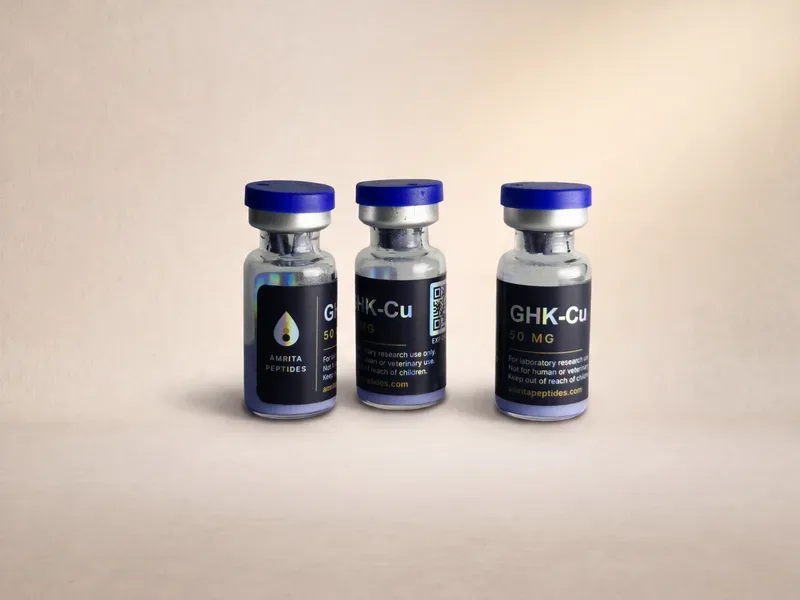
GHK-Cu
Molecular formula: C14H23CuN6O4+
A copper peptide found naturally in the body, best known from skin research, where it is looked at for collagen and tissue remodelling.
From ฿800 View
Copper-peptide research examines peptides that bind copper and the questions that raises in laboratory work. This category focuses on GHK-Cu, also called Copper Tripeptide-1. The name identifies a research material, not a finished skin-care product. Compare the listed formats below, then read what the copper part of the name means and what a product label cannot establish. Research use only; not for human or veterinary use.
Molecular formula: C14H23CuN6O4+
A copper peptide found naturally in the body, best known from skin research, where it is looked at for collagen and tissue remodelling.
GHK is a short peptide made from three amino acids, the building blocks of peptides. In GHK-Cu, that peptide is bound to copper. The distinction matters when reading: a paper about GHK without copper is not automatically a paper about the copper-bound material.
You may see the name Copper Tripeptide-1 in other settings, including discussions of cosmetic ingredients. A shared ingredient name does not make this research listing a cosmetic formulation. A finished product contains a particular mixture with its own intended use, instructions and controls. Those features do not come with a research vial simply because the names overlap.
Copper-peptide papers can examine cells, tissue samples or particular laboratory measurements. To understand a finding, first identify which material the authors used and which question they tested. A change in a cell marker is different from a measured result in a finished-product study.
If an article discusses appearance, repair or ageing, follow its source before accepting the conclusion. Check whether it describes isolated cells, an animal model or a study involving people. Also check whether the material was part of a mixture. A result from that mixture cannot establish the contribution of one ingredient on its own.
The stated amount on a vial describes the listed quantity of material. Concentration describes how much material is present in a volume of liquid. They answer different questions. A vial amount alone therefore cannot tell you the concentration of a laboratory preparation.
Pack size is another separate detail. Compare the number of vials as well as the amount per vial when reviewing options. Neither a larger quantity nor a lower cost per milligram establishes suitability for an experiment. That decision belongs with the laboratory’s study requirements and the evidence available for the specific material.
Do not assume that a solvent used for another peptide is suitable here. The presence of copper is one reason to keep the exact material and the full preparation conditions in view. Follow a material-specific laboratory procedure rather than borrowing directions from a cosmetic recipe or another product page.
The reconstitution and laboratory safety guides below help organise compatibility checks, clean handling and recordkeeping. Keep label details, preparation records and storage history together. Colour or clarity may be observations worth recording, but neither is proof of purity, sterility or identity. Where batch-specific evidence is unavailable, that remains a limit; general literature cannot replace it.
Background reading for this research area, from our published guides and blog.
A laboratory guide to solvent compatibility, nominal concentration, documented reconstitution steps, and deviation troubleshooting for research peptides.
GuideA laboratory guide to peptide hazard assessment, aseptic bench handling, engineering controls, incident response, labelling, storage, and waste segregation.
For laboratory research use only. Not for human or veterinary use.