GHK-Cu in Thailand
From ฿800 · 50 mg
A copper peptide found naturally in the body, best known from skin research, where it is looked at for collagen and tissue remodelling.
Choose size
Added to cart. Choose another size or open your cart when ready.
For laboratory research use only. Not for human or veterinary use.
Delivery & ordering
- Ships from
- Bangkok, Thailand
- Coverage
- Thailand only — every province
- Dispatch
- Same-day dispatch
- Delivery time
- 2–3 days nationwide
- How to order
- Cart message by WhatsApp, LINE or Telegram
- Payment
- PromptPay, Thai bank transfer, Crypto
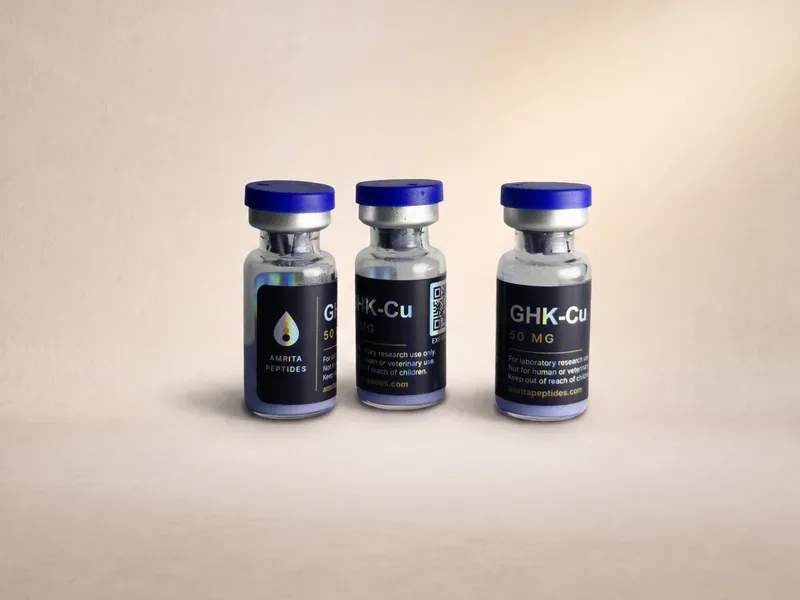
GHK-Cu 50 mg research vials in Thailand
What is GHK-Cu? GHK-Cu is a naturally occurring copper-binding tripeptide — glycyl-L-histidyl-L-lysine chelated to a copper(II) ion, also listed as Copper Tripeptide-1. The same name appears on skincare labels, which is why it is easy to confuse two different things. In a serum, GHK-Cu is one cosmetic ingredient inside a finished, tested formulation with its own instructions. What we sell is the raw research material: 50 mg of lyophilised GHK-Cu powder per vial, in packs of 1, 5 or 10, for laboratory work only. It is not a skincare product, it is not made to be applied or injected, and nothing on this page is a skin-benefit claim. Vials are stocked in Bangkok with tracked delivery to Bangkok, Phuket, Chiang Mai and the rest of Thailand; browse related materials in the copper peptide research hub.
Research on GHK-Cu dates to the 1970s. It is the most heavily characterised copper peptide in the matrix-biology literature, largely through the work of Loren Pickart and the Reims group led by François-Xavier Maquart, and the evidence base is predominantly fibroblast culture and rodent models, with a separate cosmetic-formulation literature.
Quick facts
- Product
- GHK-Cu (Copper Tripeptide-1)
- CAS
- 89030-95-5 is commonly referenced for the copper complex (49557-75-7 for free GHK)
- Molecular weight
- ~340 Da for free GHK; ~400 Da for the 1:1 copper complex
- Form
- Lyophilised powder, sealed vial
- Intended use
- laboratory research use only
Explore the sequence and chemical composition.
- Gly
- His
- Lys
Hover or focus a residue to see its full name.
The GHK tripeptide is shown; the listed compound is its copper(II) complex.
Shown for PubChem's prezatide copper record matching CAS 89030-95-5. Other public records use different copper-to-peptide stoichiometries, so confirm the current label.
How GHK-Cu works
The biology of GHK depends on the copper. The tripeptide's glycine amine, histidine imidazole, and backbone nitrogens form a high-affinity square-planar chelate around Cu(II), and it is this complex — not the bare peptide — that carries most of the activity reported in the literature. Because the copper is tightly bound rather than free in solution, GHK-Cu is studied as a way to deliver copper to cells without the uncontrolled redox chemistry that free copper ions produce. GHK sequences occur within the alpha-2(I) chain of type I collagen, which led Maquart and colleagues to propose that proteolysis at an injury site releases GHK locally, where it picks up copper and acts as an endogenous repair signal.
Downstream, dermal fibroblast studies report increased synthesis of collagen types I and III, glycosaminoglycans, and the proteoglycan decorin, alongside modulation of matrix metalloproteinases and their tissue inhibitors — that is, GHK-Cu is described as tuning both the building and the breakdown side of matrix turnover rather than simply adding collagen. Review work also attributes broad transcriptional effects to GHK across genes tied to remodelling, antioxidant defence, and inflammatory signalling. These are findings from specific published studies, not outcomes attributed to this product.
Key research findings
- In human fibroblast cultures, GHK-Cu stimulated collagen synthesis in a dose-dependent manner from 10⁻¹² M, peaking around 10⁻⁹ M, with the effect occurring independently of any change in cell number (Maquart, FEBS Lett, 1988).
- In a rat wound-chamber model using subcutaneously implanted steel mesh cylinders, GHK-Cu produced a concentration-dependent increase in dry weight, DNA, total protein, collagen, and glycosaminoglycan content, with collagen accumulating at roughly twice the rate of non-collagen protein and elevated type I and type III collagen mRNA (Maquart, J Clin Invest, 1993).
- In a mouse model of bleomycin-induced pulmonary fibrosis, intraperitoneal GHK-Cu at 0.2, 2, and 20 µg/g on alternate days reduced inflammatory markers and collagen deposition and reversed the MMP-9/TIMP-1 imbalance via Nrf2, NF-κB, and TGF-β1 pathways (Ma, Life Sci, 2020).
Research applications
- Collagen synthesis and extracellular-matrix remodelling assays in dermal fibroblasts
- Wound-healing and granulation-tissue models
- Matrix metalloproteinase / TIMP balance studies
- Copper-chelation and metal-delivery chemistry
- Antioxidant and anti-inflammatory signalling research (Nrf2, NF-κB)
- Gene-expression profiling under copper-peptide exposure
- Comparative tissue-repair studies alongside BPC-157 and TB-500
Study parameters reported in literature
The underlying literature is expressed on three different scales rather than as a single protocol: fibroblast culture work used ~10⁻¹² to 10⁻⁹ M (Maquart, FEBS Lett, 1988), the mouse fibrosis model used 0.2–20 µg/g intraperitoneally on alternate days (Ma, Life Sci, 2020), and cosmetic-science studies describe topical formulations at roughly 0.1–2%. Parameters vary widely because the published work spans cell culture, rodent models, and topical formulation studies rather than a single standard protocol. This is a descriptive summary of parameters reported in cited research, not a recommendation for use. To model concentrations for a defined protocol, use the GHK-Cu peptide calculator.
Reconstitution & storage
- Solvent
- Confirm compatibility for this material; copper complexes are sensitive to pH and to reducing or chelating agents, so no diluent is universal
- Mixing
- Add solvent down the vial wall and swirl gently until dissolved; do not shake
- Appearance
- Solutions of the copper complex are characteristically deep blue
- Storage
- Refrigerated (2–8 °C) after reconstitution, in common laboratory practice
- Use within
- No in-use stability data has been published for this material; set limits from a validated protocol
- Freeze / light
- Keep lyophilised powder frozen or cold, sealed, and protected from light
Because copper complexes react with some buffer components, laboratory practice is to check compatibility before choosing a diluent such as bacteriostatic water and to prepare solutions fresh. In Thailand's heat and humidity, protect vials from ambient temperature swings during storage and courier handling.
Selected research
- Stimulation of collagen synthesis in fibroblast cultures by the tripeptide-copper complex glycyl-L-histidyl-L-lysine-Cu2+ — FEBS Lett, 1988
- In vivo stimulation of connective tissue accumulation by the tripeptide-copper complex glycyl-L-histidyl-L-lysine-Cu2+ in rat experimental wounds — J Clin Invest, 1993
- Protective effects of GHK-Cu in bleomycin-induced pulmonary fibrosis via anti-oxidative stress and anti-inflammation pathways — Life Sci, 2020
- GHK Peptide as a Natural Modulator of Multiple Cellular Pathways in Skin Regeneration — Biomed Res Int, 2015 (review, Pickart)
- Topically applied GHK as an anti-wrinkle peptide: Advantages, problems and prospective — BioImpacts, 2025 (review)
- Browse all indexed GHK-Cu copper peptide literature on PubMed
Related compounds
- BPC-157 — a pentadecapeptide studied for tendon, gut, and tissue repair; often examined alongside GHK-Cu in matrix and angiogenesis research through a different mechanism.
- TB-500 — a synthetic Thymosin Beta-4 fragment studied in cell-migration and repair models; the actin-regulating counterpart to GHK-Cu's matrix-synthesis focus.
- Bacteriostatic water — the standard diluent used to reconstitute lyophilised research peptides.
See also: more copper peptide research compounds.
GHK-Cu FAQ
What is the difference between GHK and GHK-Cu?
GHK is the free glycyl-L-histidyl-L-lysine tripeptide. GHK-Cu is that tripeptide chelated to a copper(II) ion, commonly called Copper Tripeptide-1. Most of the published activity — the collagen and matrix effects in particular — is reported for the copper complex, and free GHK behaves differently. If a protocol requires one specific form, confirm the product name and label details before ordering.
What evidence level supports GHK-Cu?
Predominantly in-vitro fibroblast culture work and rodent models, plus a body of topical cosmetic-science literature. The mechanistic findings cited on this page are from specific published studies dating back to the 1988 FEBS Letters fibroblast work. There are no human-outcome claims associated with this product.
What do the study parameters on this page represent?
They record the cell-culture concentrations, rodent amounts, routes, and topical formulation percentages used in the cited research. They describe those distinct study designs rather than recommending use of the listed material, which is not intended for humans or animals.
How should GHK-Cu be stored, especially in Thailand?
Keep the lyophilised powder frozen or cold, sealed, and out of direct light. Once reconstituted it is typically refrigerated, but no in-use shelf life has been demonstrated for this material, so a validated protocol should set how long a solution is kept. In Thailand's heat and humidity, minimise time at ambient temperature during handling and delivery; tracked shipping is available nationwide after order confirmation.
Is GHK-Cu legal to buy for research in Thailand?
It is offered strictly for laboratory research use only, not for human, veterinary, or cosmetic use. An RUO label does not determine legal status; researchers should check current Thai FDA information for the specific product and activity.
Where is GHK-Cu sourced and how is it verified?
It is sourced from reliable suppliers in China, stocked in Bangkok, and dispatched within Thailand. Confirm the selected option and the current label details before checkout when compound identity matters to a protocol. The sourcing and transparency page lists what can be confirmed before payment and what cannot be evidenced.
Why do published formulas for GHK-Cu differ?
Because copper-to-peptide stoichiometry varies between references and between products — 1:1 complexes are most commonly described, but other ratios and salt forms appear in compound databases. Confirm the exact formula and molecular weight on the current label rather than relying on a generic catalogue figure.
Compliance note
GHK-Cu is supplied for laboratory research use only. It is not for human or veterinary use, not a cosmetic or topical product, and it is not intended to diagnose, treat, cure, or prevent any disease. All findings referenced above are the results of specific published studies, not claims about this product.
Helpful resources
Related products
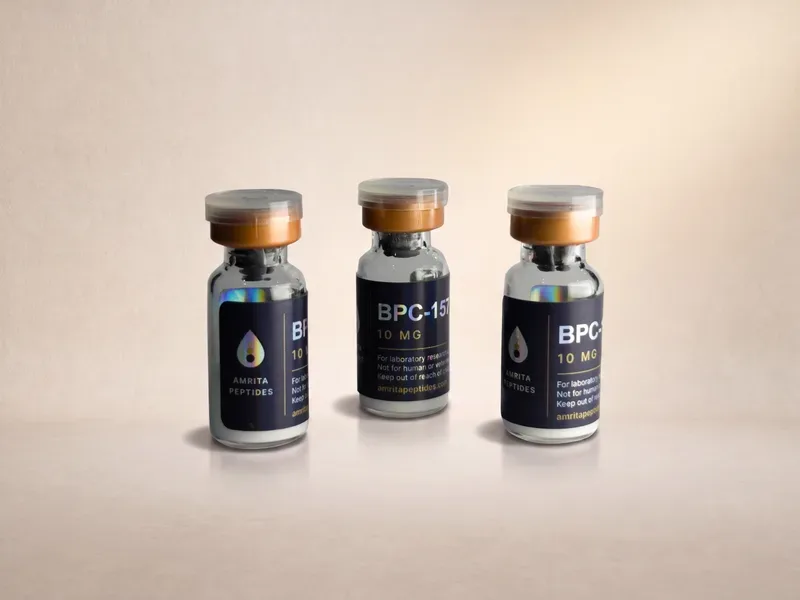
BPC-157
Molecular formula: C62H98N16O22
Probably the best-known recovery peptide — a 15-amino-acid fragment of a stomach protein, researched for how tendons, ligaments and the gut heal.
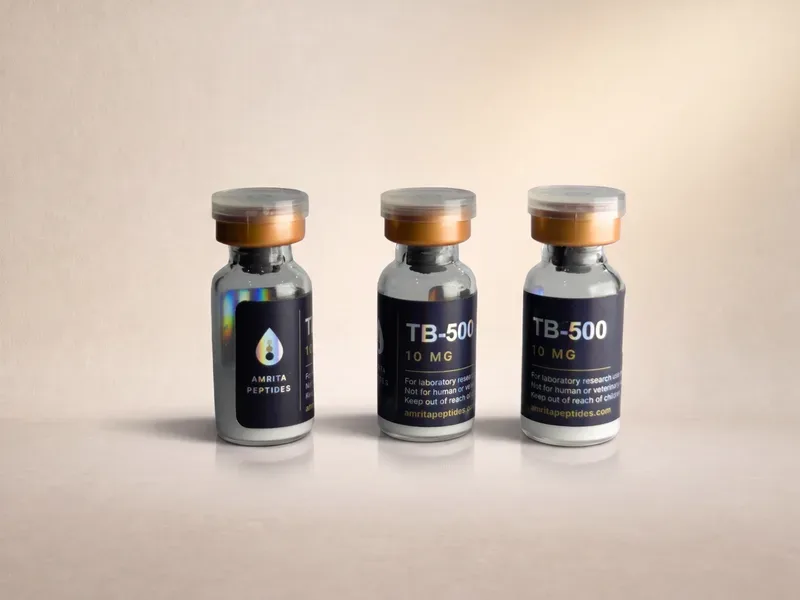
TB-500
Molecular formula: C38H68N10O14
A synthetic piece of Thymosin Beta-4, a protein that helps cells move and rebuild, often researched side by side with BPC-157.
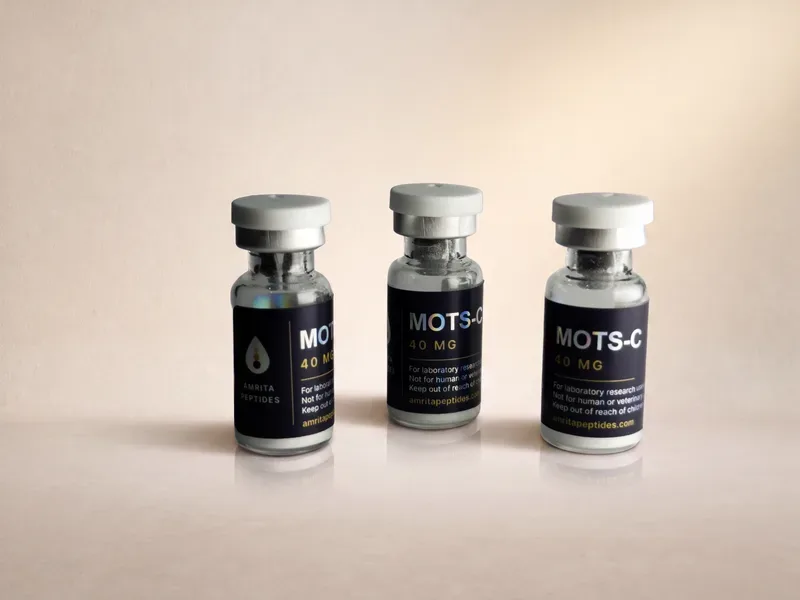
MOTS-C
Molecular formula: C101H152N28O22S2
A peptide made by the mitochondria rather than the main genome, researched for its links to exercise, insulin sensitivity and ageing.
฿800
Added to cart. Research use only.