BPC-157 in Thailand
From ฿700 · 5 mg
Probably the best-known recovery peptide — a 15-amino-acid fragment of a stomach protein, researched for how tendons, ligaments and the gut heal.
Choose size
Added to cart. Choose another size or open your cart when ready.
For laboratory research use only. Not for human or veterinary use.
Delivery & ordering
- Ships from
- Bangkok, Thailand
- Coverage
- Thailand only — every province
- Dispatch
- Same-day dispatch
- Delivery time
- 2–3 days nationwide
- How to order
- Cart message by WhatsApp, LINE or Telegram
- Payment
- PromptPay, Thai bank transfer, Crypto
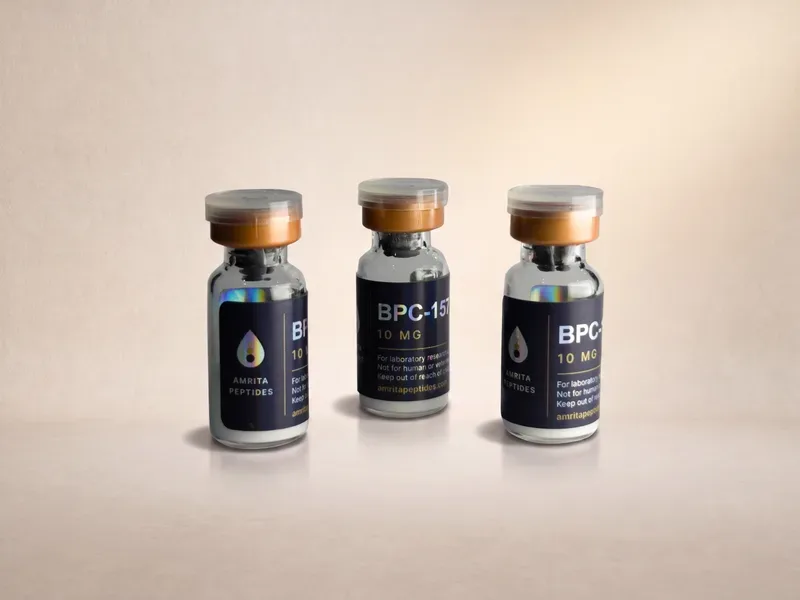
BPC-157 research peptide in Thailand
BPC-157 (Body Protection Compound 157) is a synthetic pentadecapeptide — a 15-amino-acid fragment derived from a protein found in human gastric juice — studied in preclinical models of tendon, ligament, gut, and blood-vessel (angiogenesis) repair. Almost all published BPC-157 evidence comes from rodent and in-vitro experiments, largely from the Sikirić research group; there are no completed controlled human efficacy trials. In Thailand we stock it as lyophilised powder in 5 mg and 10 mg vials, each sold singly or in 5- and 10-vial packs, dispatched from Bangkok the same day after manual confirmation with free tracked delivery to Bangkok, Phuket, Chiang Mai and every other province.
This listing is supplied strictly for laboratory research use only. It is not a medicine, supplement, or treatment, and is not for human or veterinary use.
Quick facts
- Product
- BPC-157 (Body Protection Compound 157)
- CAS number
- 137525-51-0
- Molecular weight
- ~1419.5 g/mol
- Intended use
- laboratory research use only
Explore the sequence and chemical composition.
- Gly
- Glu
- Pro
- Pro
- Pro
- Gly
- Lys
- Pro
- Ala
- Asp
- Asp
- Ala
- Gly
- Leu
- Val
Hover or focus a residue to see its full name.
How BPC-157 works
In animal and cell studies, BPC-157 is described as a cytoprotective peptide that acts on several repair pathways at once rather than a single receptor. The mechanism most often reported is promotion of angiogenesis — new blood-vessel growth toward injured tissue — through upregulation of VEGF signalling, alongside activation of the FAK–paxillin pathway, which in cultured tendon fibroblasts is associated with faster cell migration and outgrowth.
Researchers also describe interactions with the nitric-oxide (NO) system and with growth-hormone receptor expression in fibroblasts, and, in gastrointestinal models, stabilisation of the mucosal lining against NSAID-induced damage. These are mechanistic observations from preclinical work, not demonstrated outcomes in humans.
Key research findings
- In cultured rat Achilles tendon fibroblasts, BPC-157 promoted tendon-explant outgrowth, cell survival under stress, and cell migration, effects linked to the FAK–paxillin pathway (Chang et al., J Appl Physiol, 2011).
- In Wistar rats subjected to massive small-bowel resection, BPC-157 was reported to reduce gastrointestinal, liver, and brain lesions and to counter failed anastomosis healing (Vukojević et al., PLoS One, 2016).
- A 2019 review concluded that BPC-157 showed consistently positive soft-tissue healing signals across studies, while stressing that the majority were small-rodent models and that efficacy remains unconfirmed in humans (Gwyer et al., Cell Tissue Res, 2019).
Research applications
- Tendon and ligament healing models, including Achilles tendon and transection studies
- Gastrointestinal research: gastric ulcer, NSAID-induced mucosal injury, and intestinal anastomosis models
- Angiogenesis and wound-healing assays examining VEGF-driven vessel growth
- Muscle injury and connective-tissue repair models
- Cytoprotection and organ-protection studies across multiple tissues
- In-vitro fibroblast migration and collagen-signalling work
Study parameters reported in literature
The published rodent work expressed doses on a body-weight basis rather than as fixed amounts — most often ~10 µg/kg, with a much lower ~10 ng/kg arm in several of the Sikirić experiments — and gut-focused models frequently used the oral route rather than injection. These figures summarise how doses were expressed in the published animal literature and are provided for reference and product identification only — not as recommendations for use. To convert a target concentration into working volumes for research use, see the BPC-157 peptide calculator.
Reconstitution & storage
- Solvent
- Bacteriostatic water — most common in laboratory practice
- Mixing
- Add solvent slowly against the vial wall and swirl gently until dissolved; do not shake
- Storage
- Refrigerate at 2–8 °C after reconstitution
- Use within
- About 4 weeks of reconstitution, in common lab practice
- Freeze / light
- Keep lyophilised powder frozen for long-term storage and protect from direct light
BPC-157 ships as a lyophilised powder and is reconstituted with bacteriostatic water using standard sterile handling. In Thailand's heat and humidity, minimise time at room temperature and store promptly.
Selected research
- The promoting effect of pentadecapeptide BPC 157 on tendon healing involves tendon outgrowth, cell survival, and cell migration — J Appl Physiol, 2011
- Effects of Diclofenac, L-NAME, L-Arginine, and Pentadecapeptide BPC 157 ... in 24 Hour-Short-Bowel Rats — PLoS One, 2016
- Gastric pentadecapeptide body protection compound BPC 157 and its role in accelerating musculoskeletal soft tissue healing — Cell Tissue Res, 2019
- A new gastric juice peptide, BPC: an overview of the stomach-stress-organoprotection hypothesis — J Physiol Paris, 1993
- Pharmacokinetics, distribution, metabolism, and excretion of body-protective compound 157 in rats and dogs — Frontiers in Pharmacology, 2022 (reported elimination half-life under 30 minutes after IV/IM administration; no human half-life established).
- Browse all BPC-157 studies on PubMed
Related compounds
- TB-500 — a synthetic Thymosin Beta-4 fragment studied in overlapping tissue-repair models; frequently referenced alongside BPC-157 in the literature, though the two act through different mechanisms.
- Bacteriostatic water — the solvent most commonly used to reconstitute lyophilised research peptides such as BPC-157.
- GHK-Cu — a copper-binding tripeptide studied in collagen and matrix-remodelling models; see the copper peptide research hub for how it differs from a cosmetic ingredient.
For a side-by-side comparison, see BPC-157 vs TB-500 and browse more tissue-repair signalling compounds.
Buying BPC-157 in Thailand
BPC-157 is stocked in Bangkok as 5 mg or 10 mg vials, sold singly or in packs of 5 or 10. Prices are in Thai baht and include tracked delivery anywhere in Thailand. 10 × 5 mg vials work out at ฿550 a vial, 21% less than a single 5 mg vial.
| Option | Price | Per vial |
|---|---|---|
| 1 × 5 mg vial | ฿700 | ฿700 |
| 5 × 5 mg vials | ฿3,000 | ฿600 |
| 10 × 5 mg vials | ฿5,500 | ฿550 |
| 1 × 10 mg vial | ฿1,400 | ฿1,400 |
| 5 × 10 mg vials | ฿6,000 | ฿1,200 |
| 10 × 10 mg vials | ฿11,000 | ฿1,100 |
Dispatch and delivery
Same-day dispatch from Bangkok once your order is confirmed, by tracked courier. Typical timing:
- Bangkok
- same-day or next-day dispatch after confirmation
- Pattaya and the Eastern Seaboard
- tracked overnight where courier timing allows
- Phuket and the South
- usually 1–2 days after dispatch
- Chiang Mai and the North
- usually 1–2 days after dispatch
- Hua Hin, Koh Samui, and other provinces
- tracked nationwide courier delivery
How to order
Add a size to the cart and send the order message it writes on WhatsApp, LINE or Telegram. We reply with stock, the total and payment details (PromptPay, Thai bank transfer or Crypto). Nothing is charged on this website.
BPC-157 FAQ
Is BPC-157 supplied for research use only?
Yes. BPC-157 is listed strictly for laboratory research use only. It is not a medicine, supplement, cosmetic, or food, and is not intended for human or veterinary use, consumption, diagnosis, treatment, or disease prevention.
What is the evidence level behind BPC-157?
Preclinical. Nearly all published BPC-157 data come from rodent and in-vitro experiments, many from the Sikirić group. There are no completed controlled human efficacy trials, so the mechanisms and findings described here are research observations in animal and cell models, not demonstrated human outcomes.
What do the study parameters on this page represent?
They record the body-weight-based amounts, routes, and frequencies used in the cited animal studies. They describe those study designs rather than recommending use of the listed material, which is not intended for humans or animals.
How is BPC-157 handled and reconstituted in the lab?
It ships as a lyophilised powder and is typically reconstituted with bacteriostatic water using sterile technique, then kept refrigerated, following standard laboratory practice.
How should BPC-157 be stored in Thailand's climate?
Keep the sealed lyophilised vial frozen or refrigerated and out of direct sunlight, and limit time at room temperature. Thailand's heat and humidity make prompt, stable storage important.
Is BPC-157 legal to buy for research in Thailand?
It is supplied here as a research chemical for laboratory use only. Import and possession rules for research compounds can change, so confirm the current status and your own compliance obligations before ordering. This page is not legal advice.
How does delivery work within Thailand?
Orders are dispatched from Bangkok with tracked delivery nationwide, including Phuket, Chiang Mai, Pattaya, and Hua Hin. Option, current stock, price, and dispatch timing are confirmed manually before checkout.
Compliance note
BPC-157 is presented here for research identification and laboratory handling reference only. It is not for human or veterinary use and is not intended to diagnose, treat, cure, or prevent any disease.
Helpful resources
Related products
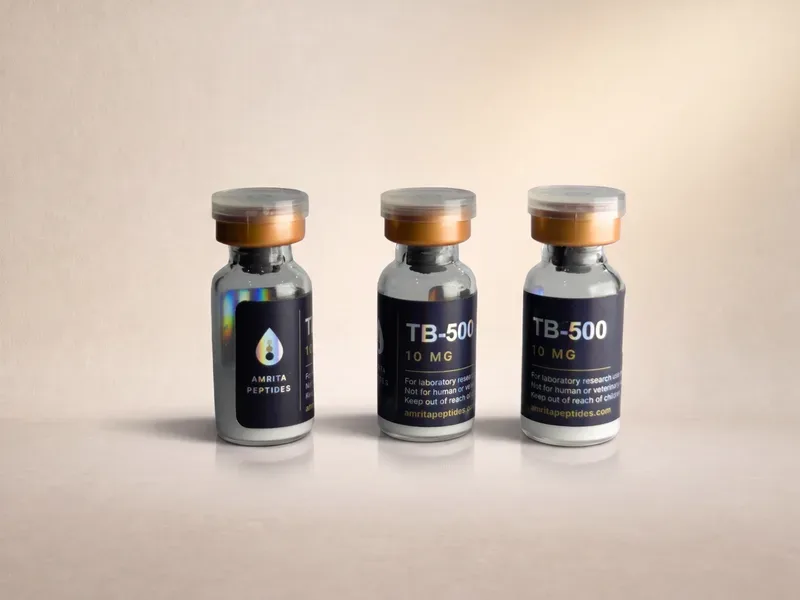
TB-500
Molecular formula: C38H68N10O14
A synthetic piece of Thymosin Beta-4, a protein that helps cells move and rebuild, often researched side by side with BPC-157.
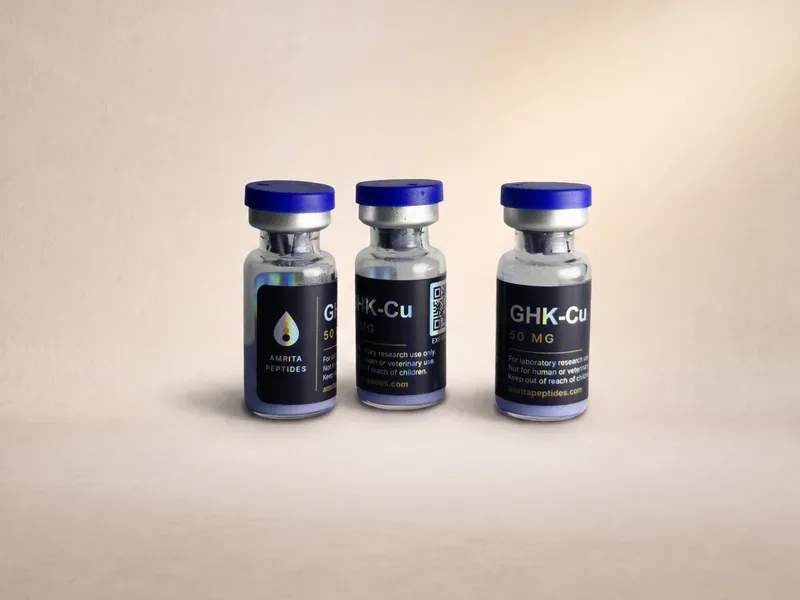
GHK-Cu
Molecular formula: C14H23CuN6O4+
A copper peptide found naturally in the body, best known from skin research, where it is looked at for collagen and tissue remodelling.
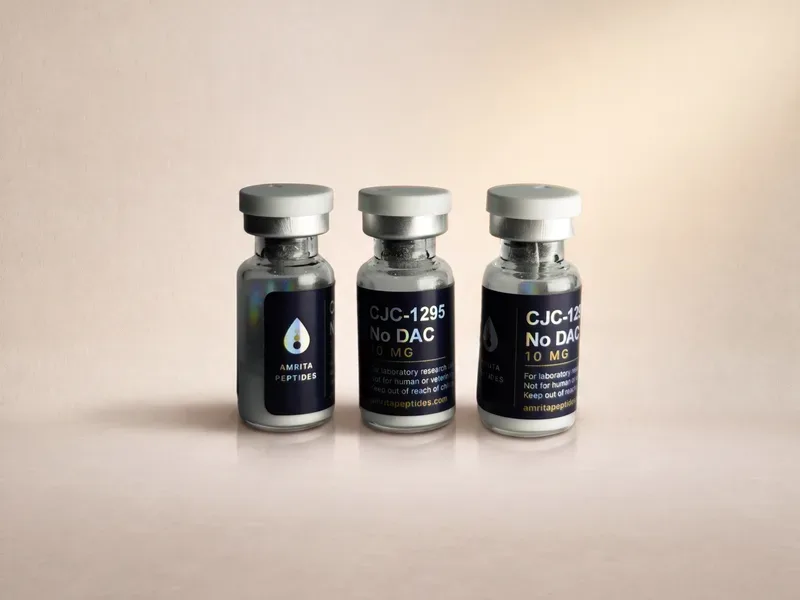
CJC-1295 No DAC
Molecular formula: C152H252N44O42
A short-acting version of the body's own growth-hormone-releasing signal, and the usual research partner for Ipamorelin.
฿700
Added to cart. Research use only.