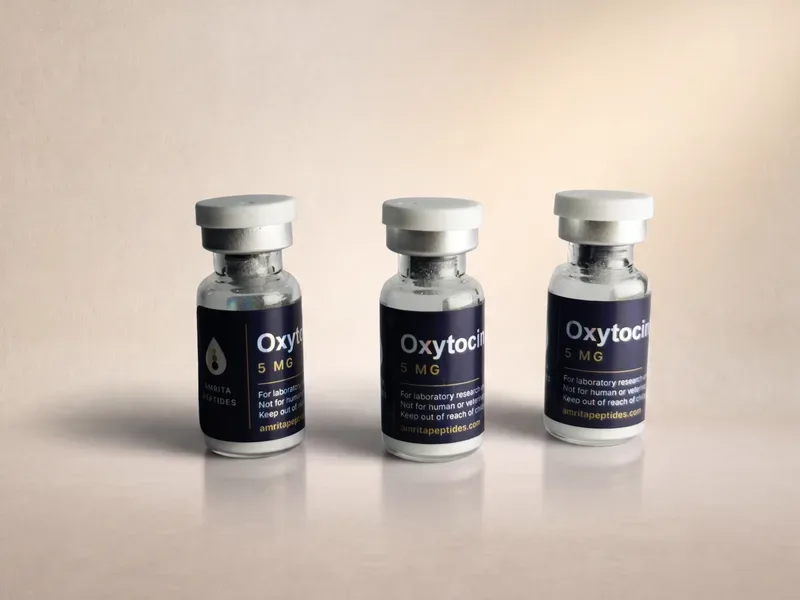
Oxytocin
Molecular formula: C43H66N12O12S2
The body's own bonding hormone: nine amino acids, and one of the most studied signalling molecules in social-behaviour research.
From ฿2,800 View
Neuroendocrine research looks at how the brain turns nerve signals into hormone signals, mostly through the hypothalamus and pituitary. This category is narrower than the neuropeptide hub: it holds two receptor-defined reference compounds, oxytocin at the oxytocin receptor and PT-141 (bremelanotide) at the melanocortin MC3R/MC4R receptors, rather than the Semax, Selank and Pinealon group studied mainly in CNS and behaviour models. Both compounds here also have a registered medicine with their name, which is why this hub keeps a strict line between clinical literature and a research vial. It is not a list of products for changing mood, relationships or sexual function. Use the product pages to compare vial amounts, pack sizes and units, and the reading below to understand what the research can and cannot show. Laboratory research use only; not for human or veterinary use.
Molecular formula: C43H66N12O12S2
The body's own bonding hormone: nine amino acids, and one of the most studied signalling molecules in social-behaviour research.
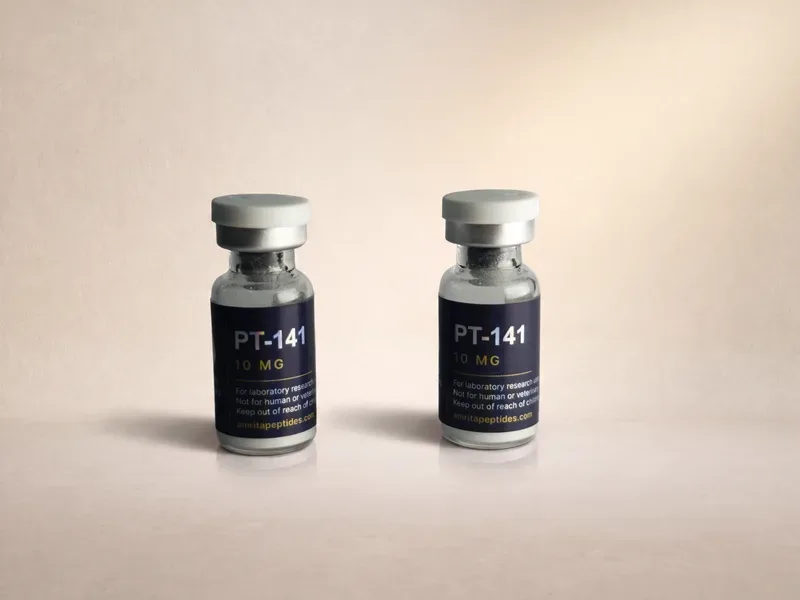
Molecular formula: C50H68N14O10
Also known as bremelanotide, a melanocortin peptide that reached approval for low sexual desire in 2019 — sold here strictly as a research compound.
The nervous system and hormone system do not work in isolation. Research can examine how a signal is produced, which cells receive it and what happens next in a controlled setting. That creates several different kinds of study under one category heading.
PT-141 and oxytocin belong to different research contexts. They are not two versions of the same substance, and the fact that both appear here does not imply that they act at the same receiving points in a cell. A shared subject is a reason to organise reading, not a reason to exchange or combine materials.
Short popular descriptions of hormones can make a complex subject sound simple. A label associated with a feeling or behaviour leaves out the study setting, measurement and uncertainty. Those missing details are often the most important part of understanding the research.
When a paper reports an observation, ask how it was measured. A laboratory signal, an animal behaviour and a person’s reported experience are different forms of evidence. Findings can also depend on the conditions of the study. They should not be rewritten as a predictable outcome for an individual.
A compound name may also appear in medical literature. That does not make an independently supplied research material an authorised medicine. Any approval belongs to a particular product and use in a particular jurisdiction, not to every vial carrying a related name.
For the same reason, a study’s amount, route and schedule are records of that study rather than directions for this catalog. Do not detach those numbers from their original setting. These pages do not help choose products for personal treatment, and the research-use label does not establish that a material is safe for people.
Check the full option name and the units used on each listing. Do not assume that quantities expressed with different units can be compared directly, or that equal-looking numbers describe equivalent material. Keep the product name attached to every quantity in an order or laboratory record.
The guides below address laboratory preparation and storage as separate tasks. Before work begins, the laboratory should have a procedure specific to the material, including compatibility and recordkeeping. In Thailand, receipt conditions and temperature changes are worth logging, but local weather alone cannot tell you a vial’s condition. Visible appearance is not a replacement for evidence about identity, contamination or stability.
Background reading for this research area, from our published guides and blog.
A laboratory guide to solvent compatibility, nominal concentration, documented reconstitution steps, and deviation troubleshooting for research peptides.
GuideA Thailand laboratory guide to documented peptide storage conditions, temperature monitoring, outages, condensation, delivery quarantine, and excursion records.
For laboratory research use only. Not for human or veterinary use.