Oxytocin in Thailand
From ฿2,800 · 5 mg
The body's own bonding hormone: nine amino acids, and one of the most studied signalling molecules in social-behaviour research.
Choose size
Added to cart. Choose another size or open your cart when ready.
For laboratory research use only. Not for human or veterinary use.
Delivery & ordering
- Ships from
- Bangkok, Thailand
- Coverage
- Thailand only — every province
- Dispatch
- Same-day dispatch
- Delivery time
- 2–3 days nationwide
- How to order
- Cart message by WhatsApp, LINE or Telegram
- Payment
- PromptPay, Thai bank transfer, Crypto
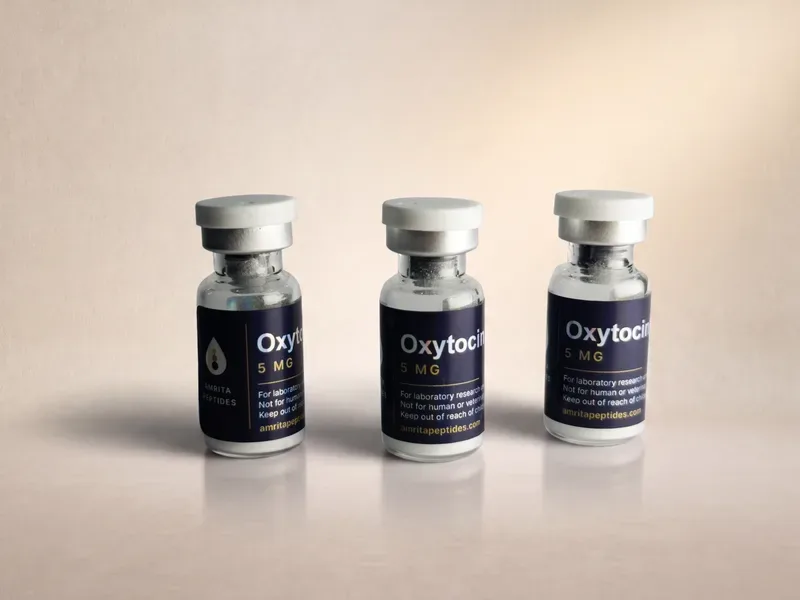
Oxytocin research peptide in Thailand
Oxytocin is a nine-amino-acid cyclic neuropeptide, produced in the hypothalamus and released from the posterior pituitary, studied in reproductive physiology, neuroendocrine signalling, stress reactivity, and social-cognition research. It is one of the most thoroughly characterised peptides in the literature — its receptor, structure, and peripheral physiology have been mapped in detail, and intranasal administration has become a large (and heavily debated) experimental field in its own right.
This listing is for laboratory research use only. Oxytocin is a licensed obstetric medicine in many countries; the material sold here is research-grade reagent, not a medicine, and is not supplied for human or veterinary use.
Quick facts
- Product
- Oxytocin (lyophilised powder)
- CAS
- 50-56-6
- Molecular weight
- ~1007.2 g/mol
- Related peptide
- Vasopressin — differs at only two residues, which is why receptor cross-reactivity is a standing methodological issue
- Intended use
- laboratory research use only
Explore the sequence and chemical composition.
- Cys
- Tyr
- Ile
- Gln
- Asn
- Cys
- Pro
- Leu
- Gly
- NH2
Hover or focus a residue to see its full name.
Cys¹ and Cys⁶ form the disulfide bridge that cyclises the peptide; the C-terminus is amidated.
How oxytocin works
Oxytocin acts through the oxytocin receptor, a class I G protein-coupled receptor that couples primarily to Gq/11 and drives phospholipase C activation, IP3 generation, and intracellular calcium release. In peripheral tissue that pathway underlies the two classical physiological effects — uterine smooth-muscle contraction and milk ejection from mammary myoepithelial cells. Receptor density is not fixed: it is strongly modulated by oestrogen and rises dramatically in the uterus toward term, which is one reason oxytocin physiology is studied as a hormone-regulated receptor system rather than a simple ligand story (Gimpl & Fahrenholz, Physiol Rev, 2001).
Centrally, oxytocin is released within the brain by hypothalamic neurons projecting to regions including the amygdala, nucleus accumbens, and brainstem, where it modulates stress and social-processing circuits. The central and peripheral pools are only loosely coupled, and the extent to which intranasally administered oxytocin reaches brain targets at behaviourally relevant concentrations remains genuinely contested — a caveat researchers should carry into any study design that assumes central engagement (Leng & Ludwig, Biol Psychiatry, 2016).
Key research findings
- In a double-blind experiment using a trust game with real monetary stakes, intranasal oxytocin increased transfers to a trustee relative to placebo, with no comparable effect on a non-social risk task (Kosfeld, Nature, 2005).
- In a placebo-controlled study combining intranasal oxytocin with social support before the Trier Social Stress Test, the combination was associated with the lowest cortisol response and reduced subjective anxiety among the conditions tested (Heinrichs, Biol Psychiatry, 2003).
- A critical review of the trust literature found that effects were not reliably reproduced across studies and concluded the evidence that intranasal oxytocin increases trust in humans is weak, highlighting small samples and publication bias (Nave, Perspect Psychol Sci, 2015).
Reproducibility is the defining methodological problem in this field. Analyses of intranasal oxytocin studies have documented systematically underpowered designs, flexible analysis with subgroup and interaction effects, and effect sizes that shrink on replication (Walum, Biol Psychiatry, 2016). Treat single positive social-cognition findings as hypotheses, not settled results.
Research applications
- Oxytocin receptor pharmacology, binding, and Gq/calcium-signalling assays
- Uterine and mammary smooth-muscle contractility models
- Neuroendocrine and HPA-axis stress-reactivity research
- Social cognition and social-behaviour paradigms in animal and human study designs
- Receptor-selectivity work distinguishing oxytocin from vasopressin signalling
- Peptide stability, delivery-route, and pharmacokinetic method development
- Replication and methodological studies addressing the field's power and reliability problems
Study parameters reported in literature
Oxytocin is dosed in international units throughout the published literature; the mcg figures above use the USP conversion of 1 IU to about 1.67 mcg, so that this page and the calculator work in the same units as every other compound. Behavioural testing in these paradigms usually begins ~30–45 minutes after administration. The 24 IU single intranasal dose (about 40 mcg) became the field's de facto convention rather than a dose-optimised choice, and reviews have specifically flagged the lack of dose-response characterisation as a weakness (Quintana, Mol Psychiatry, 2021). This is a summary of parameters as reported in published research, not recommendations for use. To model concentrations for a defined protocol, use the oxytocin peptide calculator.
Reconstitution & storage
- Solvent
- Bacteriostatic water — standard for lyophilised research peptides
- Mixing
- Add solvent down the vial wall and swirl gently until dissolved; do not shake
- Storage
- Refrigerated (2–8 °C) after reconstitution, in common laboratory practice
- Use within
- A few weeks once reconstituted
- Freeze / light
- Keep lyophilised powder frozen or cold, sealed, and protected from light
- Handling note
- A disulfide-bridged cyclic peptide — avoid repeated freeze-thaw cycles and reducing conditions
Standard laboratory practice for lyophilised peptides applies, using sterile technique. In Thailand's heat and humidity, minimise time at ambient temperature during storage and courier handling, since thermal cycling is the main practical threat to peptide integrity here.
Selected research
- The oxytocin receptor system: structure, function, and regulation — Physiol Rev, 2001 (review)
- Oxytocin increases trust in humans — Nature, 2005
- Does oxytocin increase trust in humans? A critical review of research — Perspect Psychol Sci, 2015
- Intranasal oxytocin: myths and delusions — Biol Psychiatry, 2016
- Statistical and methodological considerations for the interpretation of intranasal oxytocin studies — Biol Psychiatry, 2016
- Browse all indexed intranasal oxytocin literature on PubMed
Related compounds
- Selank — an anxiolytic peptide studied in stress and anxiety-behaviour models, a common comparator when oxytocin is examined for stress-axis effects.
- Semax — an ACTH(4-10) analogue studied in neuroprotection and cognition research, another neuropeptide with a substantial intranasal-administration literature.
- Pinealon — a short peptide studied in neuronal and neuroendocrine research contexts.
- PT-141 — bremelanotide, a melanocortin-receptor agonist; it shares this neuroendocrine category with oxytocin but acts at MC3R/MC4R rather than the oxytocin receptor.
- Bacteriostatic water — the standard diluent used to reconstitute lyophilised research peptides.
See also: more neuroendocrine signalling compounds.
Oxytocin FAQ
Is oxytocin here a medicine?
No. Oxytocin is a licensed obstetric medicine in many countries, but the material listed on this page is research-grade reagent supplied for laboratory research use only. It is not a pharmaceutical product, is not for human or veterinary use, and carries no medicinal indication.
How strong is the evidence for oxytocin's behavioural effects?
It depends entirely on which literature you mean. The peripheral physiology — receptor structure, uterine and mammary signalling — is very well established. The intranasal social-cognition literature is a different matter: it has well-documented replication problems, with underpowered studies and effects that shrink or vanish on repetition. This page cites both the influential original findings and the critical reviews so researchers can see the full picture.
Why does this page avoid calling oxytocin the "love hormone"?
Because that framing misrepresents the science. Oxytocin is a neuroendocrine signalling peptide with broad, context-dependent effects; the popular shorthand collapses a contested experimental literature into a claim the data do not support. We describe it as it appears in the published research.
What do the study parameters on this page represent?
They record the international-unit amounts, routes, and timing used in the cited behavioural and pharmacokinetic studies. They describe published study designs rather than recommending use of the listed material, which is not intended for humans or animals.
How should oxytocin be stored, especially in Thailand?
Keep the lyophilised powder frozen or cold, sealed, and out of direct light. Once reconstituted with bacteriostatic water it is typically refrigerated and used within a few weeks. As a cyclic, disulfide-bridged peptide it is worth avoiding repeated freeze-thaw cycles. In Thailand's climate, minimise ambient-temperature exposure during handling and delivery.
Is oxytocin legal to buy for research in Thailand?
It is offered strictly for laboratory research use only. Because oxytocin has regulated medical and veterinary uses in many jurisdictions, researchers should check current Thai FDA information for the specific product and activity. Tracked delivery is available nationwide after order confirmation.
Where is it sourced, and are the images the exact vial?
It is sourced from established suppliers, stocked in Bangkok, and dispatched within Thailand. Product images are illustrative, not photographs of the specific vial shipped — confirm the current label, batch, and packaging details when they matter to a protocol.
Compliance note
Oxytocin is supplied for laboratory research use only. It is not for human or veterinary use, and it is not intended to diagnose, treat, cure, or prevent any disease. All findings referenced above are the results of specific published studies, not claims about this product.
Helpful resources
Related products
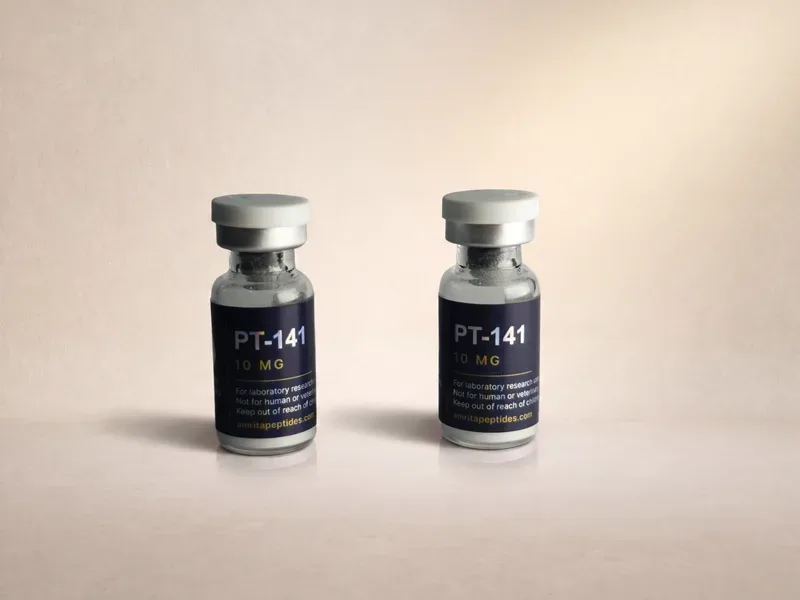
PT-141
Molecular formula: C50H68N14O10
Also known as bremelanotide, a melanocortin peptide that reached approval for low sexual desire in 2019 — sold here strictly as a research compound.
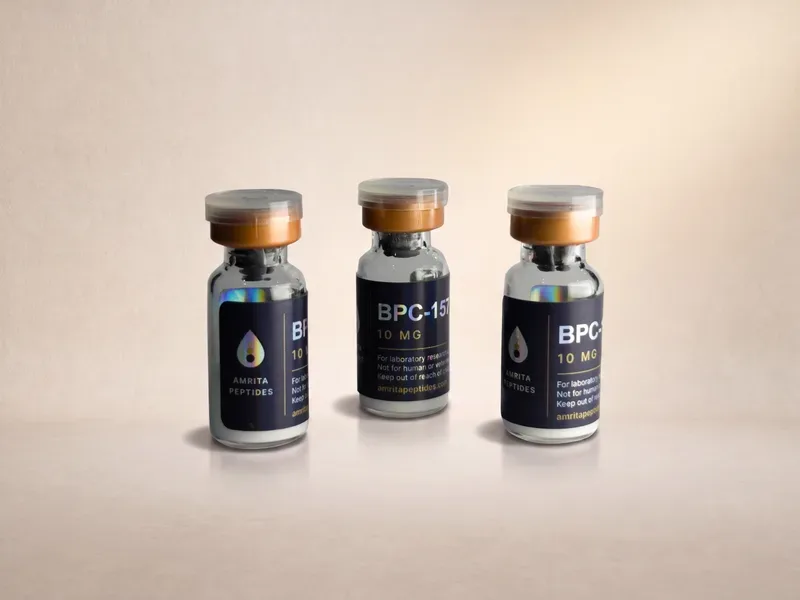
BPC-157
Molecular formula: C62H98N16O22
Probably the best-known recovery peptide — a 15-amino-acid fragment of a stomach protein, researched for how tendons, ligaments and the gut heal.
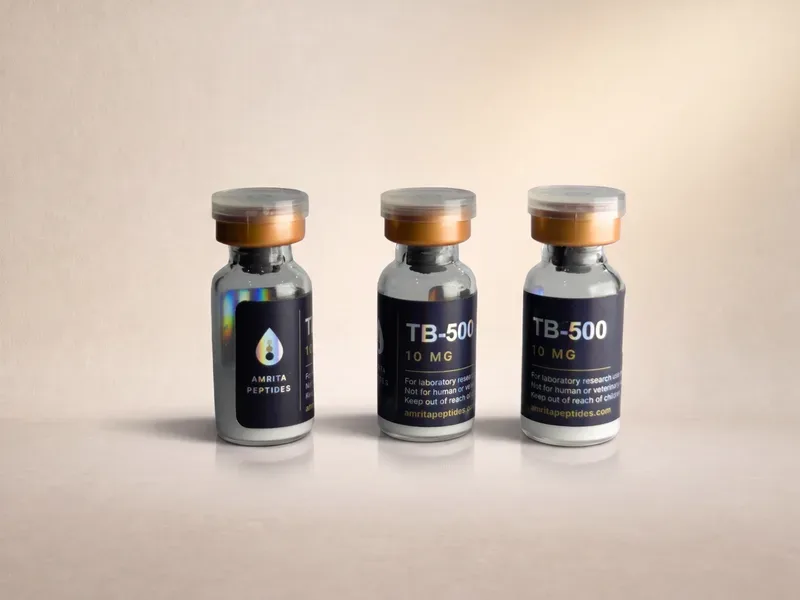
TB-500
Molecular formula: C38H68N10O14
A synthetic piece of Thymosin Beta-4, a protein that helps cells move and rebuild, often researched side by side with BPC-157.
฿2,800
Added to cart. Research use only.