TB-500 in Thailand
From ฿1,600 · 10 mg
A synthetic piece of Thymosin Beta-4, a protein that helps cells move and rebuild, often researched side by side with BPC-157.
Choose size
Added to cart. Choose another size or open your cart when ready.
For laboratory research use only. Not for human or veterinary use.
Delivery & ordering
- Ships from
- Bangkok, Thailand
- Coverage
- Thailand only — every province
- Dispatch
- Same-day dispatch
- Delivery time
- 2–3 days nationwide
- How to order
- Cart message by WhatsApp, LINE or Telegram
- Payment
- PromptPay, Thai bank transfer, Crypto
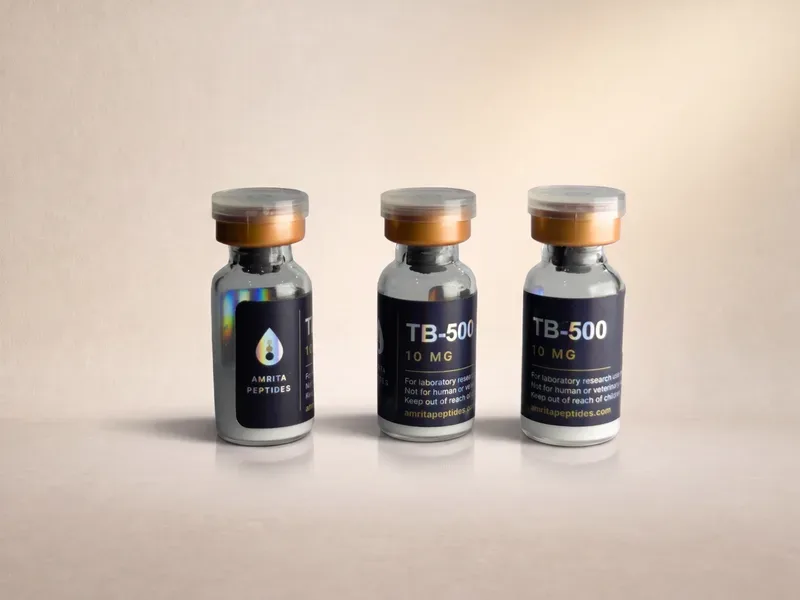
Buy TB-500 10 mg research vials in Thailand
TB-500 is a synthetic peptide based on the active region of Thymosin Beta-4 (Tβ4), and we stock it as lyophilised powder in 10 mg vials, sold singly or in 5- and 10-vial packs (current baht prices are shown in the size selector). Vials are stocked in Bangkok and dispatched the same day after manual confirmation, with free tracked delivery to Bangkok, Phuket, Chiang Mai and every other Thai province in about 2–3 days. Order by sending the cart message on WhatsApp, LINE or Telegram. Laboratory research use only; not a medicine, supplement, or recovery product.
TB-500 is studied in preclinical models of tissue repair, cell migration, angiogenesis, and cardiac and corneal healing, and is best known in the literature for Tβ4's actin-regulating activity. The evidence base is largely cell and animal work. It is frequently examined alongside BPC-157; BPC-157 vs TB-500 sets out how the two differ.
Quick facts
- Product
- TB-500 (synthetic Thymosin Beta-4 fragment)
- Related protein
- Thymosin Beta-4 (Tβ4), a 43-amino-acid peptide, ~4.9 kDa
- Note
- TB-500 is a fragment, not full-length native Tβ4; the two differ in size and identity
- Intended use
- laboratory research use only
Explore the sequence and chemical composition.
- Ac
- Leu
- Lys
- Lys
- Thr
- Glu
- Thr
- Gln
- OH
Hover or focus a residue to see its full name.
N-acetylated heptapeptide corresponding to residues 17–23 of thymosin β4.
Free-base formula. Acetate salts add acetate equivalents; TB-500 naming is inconsistent, so confirm the current label.
How TB-500 works
Thymosin Beta-4 is one of the most abundant actin-sequestering peptides in mammalian cells. It binds free G-actin monomers, buffering the pool of actin available for polymerisation and allowing cells to reorganise their cytoskeleton and migrate toward sites of injury. TB-500 reproduces the short active region responsible for much of this behaviour, which is why researchers use it as a lower-molecular-weight stand-in for the full protein in migration and repair models.
Beyond actin regulation, the published literature links Tβ4 to endothelial cell migration and new blood-vessel formation (angiogenesis), to survival signalling in cardiac cells, and to reduced inflammatory signalling at wound sites. These are findings from specific preclinical studies, not outcomes attributed to this product.
Key research findings
- In a mouse myocardial-infarction model, Thymosin Beta-4 activated integrin-linked kinase and Akt signalling, promoted cardiac cell migration and survival, and improved cardiac function after coronary ligation (Bock-Marquette, Nature, 2004).
- In a rat full-thickness wound model, Tβ4 increased re-epithelialisation by up to 61% versus saline controls and stimulated keratinocyte migration, collagen deposition, and angiogenesis (Malinda, J Invest Dermatol, 1999).
- In a mouse alkali-burn model, topical Tβ4 accelerated corneal re-epithelialisation and reduced inflammatory cell infiltration and inflammatory-cytokine expression (Sosne, Exp Eye Res, 2002).
Research applications
- Soft-tissue, tendon, and ligament repair models
- Cardiac repair and post-ischaemic cardiomyocyte survival studies
- Dermal wound-healing and re-epithelialisation research
- Corneal wound-healing and ocular anti-inflammatory models
- Angiogenesis and endothelial cell migration assays
- Comparative repair-pathway studies alongside BPC-157
Study parameters reported in literature
That range is drawn from the larger-animal work rather than from human trials. This is a summary of parameters as reported in research references, not recommendations for use. To model concentrations for a defined protocol, use the TB-500 peptide calculator.
Reconstitution & storage
- Solvent
- Bacteriostatic water — standard for lyophilised research peptides
- Mixing
- Add solvent down the vial wall and swirl gently until dissolved; do not shake
- Storage
- Refrigerated (2–8 °C) after reconstitution, in common laboratory practice
- Use within
- A few weeks once reconstituted
- Freeze / light
- Keep lyophilised powder frozen or cold, sealed, and protected from light
Reconstitute with bacteriostatic water using sterile technique. In Thailand's heat and humidity, protect vials from ambient temperature swings during storage and courier handling.
Selected research
- Thymosin beta4 activates integrin-linked kinase and promotes cardiac cell migration, survival and cardiac repair — Nature, 2004
- Thymosin beta4 accelerates wound healing — J Invest Dermatol, 1999
- Thymosin beta 4 promotes corneal wound healing and decreases inflammation in vivo following alkali injury — Exp Eye Res, 2002
- Thymosin β4: a multi-functional regenerative peptide. Basic properties and clinical applications — Expert Opin Biol Ther, 2012 (review)
- Browse all indexed Thymosin Beta-4 literature on PubMed
Related compounds
- BPC-157 — a pentadecapeptide studied for tendon, gut, and tissue repair; frequently discussed together with TB-500 in recovery research because the two are studied through distinct (local vs systemic) repair mechanisms.
- Bacteriostatic water — the standard diluent used to reconstitute lyophilised research peptides.
For a side-by-side comparison, see BPC-157 vs TB-500. See also: more tissue-repair signalling compounds.
Buying TB-500 in Thailand
TB-500 is stocked in Bangkok as 10 mg vials, sold singly or in packs of 5 or 10. Prices are in Thai baht and include tracked delivery anywhere in Thailand. 10 × 10 mg vials work out at ฿1,250 a vial, 22% less than a single 10 mg vial.
| Option | Price | Per vial |
|---|---|---|
| 1 × 10 mg vial | ฿1,600 | ฿1,600 |
| 5 × 10 mg vials | ฿6,800 | ฿1,360 |
| 10 × 10 mg vials | ฿12,500 | ฿1,250 |
Dispatch and delivery
Same-day dispatch from Bangkok once your order is confirmed, by tracked courier. Typical timing:
- Bangkok
- same-day or next-day dispatch after confirmation
- Pattaya and the Eastern Seaboard
- tracked overnight where courier timing allows
- Phuket and the South
- usually 1–2 days after dispatch
- Chiang Mai and the North
- usually 1–2 days after dispatch
- Hua Hin, Koh Samui, and other provinces
- tracked nationwide courier delivery
How to order
Add a size to the cart and send the order message it writes on WhatsApp, LINE or Telegram. We reply with stock, the total and payment details (PromptPay, Thai bank transfer or Crypto). Nothing is charged on this website.
TB-500 FAQ
Is TB-500 the same as Thymosin Beta-4?
No. Native Thymosin Beta-4 is a full-length 43-amino-acid protein. TB-500 is a shorter synthetic peptide based on Tβ4's active region (commonly the Ac-LKKTETQ fragment). Much of the published biology describes full-length Tβ4, so when a protocol requires a specific molecule, confirm the exact fragment named on the current label.
What evidence level supports TB-500?
The research base is largely preclinical — cell-culture assays and animal models of cardiac, dermal, and corneal repair. The citations on this page are to specific published studies. There are no human-outcome claims associated with this product.
What do the study parameters on this page represent?
They record the amounts, subcutaneous route, and schedules reported in the cited larger-animal work rather than implying a human protocol. They describe that evidence base rather than recommending use of the listed material, which is not intended for humans or animals.
How should TB-500 be stored, especially in Thailand?
Keep the lyophilised powder frozen or cold, sealed, and out of direct light. Once reconstituted with bacteriostatic water, it is typically refrigerated and used within a few weeks. In Thailand's heat, minimise time at ambient temperature during handling and delivery.
Is TB-500 legal to buy for research in Thailand?
It is offered strictly for laboratory research use only, not for human or veterinary use. Researchers are responsible for complying with the institutional, import, and handling rules that apply to their work. Tracked delivery is available across Thailand after order confirmation.
How does TB-500 relate to BPC-157?
They are separate compounds often studied together in recovery research because they are associated with different repair mechanisms — TB-500 with systemic actin-regulated cell migration, BPC-157 with more localised angiogenesis and tissue protection. See BPC-157 for its own research summary.
Are the product images the exact vial shipped?
No. Images are illustrative. Confirm the current label, fragment, and packaging details when they matter to a protocol.
Compliance note
TB-500 is supplied for laboratory research use only. It is not for human or veterinary use, and it is not intended to diagnose, treat, cure, or prevent any disease. All findings referenced above are the results of specific published studies, not claims about this product.
Helpful resources
Related products
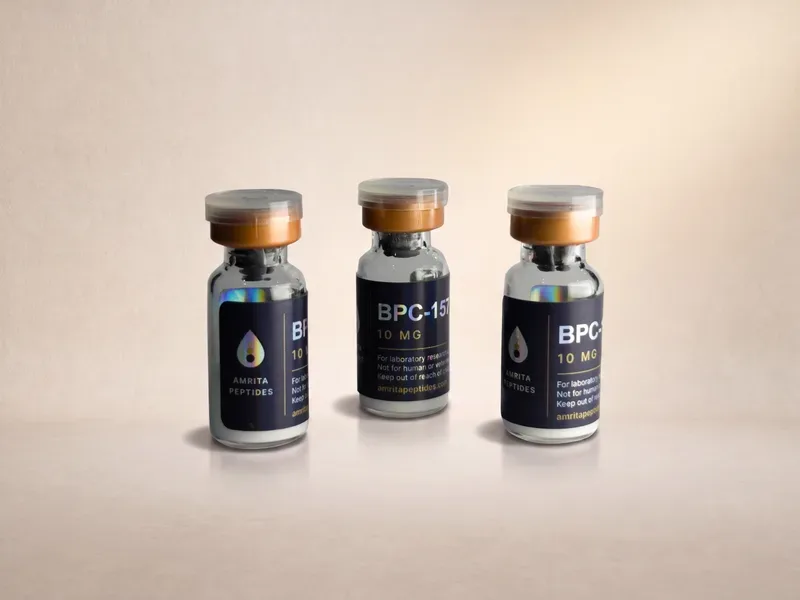
BPC-157
Molecular formula: C62H98N16O22
Probably the best-known recovery peptide — a 15-amino-acid fragment of a stomach protein, researched for how tendons, ligaments and the gut heal.
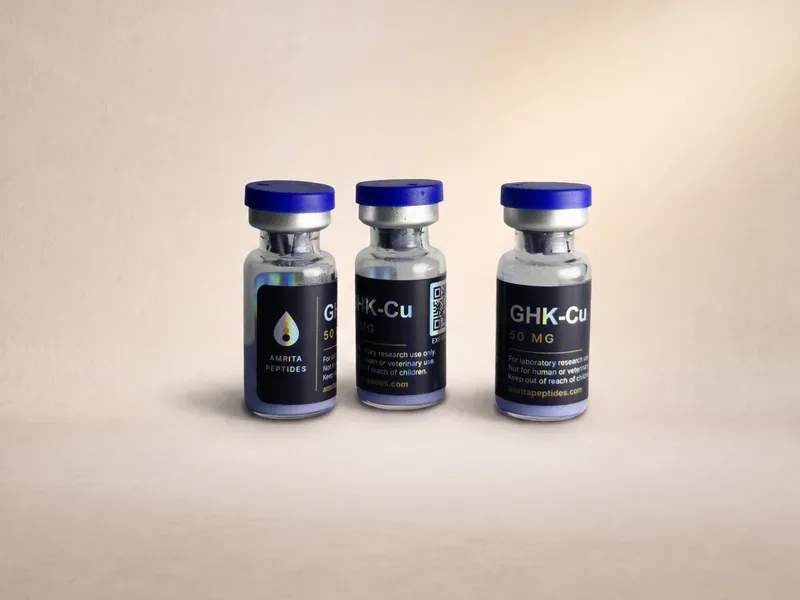
GHK-Cu
Molecular formula: C14H23CuN6O4+
A copper peptide found naturally in the body, best known from skin research, where it is looked at for collagen and tissue remodelling.
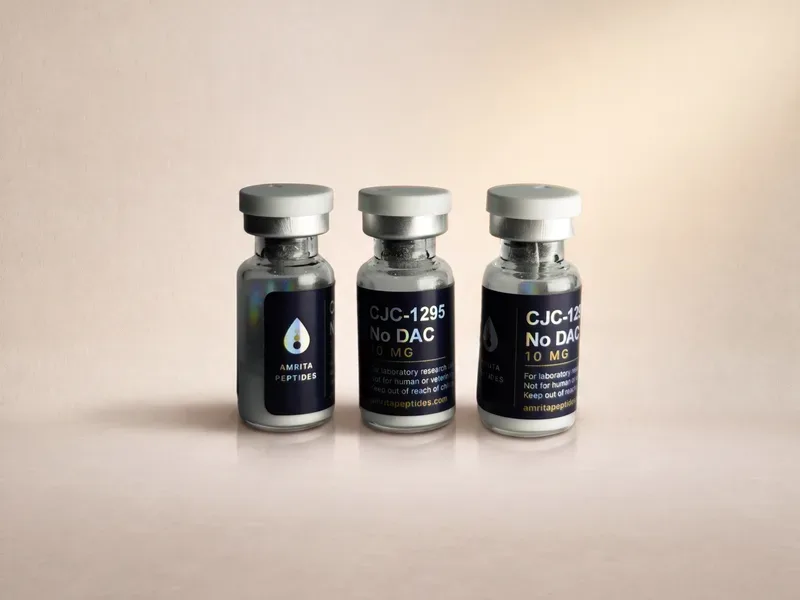
CJC-1295 No DAC
Molecular formula: C152H252N44O42
A short-acting version of the body's own growth-hormone-releasing signal, and the usual research partner for Ipamorelin.
฿1,600
Added to cart. Research use only.