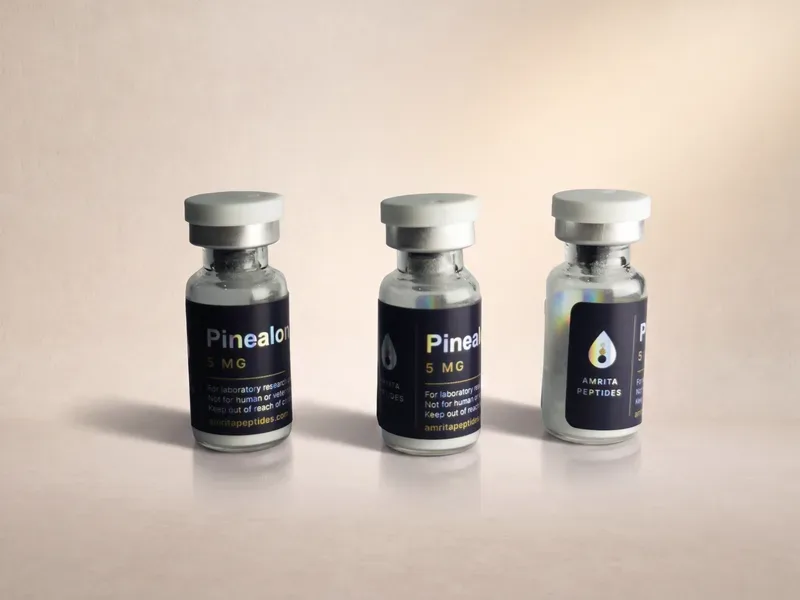
Pinealon
Molecular formula: C15H26N6O8
A tiny three-amino-acid peptide from Russian "bioregulator" research, looked at for how nerve cells cope with oxidative stress and ageing.
From ฿500 View
Neuropeptide research studies how short chains of amino acids relate to signalling in the nervous system. Amino acids are the building blocks of peptides. This category brings together materials found in that research, without suggesting that they improve memory, mood or attention. Use the listings to compare product identities, then read the notes below on understanding the evidence. Research use only; not for human or veterinary use.
Molecular formula: C15H26N6O8
A tiny three-amino-acid peptide from Russian "bioregulator" research, looked at for how nerve cells cope with oxidative stress and ageing.
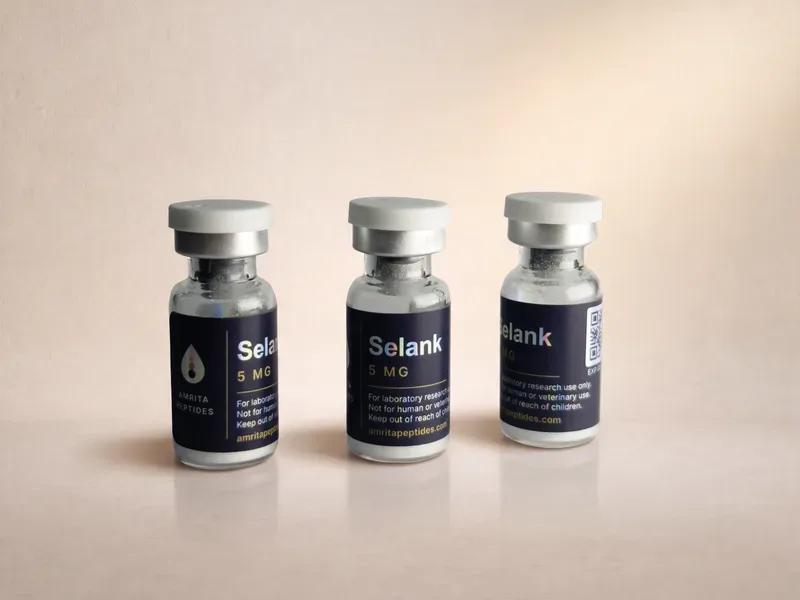
Molecular formula: C33H57N11O9
Often mentioned in the same breath as Semax — a Russian peptide based on tuftsin, researched in stress and anxiety models.
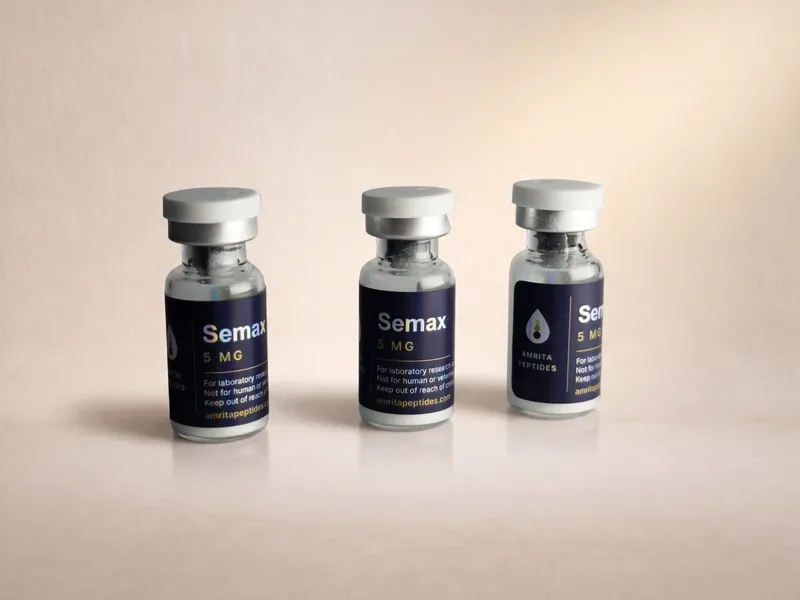
Molecular formula: C37H51N9O10S
A Russian-developed peptide built on a fragment of ACTH, researched in memory, learning and brain-protection studies.
Neurobiology includes many different questions. One experiment may observe isolated cells, another may record an animal’s behaviour, and another may measure a chemical signal. Placing materials in the same category helps organise those topics; it does not show that the materials do the same thing.
Semax, Selank and Pinealon should therefore be read as separate names with separate evidence. A result reported for one cannot fill a gap in research on another. Nor does being discussed in a nervous-system study make a compound a medicine or establish a useful effect in people.
Start with three questions: what material did the researchers use, what did they study, and what did they measure? The abstract can help you decide whether the paper is relevant, but the methods are where the details usually live. Look for a clear compound identity and an explanation of the comparison group.
Pay attention to the meaning of the result. A change in a cell measurement is not a measurement of memory. An animal task is not a test of a person’s everyday concentration. When an article moves between these ideas without explaining the gap, its conclusion may be broader than its evidence.
A long reference list can contain several reports from the same research team, repeat discussions of an earlier experiment, or studies asking very different questions. It is more useful to know whether independent teams examined the same question than to count titles alone.
Translation can add another source of confusion. If the full paper is not available in a language you can assess, be clear about whether you are relying on an abstract or someone else’s summary. Missing methods should remain an uncertainty, not become an assumption that the study matches a product listing.
Compare the exact name, stated vial amount and pack size on each product page. Those details support ordering and recordkeeping; they are not a guide to selecting a peptide for personal cognitive goals. A research-use label also does not prove batch identity or purity.
The Semax and Selank comparison below provides a more focused reading path, while the laboratory safety guide covers clean handling and records. Keep those tasks separate: a paper helps explain a research question, and a handling procedure governs work at the bench. Neither replaces material-specific evidence or the laboratory’s approval of an experiment.
Background reading for this research area, from our published guides and blog.
Compare Semax and Selank by sequence, research origin, proposed mechanisms, and evidence limitations.
GuideWe read about 780 first-hand Semax and Selank stories from Reddit and forums. Here is what people say they felt, the doses and cycles they describe, and what went wrong.
For laboratory research use only. Not for human or veterinary use.