Semax in Thailand
From ฿700 · 5 mg
A Russian-developed peptide built on a fragment of ACTH, researched in memory, learning and brain-protection studies.
Choose size
Added to cart. Choose another size or open your cart when ready.
For laboratory research use only. Not for human or veterinary use.
Delivery & ordering
- Ships from
- Bangkok, Thailand
- Coverage
- Thailand only — every province
- Dispatch
- Same-day dispatch
- Delivery time
- 2–3 days nationwide
- How to order
- Cart message by WhatsApp, LINE or Telegram
- Payment
- PromptPay, Thai bank transfer, Crypto
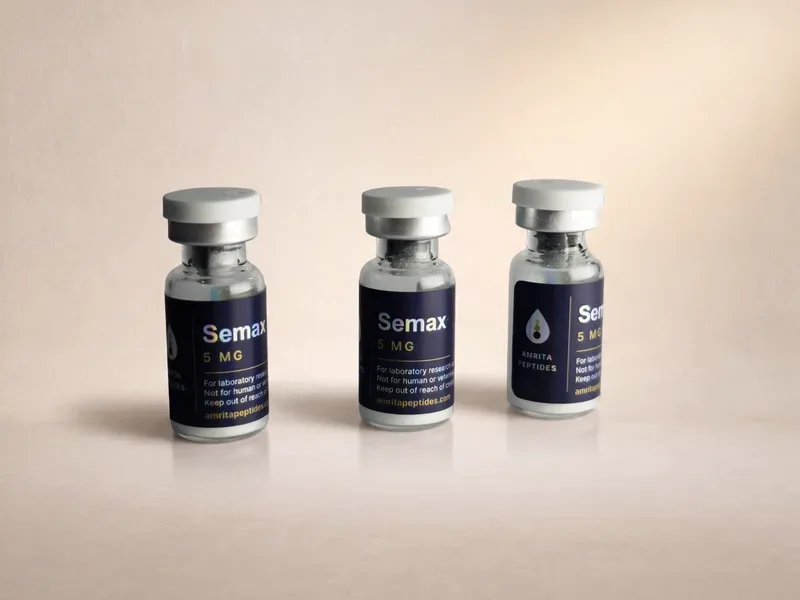
Semax research peptide in Thailand
Semax is a synthetic heptapeptide (Met-Glu-His-Phe-Pro-Gly-Pro) built from the ACTH(4-7) fragment and capped with a Pro-Gly-Pro tail, studied in neuroprotection, BDNF and NGF signalling, and cerebral ischaemia models. It is developed in Russia and appears throughout the literature under the name "ACTH(4-10) analogue", and it is commonly examined alongside Selank in neuropeptide research.
This listing is for laboratory research use only. Semax is not a medicine, nootropic, supplement, or cognitive-enhancement product.
Quick facts
- Product
- Semax (ACTH(4-7)-Pro-Gly-Pro heptapeptide)
- CAS
- 80714-61-0
- Molecular weight
- ~813.9 g/mol
- Form
- Lyophilised powder, sealed vial
- Intended use
- laboratory research use only
Explore the sequence and chemical composition.
- Met
- Glu
- His
- Phe
- Pro
- Gly
- Pro
Hover or focus a residue to see its full name.
One-letter sequence: MEHFPGP.
How Semax works
Native ACTH carries both a neurotrophic signalling region and the adrenal-stimulating region that drives cortisol release. Semax keeps only the short ACTH(4-7) core, which removes the corticotropic activity, and adds a C-terminal Pro-Gly-Pro tripeptide that slows enzymatic degradation and extends the window over which the fragment stays intact. The parent peptide itself clears from plasma within minutes; much of the activity described in the literature is attributed to this stabilised fragment and its metabolites reaching central tissue.
Mechanistically, the published work centres on neurotrophic factor expression. Studies report that Semax binds specifically to membranes in the rat basal forebrain and raises BDNF protein levels, and that it regulates both BDNF and its receptor trkB in the hippocampus. Separate rodent work describes modulation of dopaminergic and serotonergic transmission, and genome-wide analyses in focal-ischaemia models report broad shifts in immune- and vascular-related gene expression. These are findings of specific published studies, not outcomes attributed to this product.
Key research findings
- A single intranasal application of Semax increased BDNF protein and trkB expression in the rat hippocampus, with the authors linking the change to performance in avoidance learning tasks (Dolotov, Brain Research, 2006).
- In a rat model of cerebral ischaemia-reperfusion, brain protein expression profiling reported suppression of inflammatory and cell-death markers alongside activation of recovery-associated proteins (Sudarkina, Int J Mol Sci, 2021).
- Genome-wide transcriptional analysis in rat brain focal ischaemia found the immune response to be the process most markedly affected, with additional changes in vascular-system gene expression (Medvedeva, BMC Genomics, 2014).
Research applications
- Neurotrophic signalling studies (BDNF, NGF, trkB expression)
- Cerebral ischaemia and reperfusion-injury models
- Neuroprotection and neuronal survival assays under hypoxic conditions
- Dopaminergic and serotonergic pathway investigations in rodents
- Learning, memory, and avoidance-task behavioural models
- Comparative neuropeptide work alongside Selank
A note on the evidence base
Semax deserves an honest caveat that catalogue copy usually skips. It has been registered and used clinically in Russia since the 1990s, and a substantial body of clinical reporting exists — but that literature is overwhelmingly Russian-language, published in domestic journals, and has not been replicated in independent Western randomised trials. The preclinical rodent work cited above is peer-reviewed and internationally indexed; the human clinical picture is not held to the same external standard. Researchers should treat the clinical claims circulating online as unreplicated, and read the primary Russian sources directly where they matter: PubMed listings for Semax in ischaemic stroke.
Study parameters reported in literature
The BDNF and trkB work cited above administered the peptide intranasally rather than by injection. This is a summary of parameters as reported in research references, not recommendations for use. To model concentrations for a defined protocol, use the Semax peptide calculator.
Reconstitution & storage
- Solvent
- Bacteriostatic water — standard for lyophilised research peptides
- Mixing
- Add solvent down the vial wall and swirl gently until dissolved; do not shake
- Storage
- Refrigerated (2–8 °C) after reconstitution, in common laboratory practice
- Use within
- A few weeks once reconstituted
- Freeze / light
- Keep lyophilised powder frozen or cold, sealed, and protected from light
Reconstitute with bacteriostatic water using sterile technique. Short peptides of this class are handled cold and kept out of direct light; in Thailand's heat and humidity, minimise ambient-temperature exposure during storage and courier handling.
Selected research
- Semax, an analog of ACTH(4-10) with cognitive effects, regulates BDNF and trkB expression in the rat hippocampus — Brain Research, 2006
- Semax, an analogue of adrenocorticotropin (4-10), binds specifically and increases levels of brain-derived neurotrophic factor protein in rat basal forebrain — Journal of Neurochemistry, 2006
- Brain Protein Expression Profile Confirms the Protective Effect of the ACTH(4-7)PGP Peptide (Semax) in a Rat Model of Cerebral Ischemia-Reperfusion — Int J Mol Sci, 2021
- Semax, an ACTH(4-10) analogue with nootropic properties, activates dopaminergic and serotoninergic brain systems in rodents — Neurochemical Research, 2005
- Browse all indexed Semax literature on PubMed
Related compounds
- Selank — a synthetic tuftsin-analogue heptapeptide, also developed in Russia and also reported to affect BDNF expression; the two are frequently studied side by side because they share a development lineage but are investigated through different pathways.
- Pinealon — a short peptide bioregulator studied in neuroprotection and neuronal oxidative-stress models, a separate mechanistic approach to overlapping research questions.
- Bacteriostatic water — the standard diluent used to reconstitute lyophilised research peptides.
See also: Semax vs Selank cognitive research, what Semax and Selank users report online, and more neuropeptide signalling compounds.
Buying Semax in Thailand
Semax is stocked in Bangkok as 5 mg vials, sold singly or in packs of 5 or 10. Prices are in Thai baht and include tracked delivery anywhere in Thailand. 10 × 5 mg vials work out at ฿550 a vial, 21% less than a single 5 mg vial.
| Option | Price | Per vial |
|---|---|---|
| 1 × 5 mg vial | ฿700 | ฿700 |
| 5 × 5 mg vials | ฿3,000 | ฿600 |
| 10 × 5 mg vials | ฿5,500 | ฿550 |
Dispatch and delivery
Same-day dispatch from Bangkok once your order is confirmed, by tracked courier. Typical timing:
- Bangkok
- same-day or next-day dispatch after confirmation
- Pattaya and the Eastern Seaboard
- tracked overnight where courier timing allows
- Phuket and the South
- usually 1–2 days after dispatch
- Chiang Mai and the North
- usually 1–2 days after dispatch
- Hua Hin, Koh Samui, and other provinces
- tracked nationwide courier delivery
How to order
Add a size to the cart and send the order message it writes on WhatsApp, LINE or Telegram. We reply with stock, the total and payment details (PromptPay, Thai bank transfer or Crypto). Nothing is charged on this website.
Semax FAQ
What is Semax, chemically?
Semax is a synthetic heptapeptide with the sequence Met-Glu-His-Phe-Pro-Gly-Pro. The Met-Glu-His-Phe portion is the ACTH(4-7) fragment of adrenocorticotropic hormone; the Pro-Gly-Pro tail is added to slow enzymatic breakdown. Because the rest of the ACTH molecule is absent, the corticotropic (cortisol-releasing) activity of the parent hormone is not retained. Much of the literature refers to it as an ACTH(4-10) analogue.
What evidence level supports Semax?
Two very different tiers. The preclinical evidence — rodent BDNF/trkB expression work and cerebral ischaemia models — is peer-reviewed and internationally indexed, and it is what the citations on this page point to. The clinical evidence is almost entirely Russian-language and has not been independently replicated in Western randomised trials. There are no human-outcome claims associated with this product.
How does Semax relate to Selank?
Both are synthetic heptapeptides from the same Russian neuropeptide research programme, and both appear in the literature in connection with BDNF expression. They are structurally unrelated — Selank derives from tuftsin, Semax from ACTH — and are investigated in different model contexts. See Selank for its own research summary.
What do the study parameters on this page represent?
They record the intranasal route, amounts, and schedules used in the cited BDNF and trkB research. They describe those study designs rather than recommending use of the listed material, which is not intended for humans or animals.
How should Semax be stored, especially in Thailand?
Keep the lyophilised powder frozen or cold, sealed, and out of direct light. Once reconstituted with bacteriostatic water, it is typically refrigerated and used within a few weeks. In Thailand's heat, minimise time at ambient temperature during handling and delivery.
Is Semax legal to buy for research in Thailand?
It is offered strictly for laboratory research use only, not for human or veterinary use. An RUO label does not determine legal status; researchers should check current Thai FDA information for the specific product and activity. Tracked delivery is available nationwide after order confirmation.
Are the product images the exact vial shipped?
No. Images are illustrative. Confirm the current label, sequence, and packaging details when they matter to a protocol.
Compliance note
Semax is supplied for laboratory research use only. It is not for human or veterinary use, and it is not intended to diagnose, treat, cure, or prevent any disease. All findings referenced above are the results of specific published studies, not claims about this product.
Helpful resources
Related products
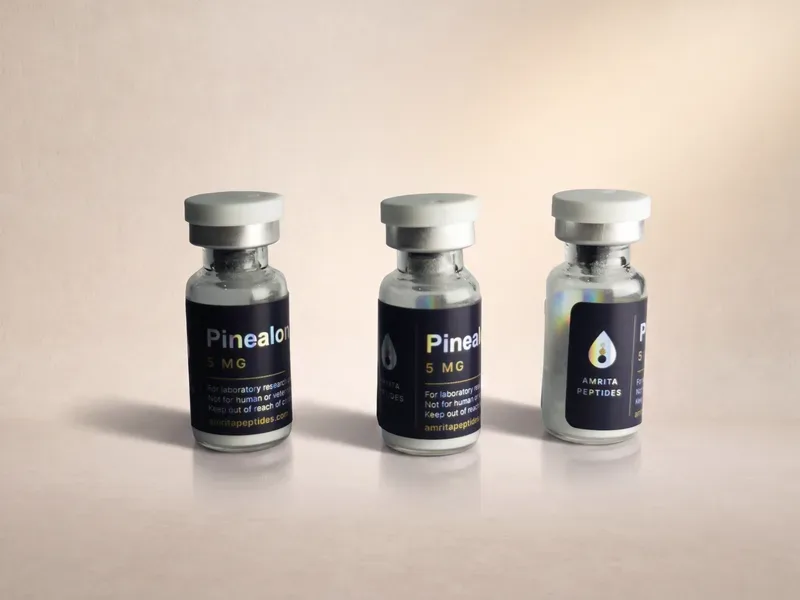
Pinealon
Molecular formula: C15H26N6O8
A tiny three-amino-acid peptide from Russian "bioregulator" research, looked at for how nerve cells cope with oxidative stress and ageing.
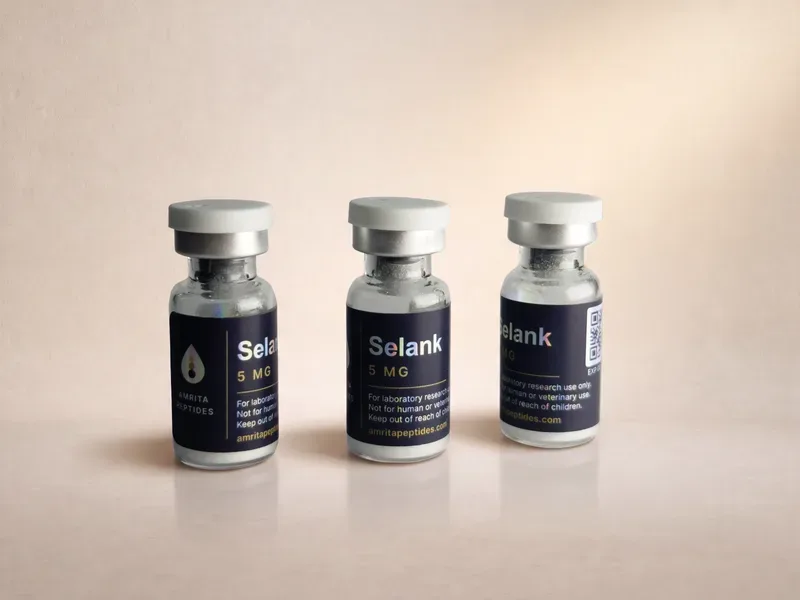
Selank
Molecular formula: C33H57N11O9
Often mentioned in the same breath as Semax — a Russian peptide based on tuftsin, researched in stress and anxiety models.
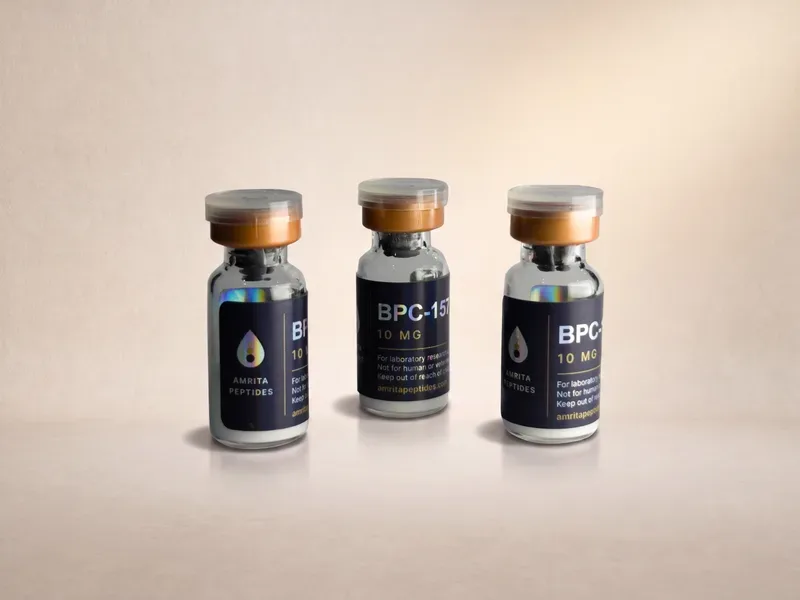
BPC-157
Molecular formula: C62H98N16O22
Probably the best-known recovery peptide — a 15-amino-acid fragment of a stomach protein, researched for how tendons, ligaments and the gut heal.
฿700
Added to cart. Research use only.