Pinealon in Thailand
From ฿500 · 5 mg
A tiny three-amino-acid peptide from Russian "bioregulator" research, looked at for how nerve cells cope with oxidative stress and ageing.
Choose size
Added to cart. Choose another size or open your cart when ready.
For laboratory research use only. Not for human or veterinary use.
Delivery & ordering
- Ships from
- Bangkok, Thailand
- Coverage
- Thailand only — every province
- Dispatch
- Same-day dispatch
- Delivery time
- 2–3 days nationwide
- How to order
- Cart message by WhatsApp, LINE or Telegram
- Payment
- PromptPay, Thai bank transfer, Crypto
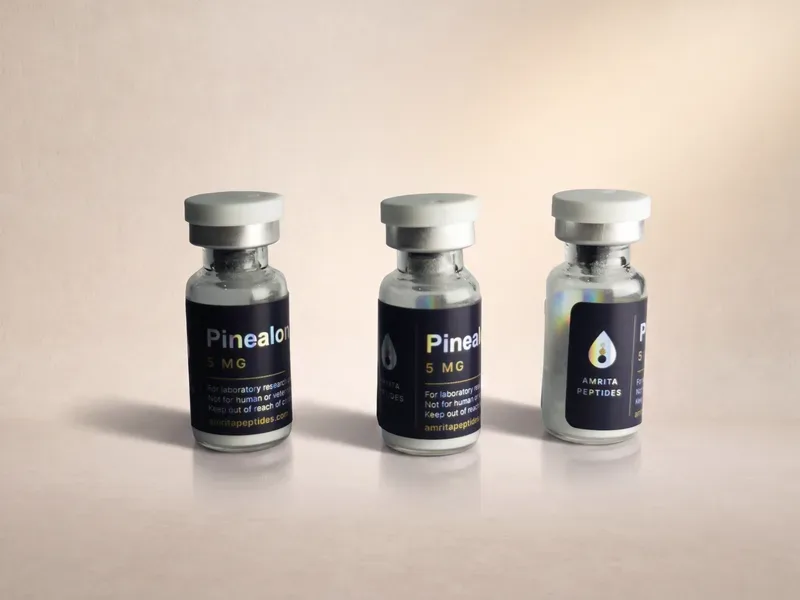
Pinealon research peptide in Thailand
Pinealon is a synthetic tripeptide (Glu-Asp-Arg, or EDR) from the Khavinson "short peptide bioregulator" series, studied in cell and animal models of oxidative stress, hypoxia tolerance, and neuronal ageing. Its defining property in the literature is size: at three residues it is small enough to enter cells and reach the nucleus, which is the basis for the gene-regulation hypothesis attached to it.
This listing is for laboratory research use only. Be aware that the evidence base is thin and comes almost entirely from a single Russian research group — see the honest assessment below before designing around it.
Quick facts
- Product
- Pinealon (EDR tripeptide)
- CAS
- 175175-23-2
- Molecular weight
- ~418.4 g/mol
- Form
- Lyophilised powder, sealed vial
- Intended use
- laboratory research use only
Explore the sequence and chemical composition.
- Glu
- Asp
- Arg
Hover or focus a residue to see its full name.
The free tripeptide is also written H-Glu-Asp-Arg-OH.
How Pinealon works
The proposed mechanism rests on the peptide's small size. Fluorescence-labelled EDR has been shown to cross both the cell membrane and the nuclear envelope in HeLa cells, appearing in cytoplasm, nucleus, and nucleolus, and to interact with deoxyribooligonucleotides and DNA in vitro (Fedoreyeva, Biochemistry (Mosc), 2011). From this, the originating group hypothesises that EDR acts as a transcriptional regulator, binding chromatin and shifting expression of genes involved in antioxidant defence and neuronal survival.
That hypothesis is not the same as a demonstrated pathway. A review from the same group proposes EDR influences MAPK/ERK signalling and the synthesis of caspase-3, p53, SOD2, GPX1, and the transcription factors PPARA and PPARG (Khavinson, Molecules, 2020) — but this is a proposed mechanism assembled largely from the authors' own prior work, not an independently replicated model. Treat the nuclear-penetration finding as the well-supported part and the downstream gene-regulation story as an open hypothesis.
Key research findings
- In cerebellar granule cells, neutrophils, and PC12 cells under oxidative stress, pinealon produced dose-dependent restriction of reactive oxygen species accumulation and reduced necrotic cell death; the authors noted the antioxidant effect saturated at lower concentrations while higher concentrations continued to alter the cell cycle (Khavinson, Rejuvenation Res, 2011).
- In a hypobaric hypoxia model comparing vilon, epitalon, vesugen, and pinealon, pinealon showed the strongest protective effect, which the author attributed to stimulation of endogenous antioxidant enzymes and possible limitation of NMDA excitotoxicity rather than direct radical scavenging (Kozina, Adv Gerontol, 2008).
- In cortical neurons induced from aged human fibroblasts, EDR increased dendritic arborisation and reduced oxidative DNA damage, but showed no effect on mitochondrial dysfunction or p16 elevation — the authors described the protection as partial (Kraskovskaya, Int J Mol Sci, 2024).
Research applications
- Oxidative stress and reactive oxygen species assays in neuronal cell lines
- Hypoxia and hypoxia-tolerance animal models
- Cellular senescence and neuronal ageing models
- Cell-penetration and peptide-DNA interaction studies
- Comparative screening alongside other short peptide bioregulators
- Antioxidant enzyme expression profiling (SOD, GPX)
Study parameters reported in literature
Reported parameters differ substantially between the in vitro concentration work and the in vivo rodent studies, and no consensus reference range exists in the peer-reviewed literature — figures quoted on vendor pages are generally not traceable to a published protocol. This is a literature summary, not recommendations for use. To model concentrations for a defined protocol, use the Pinealon peptide calculator.
Reconstitution & storage
- Solvent
- Bacteriostatic water — standard for lyophilised research peptides
- Mixing
- Add solvent down the vial wall and swirl gently until dissolved; do not shake
- Storage
- Refrigerated (2–8 °C) after reconstitution, in common laboratory practice
- Use within
- A few weeks once reconstituted
- Freeze / light
- Keep lyophilised powder frozen or cold, sealed, and protected from light
These are common laboratory handling conventions for lyophilised peptides, not instructions. In Thailand's heat and humidity, the practical risk is cumulative time at ambient temperature — during courier transit, during customs handling, and on the bench — so minimise each of those windows and keep vials sealed and out of direct light.
Selected research
- Penetration of short fluorescence-labeled peptides into the nucleus in HeLa cells and in vitro specific interaction of the peptides with deoxyribooligonucleotides and DNA — Biochemistry (Moscow), 2011
- Pinealon increases cell viability by suppression of free radical levels and activating proliferative processes — Rejuvenation Research, 2011
- Short Peptides Protect Fibroblast-Derived Induced Neurons from Age-Related Changes — Int J Mol Sci, 2024
- EDR Peptide: Possible Mechanism of Gene Expression and Protein Synthesis Regulation Involved in the Pathogenesis of Alzheimer's Disease — Molecules, 2020 (review, same group)
- Browse all indexed Pinealon literature on PubMed
The total indexed literature is small, and a large share of it is in Russian-language gerontology journals with limited independent replication. The PubMed search link above is the honest way to gauge the field's size for yourself.
Related compounds
- Semax — an ACTH(4–7) analogue studied for BDNF and NGF expression; a far better-characterised neuro-research peptide, and a useful positive comparator when EDR results are ambiguous.
- Selank — a tuftsin analogue studied in anxiety and neuroimmune models; frequently examined alongside Semax in the same Russian research tradition.
- SS-31 — a mitochondria-targeted peptide studied for cardiolipin binding and oxidative stress; relevant where the research question is mitochondrial rather than nuclear.
- NAD+ — studied in cellular energy metabolism and ageing models, a common companion in senescence research.
See also: mitochondrial research compounds and more neuropeptide signalling compounds.
Pinealon FAQ
How strong is the evidence for Pinealon?
Weak, and we would rather say so plainly. The published work is dominated by Vladimir Khavinson's group in St Petersburg and their collaborators; independent Western replication is close to absent. The most robust single finding is that the labelled tripeptide reaches the nucleus in cultured cells. The broader claims about gene regulation, melatonin synthesis, and anti-ageing effects rest on a small, largely self-referential literature. Anyone designing a study around Pinealon should read the primary papers first rather than relying on vendor summaries.
Is Pinealon the same as Epithalon?
No. Epithalon (Epitalon) is a tetrapeptide, Ala-Glu-Asp-Gly. Pinealon is the tripeptide Glu-Asp-Arg. They come from the same bioregulator programme and are often discussed together, but they are chemically distinct and we do not stock Epithalon.
What do the study parameters on this page represent?
They record the divergent concentrations and amounts reported across in-vitro and rodent studies, including where vendor figures are not traceable to a published protocol. They describe the evidence base rather than recommending use of the listed material, which is not intended for humans or animals.
How should Pinealon be stored in Thailand?
Keep the lyophilised powder frozen or cold, sealed, and out of direct light. Once reconstituted with bacteriostatic water it is typically refrigerated and used within a few weeks. Thailand's ambient heat makes transit and handling time the main variable to control.
Is Pinealon legal to buy for research in Thailand?
It is offered strictly for laboratory research use only, not for human or veterinary use. An RUO label does not determine legal status; researchers should check current Thai FDA information for the specific product and activity. Tracked delivery is available nationwide after order confirmation.
Where is Pinealon sourced, and what can I confirm before ordering?
It is sourced from established suppliers, stocked in Bangkok, and dispatched within Thailand. Before payment, the selected option, current stock, price, dispatch timing, and available label or packaging details can be confirmed manually.
Why do other vendor pages cite studies this page does not?
Because we check them. Several PMIDs cited on competing Pinealon pages resolve to entirely unrelated papers — a Caco-2 permeability study, a paper on evoked potentials in Atlantic salmon, a genetics assay method. Every citation on this page was verified against PubMed before publication, which is also why there are fewer of them.
Compliance note
Pinealon is supplied for laboratory research use only. It is not for human or veterinary use, and it is not intended to diagnose, treat, cure, or prevent any disease. All findings referenced above are the results of specific published studies, described as such, and are not claims about this product.
Helpful resources
Related products
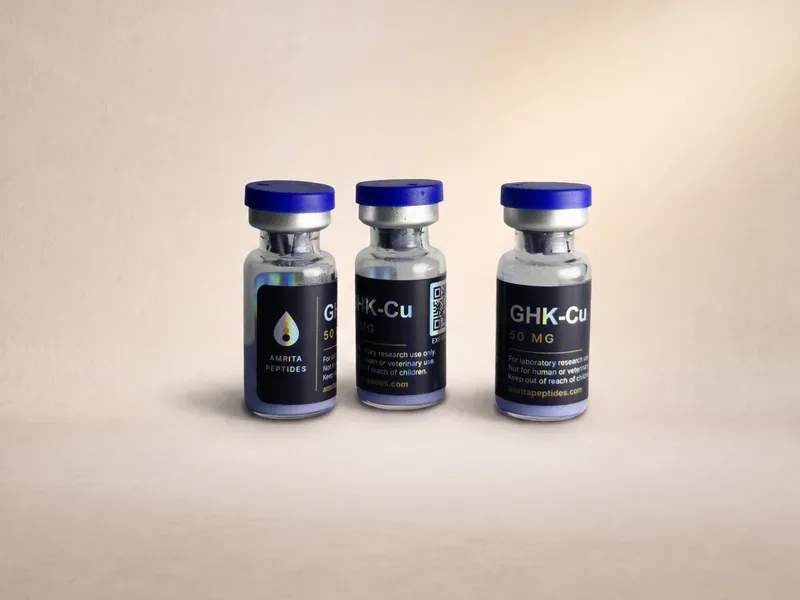
GHK-Cu
Molecular formula: C14H23CuN6O4+
A copper peptide found naturally in the body, best known from skin research, where it is looked at for collagen and tissue remodelling.
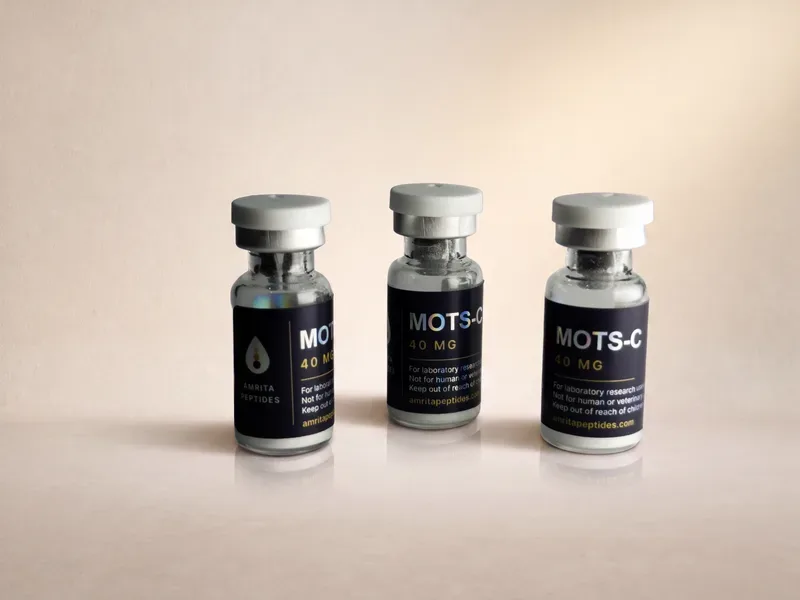
MOTS-C
Molecular formula: C101H152N28O22S2
A peptide made by the mitochondria rather than the main genome, researched for its links to exercise, insulin sensitivity and ageing.
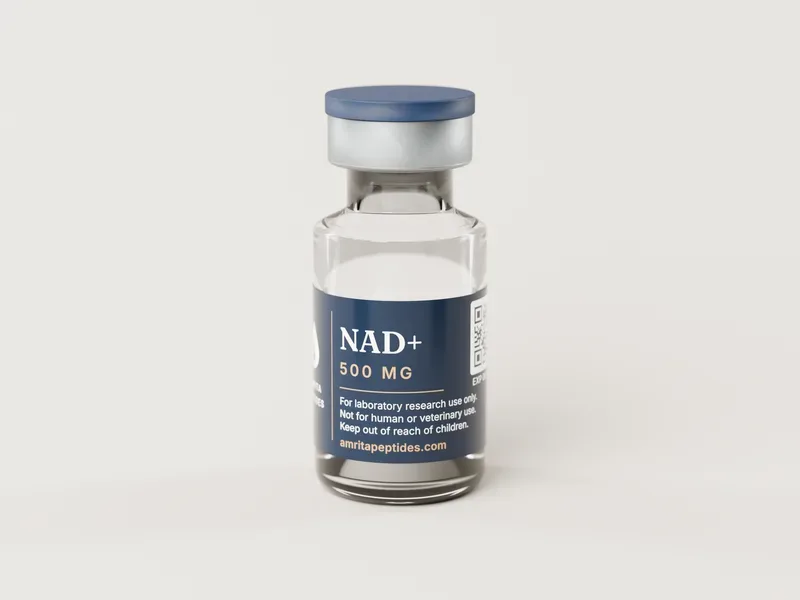
NAD+
Molecular formula: C21H27N7O14P2
Not a peptide, but the coenzyme every cell uses to turn food into energy — levels fall with age, which puts it at the centre of longevity research.
฿500
Added to cart. Research use only.