SS-31 in Thailand
From ฿5,200 · 50 mg
A four-amino-acid peptide that goes straight to the mitochondria's inner membrane, researched in heart, kidney and age-related energy decline.
Choose size
Added to cart. Choose another size or open your cart when ready.
For laboratory research use only. Not for human or veterinary use.
Delivery & ordering
- Ships from
- Bangkok, Thailand
- Coverage
- Thailand only — every province
- Dispatch
- Same-day dispatch
- Delivery time
- 2–3 days nationwide
- How to order
- Cart message by WhatsApp, LINE or Telegram
- Payment
- PromptPay, Thai bank transfer, Crypto
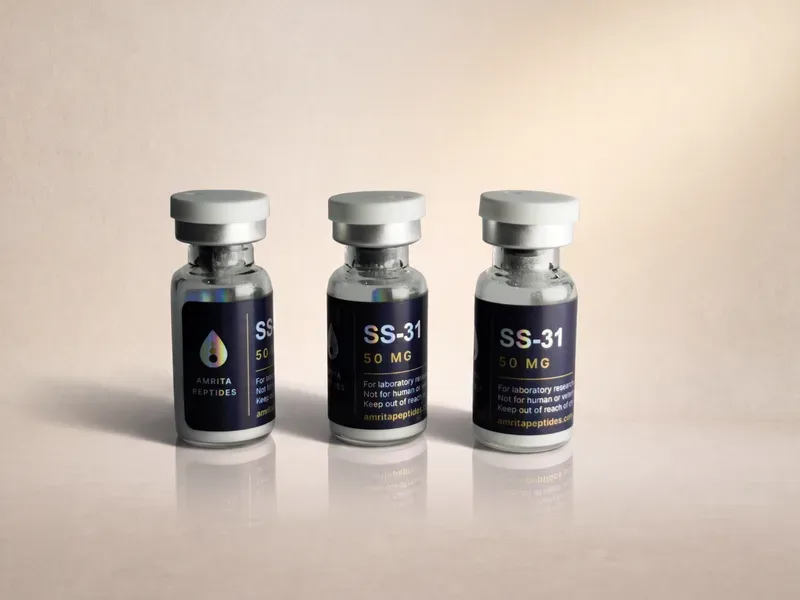
SS-31 research peptide in Thailand
SS-31 is a synthetic, mitochondria-targeting tetrapeptide that binds cardiolipin on the inner mitochondrial membrane, studied in models of mitochondrial dysfunction, cardiac and renal ischaemia-reperfusion injury, and age-related bioenergetic decline. It is indexed in the clinical literature under the name elamipretide (also MTP-131 and Bendavia), the form in which it has been taken through human trials by Stealth BioTherapeutics.
This listing is for laboratory research use only. It is not a medicine, supplement, anti-ageing product, or energy product.
Quick facts
- Product
- SS-31 (elamipretide / MTP-131 / Bendavia)
- CAS
- 736992-21-5
- Molecular weight
- ~639.8 g/mol
- Form
- Lyophilised powder, sealed vial
- Key researcher
- Hazel Szeto (Szeto-Schiller peptide series)
- Intended use
- laboratory research use only
Explore the sequence and chemical composition.
- D-Arg
- Dmt
- Lys
- Phe
- NH2
Hover or focus a residue to see its full name.
Dmt is 2′,6′-dimethyltyrosine; the tetrapeptide has a C-terminal amide.
How SS-31 works
Most peptides act on a cell-surface receptor. SS-31 does not. It is a small alternating aromatic-cationic tetrapeptide that crosses membranes without a transporter and concentrates in the inner mitochondrial membrane, where it binds cardiolipin — the signature anionic phospholipid that gives cristae their curvature and holds the electron-transport chain complexes in place. Because cardiolipin is found almost nowhere else in the cell, the peptide's distribution is effectively self-targeting.
Cardiolipin is also what goes wrong first in a stressed mitochondrion. When it oxidises, cytochrome c binds it and switches from an electron carrier into a peroxidase, cristae flatten, and ATP output collapses. Published work describes SS-31 binding cardiolipin, inhibiting that cytochrome c peroxidase activity, and preserving cristae architecture under ischaemic stress (Birk, J Am Soc Nephrol, 2013). This structural-protection mechanism, rather than a receptor-signalling one, is why researchers use it as a reference tool in cardiolipin and supercomplex studies.
Key research findings
- SS-31 was shown to bind cardiolipin with high affinity, inhibit cytochrome c peroxidase activity, preserve cristae during ischaemia, and enable rapid ATP recovery on reperfusion in renal ischaemia-reperfusion models (Birk, J Am Soc Nephrol, 2013).
- In aged mouse muscle mitochondria, elamipretide increased ADP sensitivity by raising ADP uptake through the adenine nucleotide translocator, alongside reductions in oxidative modification (Pharaoh, GeroScience, 2023).
- MMPOWER-3, a randomised placebo-controlled trial of elamipretide in adults with primary mitochondrial myopathy, did not demonstrate significant benefit on its primary endpoint in a genotypically diverse population; a later post hoc analysis reported differing responses between genotype subgroups (Karaa, Neurology, 2023; Karaa, Orphanet J Rare Dis, 2024).
Research applications
- Cardiolipin binding, cristae ultrastructure, and supercomplex-stability studies
- Cardiac and renal ischaemia-reperfusion injury models
- Mitochondrial ageing, oxidative post-translational modification, and sarcopenia research
- Primary mitochondrial myopathy and Barth syndrome disease models
- Cellular bioenergetics assays — ATP output, respiration, and ADP sensitivity
- Structure-activity comparison across the Szeto-Schiller tetrapeptide series
Study parameters reported in literature
The registered elamipretide trials used 40 mg/day subcutaneously at the upper end of that span. These are parameters as reported in published human and animal protocols, not recommendations for use. To model concentrations for a defined laboratory protocol, use the SS-31 peptide calculator.
Reconstitution & storage
- Solvent
- Bacteriostatic water — standard for lyophilised research peptides
- Mixing
- Add solvent down the vial wall and swirl gently until dissolved; do not shake
- Storage
- Refrigerated (2-8 °C) after reconstitution, in common laboratory practice
- Use within
- A few weeks once reconstituted
- Freeze / light
- Keep lyophilised powder frozen or cold, sealed, and protected from light
This reflects common laboratory handling practice for lyophilised peptides. In Thailand's heat and humidity, minimise time at ambient temperature during storage and courier handling, and keep vials sealed and out of direct sunlight.
Selected research
- The mitochondrial-targeted compound SS-31 re-energizes ischemic mitochondria by interacting with cardiolipin — J Am Soc Nephrol, 2013
- The mitochondrially targeted peptide elamipretide (SS-31) improves ADP sensitivity in aged mitochondria by increasing uptake through the adenine nucleotide translocator (ANT) — GeroScience, 2023
- Elamipretide (SS-31) treatment attenuates age-associated post-translational modifications of heart proteins — GeroScience, 2021
- Efficacy and Safety of Elamipretide in Individuals With Primary Mitochondrial Myopathy: The MMPOWER-3 Randomized Clinical Trial — Neurology, 2023
- Structure-activity relationships of mitochondria-targeted tetrapeptide pharmacological compounds — eLife, 2022
- Browse all indexed elamipretide / SS-31 literature on PubMed
Related compounds
- MOTS-c — a mitochondrial-derived peptide encoded in mitochondrial DNA and studied via AMPK activation. Where SS-31 is studied for protecting inner-membrane structure, MOTS-c is studied as a mitochondrial signalling molecule, so the two appear in complementary mitochondrial research designs.
- NAD+ — the central redox cofactor the electron-transport chain depends on. It is frequently studied alongside SS-31 in mitochondrial-ageing work, since the two address bioenergetic decline from structural and cofactor angles respectively.
See also: mitochondrial research compounds and more mitochondrial and cellular research compounds.
SS-31 FAQ
Is SS-31 the same as elamipretide?
Yes — SS-31 is the original Szeto-Schiller research designation for the tetrapeptide developed clinically as elamipretide, and also referenced as MTP-131 and Bendavia. Nearly all human trial literature is indexed under "elamipretide", while preclinical and mechanistic papers more often use "SS-31". If a protocol requires exact identity, confirm the sequence and label wording on the current batch.
What evidence level supports SS-31?
Unusually broad for a research peptide: extensive preclinical mechanistic work on cardiolipin binding and mitochondrial bioenergetics, plus completed randomised human trials as elamipretide. Those human trials are cited above and include a negative primary endpoint in MMPOWER-3 — we cite results as published, not selectively.
What do the study parameters on this page represent?
They record the amounts, subcutaneous route, and schedules used in the cited human and animal protocols, including registered elamipretide trials. They describe published study designs rather than recommending use of the listed material, which is not intended for humans or animals.
How should SS-31 be stored, especially in Thailand?
Keep the lyophilised powder frozen or cold, sealed, and out of direct light. Once reconstituted with bacteriostatic water, it is typically refrigerated and used within a few weeks. Thailand's ambient heat and humidity make it worth minimising time out of cold storage during handling and delivery.
Is SS-31 legal to buy for research in Thailand?
It is offered strictly for laboratory research use only, not for human or veterinary use. An RUO label does not determine legal status; researchers should check current Thai FDA information for the specific product and activity. Tracked delivery is available nationwide after order confirmation.
Where is SS-31 sourced, and are the images the exact vial?
It is sourced from reliable suppliers in China, stocked in Bangkok, and dispatched within Thailand. Product images are illustrative representations — confirm the current label, SKU, and packaging when those details matter to a protocol.
Can SS-31 be ordered with bacteriostatic water?
Yes, both can be included in one order when a qualified laboratory protocol requires them. See bacteriostatic water. This website does not determine diluent suitability or provide preparation instructions.
Compliance note
SS-31 is supplied for laboratory research use only. It is not for human or veterinary use, and it is not intended to diagnose, treat, cure, or prevent any disease. All findings referenced above are the results of specific published studies, not claims about this product.
Helpful resources
Related products
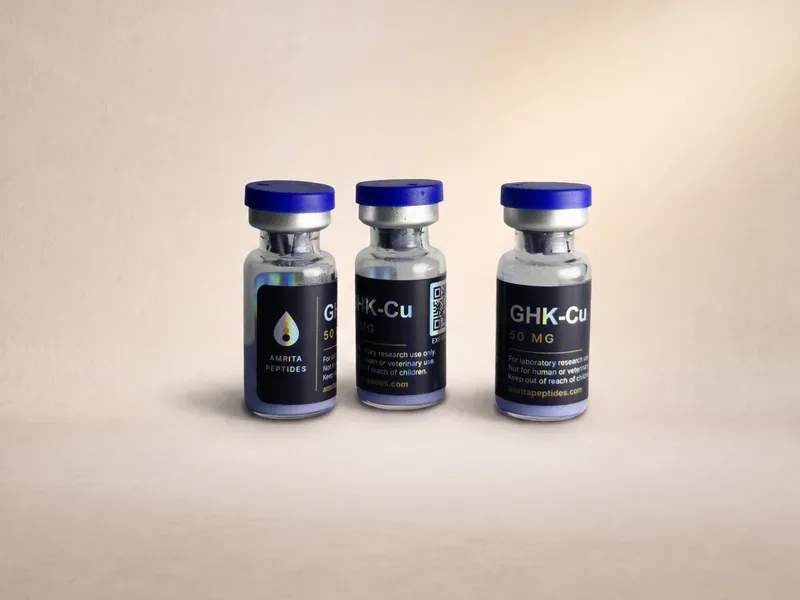
GHK-Cu
Molecular formula: C14H23CuN6O4+
A copper peptide found naturally in the body, best known from skin research, where it is looked at for collagen and tissue remodelling.
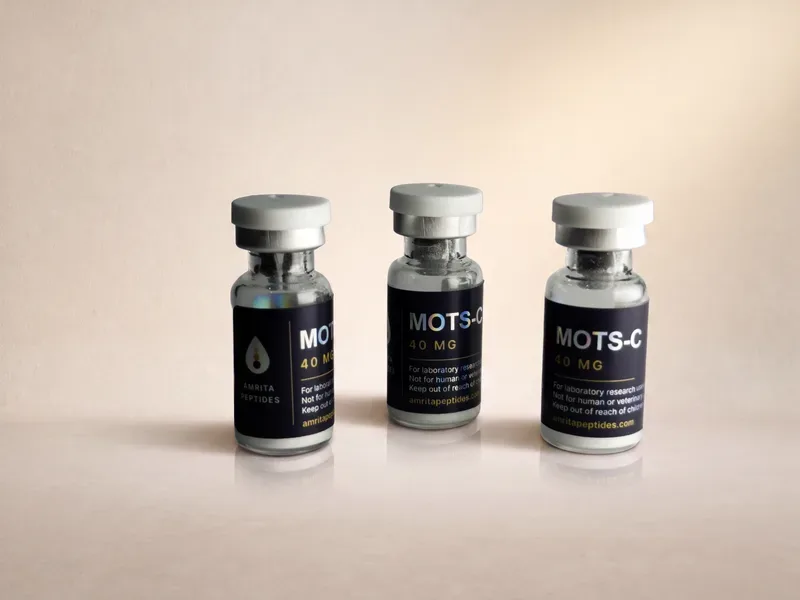
MOTS-C
Molecular formula: C101H152N28O22S2
A peptide made by the mitochondria rather than the main genome, researched for its links to exercise, insulin sensitivity and ageing.
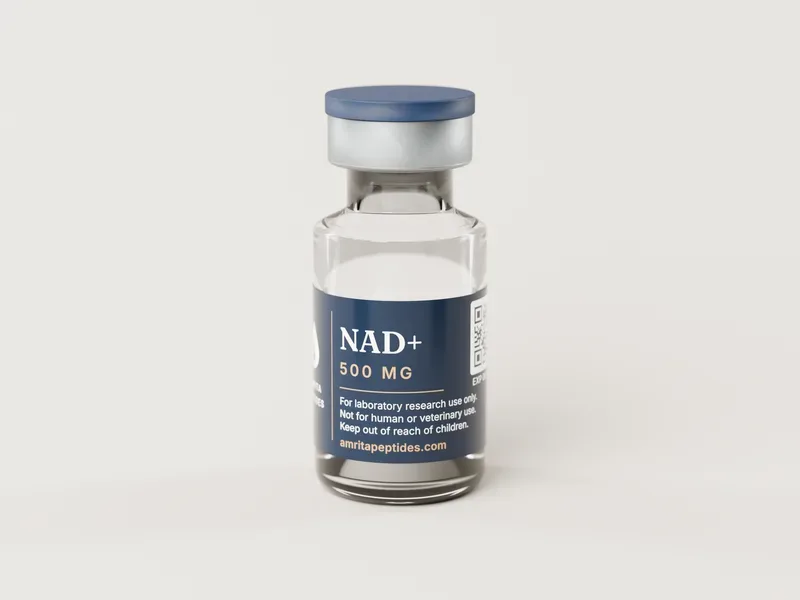
NAD+
Molecular formula: C21H27N7O14P2
Not a peptide, but the coenzyme every cell uses to turn food into energy — levels fall with age, which puts it at the centre of longevity research.
฿5,200
Added to cart. Research use only.