NAD+ in Thailand
From ฿2,400 · 500 mg
Not a peptide, but the coenzyme every cell uses to turn food into energy — levels fall with age, which puts it at the centre of longevity research.
Choose size
Added to cart. Choose another size or open your cart when ready.
For laboratory research use only. Not for human or veterinary use.
Delivery & ordering
- Ships from
- Bangkok, Thailand
- Coverage
- Thailand only — every province
- Dispatch
- Same-day dispatch
- Delivery time
- 2–3 days nationwide
- How to order
- Cart message by WhatsApp, LINE or Telegram
- Payment
- PromptPay, Thai bank transfer, Crypto
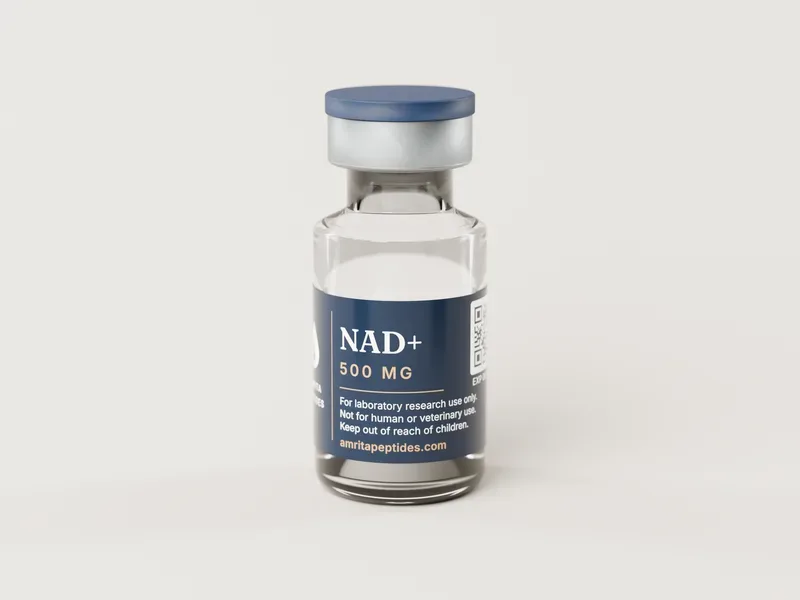
NAD+ research compound in Thailand
NAD+ (β-nicotinamide adenine dinucleotide) is a coenzyme, not a peptide — a small nucleotide cofactor that every cell uses to carry electrons through redox reactions, and that a second set of enzymes consumes outright: sirtuins, PARPs, and CD38. That dual role is why it turns up in energy-metabolism, DNA-repair, and ageing research rather than in the receptor-signalling literature that surrounds most peptides.
This listing is for laboratory research use only. One honest caveat sits over the whole field: most human data concerns NAD+ precursors — nicotinamide riboside (NR) and nicotinamide mononucleotide (NMN) — not direct NAD+ administration.
Quick facts
- Product
- β-nicotinamide adenine dinucleotide (NAD+)
- CAS
- 53-84-9
- Molecular weight
- ~663.4 g/mol (free acid)
- Key enzymes
- Sirtuins (SIRT1–7), PARP1/2, CD38, NAMPT (salvage pathway)
- Intended use
- Laboratory research use only
Explore the sequence and chemical composition.
Not applicable — NAD+ is a dinucleotide cofactor, with no amino-acid sequence
How NAD+ works
NAD+ cycles between its oxidised (NAD+) and reduced (NADH) forms as the electron shuttle of glycolysis, the TCA cycle, and oxidative phosphorylation. In that role it is regenerated, not consumed. The research interest comes from the other role: sirtuins cleave NAD+ to power protein deacetylation, PARP enzymes consume it in bursts while repairing DNA strand breaks, and the ectoenzyme CD38 degrades it. Because these reactions destroy the molecule, the cell must continually rebuild it — mainly through the NAMPT salvage pathway that recycles nicotinamide.
The central hypothesis in the ageing literature is that this balance tips with age: consumption (rising PARP and CD38 activity) outpaces salvage, tissue NAD+ falls, and sirtuin-dependent processes lose their substrate. Gomes and colleagues showed in mice that declining nuclear NAD+ disrupts communication between the nucleus and mitochondria via a SIRT1–HIF-1α axis, producing a pseudohypoxic state (Cell, 2013). The field is genuinely contested — the same researchers who established much of the precursor pharmacology, notably Charles Brenner, have publicly argued that the longevity claims built on this biology run well ahead of the human evidence.
Key research findings
- In mice and humans, oral nicotinamide riboside raised blood NAD+ metabolites in a dose-dependent way, establishing NR as an orally bioavailable NAD+ precursor and providing the first human pharmacokinetics for the pathway (Trammell, Nat Commun, 2016).
- A randomised, double-blind, placebo-controlled trial in healthy middle-aged and older adults found chronic NR supplementation was well tolerated and effectively stimulated NAD+ metabolism, though the clinical readouts were exploratory (Martens, Nat Commun, 2018).
- In a randomised placebo-controlled trial in prediabetic women, 10 weeks of NMN increased muscle insulin sensitivity and muscle remodelling gene expression, without changes in body composition or tissue NAD+ measured in whole muscle (Yoshino, Science, 2021).
Research applications
- Mitochondrial bioenergetics and redox-ratio (NAD+/NADH) assays
- Sirtuin activation and protein-deacetylation studies
- DNA-damage response and PARP-activity models
- Cellular senescence and ageing-biology research
- Comparative work against NAD+ precursors (NR, NMN) and NAMPT modulation
- Metabolic-dysfunction models: insulin sensitivity, hepatic and skeletal-muscle metabolism
Study parameters reported in literature
Human trials in this field almost always dose a precursor rather than NAD+ itself — NR at 250–1000 mg/day (Martens, 2018) or NMN at 250 mg/day (Yoshino, 2021) — because intact NAD+ is poorly cell-permeant and is degraded extracellularly. This is a summary of parameters as reported in the literature, not recommendations for use. To model concentrations for a defined protocol, use the NAD+ peptide calculator.
Reconstitution & storage
- Solvent
- Bacteriostatic water or sterile water, per the protocol for the exact material
- Mixing
- Add solvent down the vial wall and swirl gently until dissolved; do not shake
- Stability note
- NAD+ hydrolyses in solution and is markedly less stable at alkaline pH than lyophilised peptides
- Storage
- Refrigerated (2–8 °C) after reconstitution, in common laboratory practice
- Use within
- A short window once in solution — prepare fresh where the protocol allows
- Freeze / light
- Keep the lyophilised powder frozen or cold, sealed, and protected from light
General handling follows the same pattern as lyophilised research peptides, but NAD+ is a cofactor, not a peptide, so solvent choice and in-solution stability should come from a protocol written for this material. In Thailand's heat and humidity, minimise time at ambient temperature during storage and courier handling.
Selected research
- Declining NAD+ induces a pseudohypoxic state disrupting nuclear-mitochondrial communication during aging — Cell, 2013
- Nicotinamide riboside is uniquely and orally bioavailable in mice and humans — Nat Commun, 2016
- Nicotinamide riboside augments the aged human skeletal muscle NAD+ metabolome and induces transcriptomic and anti-inflammatory signatures — Cell Rep, 2019
- NAD+ metabolism and its roles in cellular processes during ageing — Nat Rev Mol Cell Biol, 2021 (review)
- Browse all indexed NAD+ metabolism and ageing literature on PubMed
Related compounds
- MOTS-c — a mitochondrial-derived peptide studied in metabolic homeostasis and AMPK signalling; frequently examined alongside NAD+ biology in mitochondrial-stress research.
- SS-31 — a mitochondria-targeting peptide studied for cardiolipin binding and electron-transport efficiency, approaching mitochondrial function from a structural rather than cofactor angle.
- Bacteriostatic water — the standard diluent used to reconstitute lyophilised research vials.
See also: mitochondrial research compounds and more mitochondrial and cellular research compounds.
NAD+ FAQ
Is NAD+ a peptide?
No. NAD+ is a dinucleotide coenzyme built from nicotinamide and adenine ribonucleotides — it has no amino-acid sequence and is not synthesised by peptide chemistry. It appears in this catalog because it is used in the same mitochondrial and cellular research workflows as several of the peptides listed, not because it belongs to the same chemical class.
Why do most studies use NR or NMN instead of NAD+ itself?
Because intact NAD+ crosses cell membranes poorly and is broken down extracellularly by ectoenzymes such as CD38. Precursors are taken up and converted intracellularly, which is why the human trial literature — Trammell 2016, Martens 2018, Yoshino 2021 — is built almost entirely on NR and NMN. Direct NAD+ work is predominantly in vitro and in animal models.
What evidence level supports NAD+ research claims?
Mechanistic and preclinical evidence is strong; human outcome evidence is early and contested. Randomised trials show precursors reliably raise NAD+ metabolites, but downstream clinical benefits remain exploratory. Charles Brenner, whose lab characterised NR pharmacokinetics, is a prominent sceptic of the broader anti-ageing claims — a useful counterweight when reading the more enthusiastic literature.
What do the study parameters on this page represent?
They distinguish the amounts reported for NAD+ precursors in human trials from the parameters used for intact NAD+ in laboratory research. They describe cited study designs rather than recommending use of the listed material, which is not intended for humans or animals.
How should NAD+ be stored, especially in Thailand?
Keep the lyophilised powder frozen or cold, sealed, and out of direct light. NAD+ hydrolyses in aqueous solution more readily than lyophilised peptides, so reconstituted material is refrigerated and used over a short window, or prepared fresh. In Thailand's climate, avoid leaving vials at ambient temperature during handling or delivery.
Is NAD+ legal to buy for research in Thailand?
It is offered strictly for laboratory research use only, not for human or veterinary use — and specifically not as an IV, infusion, or wellness product. An RUO label does not determine legal status; researchers should check current Thai FDA information for the specific product and activity. Tracked delivery is available nationwide after order confirmation.
Where is NAD+ sourced, and are the images the exact vial?
It is sourced from reliable suppliers in China, stocked in Bangkok, and dispatched within Thailand. Product images are illustrative — confirm the current label, batch, and packaging when those details matter to a protocol.
Compliance note
NAD+ is supplied for laboratory research use only. It is not for human or veterinary use, and it is not intended to diagnose, treat, cure, or prevent any disease. All findings referenced above are the results of specific published studies, not claims about this product.
Helpful resources
Related products
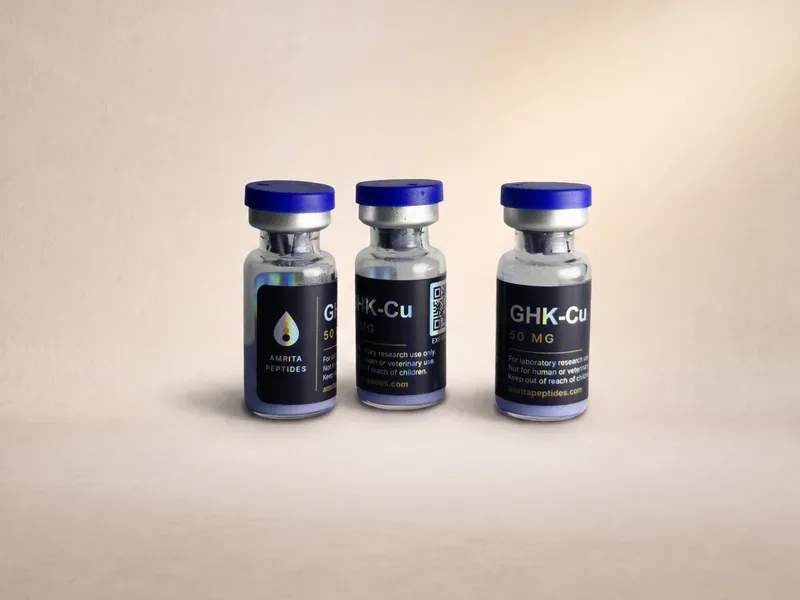
GHK-Cu
Molecular formula: C14H23CuN6O4+
A copper peptide found naturally in the body, best known from skin research, where it is looked at for collagen and tissue remodelling.
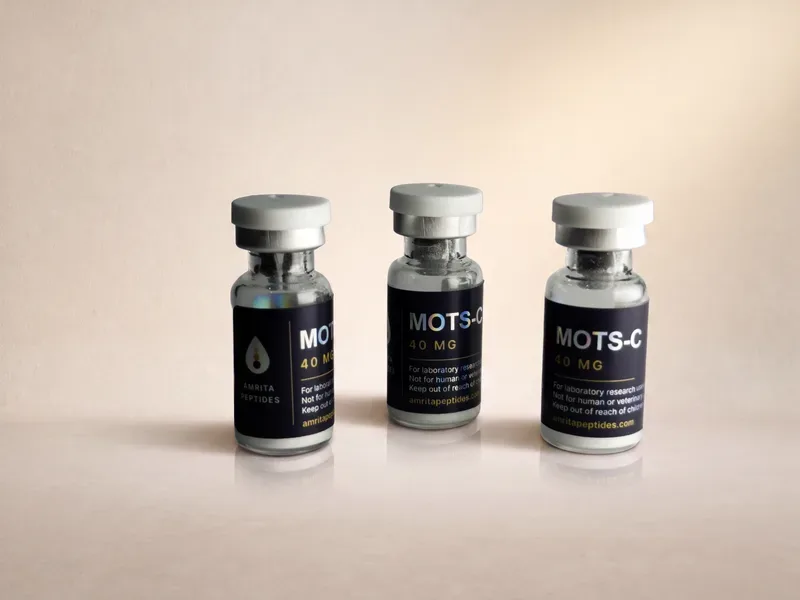
MOTS-C
Molecular formula: C101H152N28O22S2
A peptide made by the mitochondria rather than the main genome, researched for its links to exercise, insulin sensitivity and ageing.
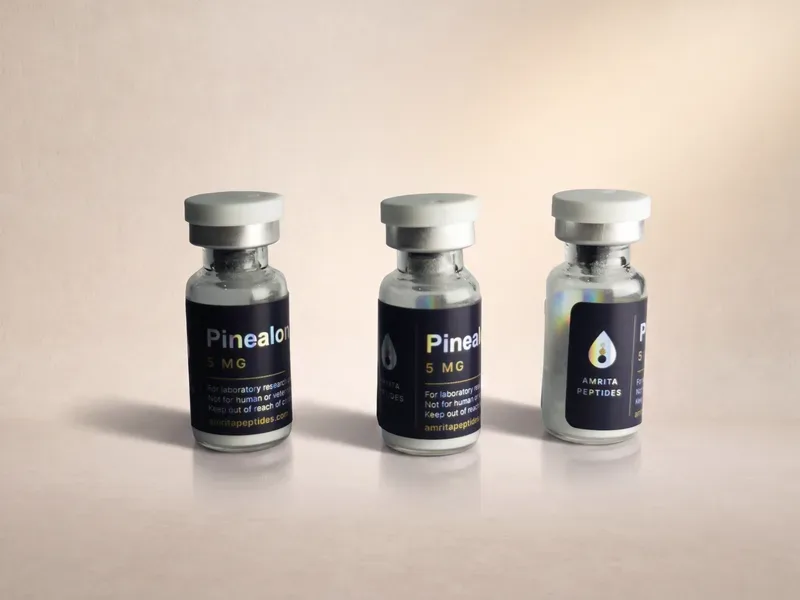
Pinealon
Molecular formula: C15H26N6O8
A tiny three-amino-acid peptide from Russian "bioregulator" research, looked at for how nerve cells cope with oxidative stress and ageing.
฿2,400
Added to cart. Research use only.