Bacteriostatic Water in Thailand
From ฿300 · 10 ml
The water you mix peptide powder with. A little benzyl alcohol stops bacteria growing, so one vial lasts about four weeks after opening.
Choose size
Added to cart. Choose another size or open your cart when ready.
For laboratory research use only. Not for human or veterinary use.
Delivery & ordering
- Ships from
- Bangkok, Thailand
- Coverage
- Thailand only — every province
- Dispatch
- Same-day dispatch
- Delivery time
- 2–3 days nationwide
- How to order
- Cart message by WhatsApp, LINE or Telegram
- Payment
- PromptPay, Thai bank transfer, Crypto
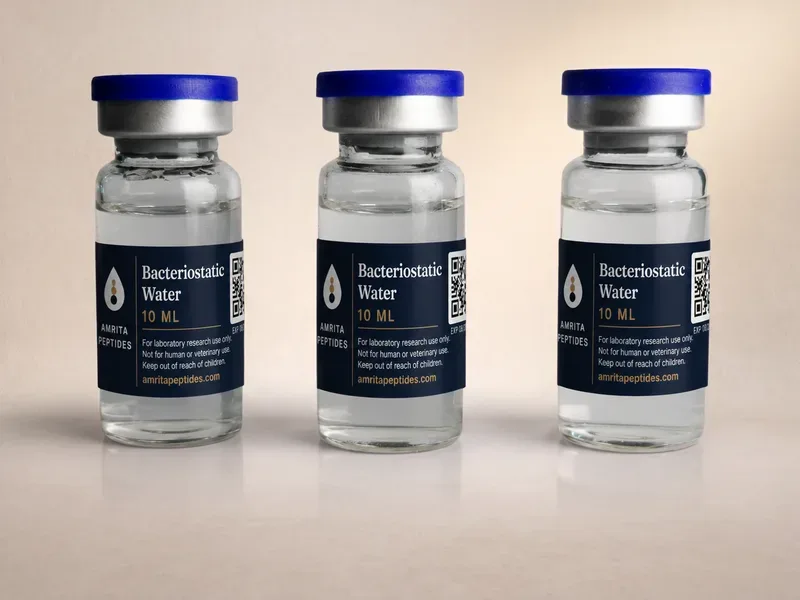
Bacteriostatic Water for research handling in Thailand
Bacteriostatic water is sterile water containing a small amount of an antimicrobial preservative — typically benzyl alcohol at around 0.9% — which suppresses the growth of bacteria that would otherwise colonise a vial once its stopper has been pierced. It is the standard diluent used in laboratories to reconstitute lyophilised research peptides, because a single vial can be drawn from repeatedly over a period of weeks rather than discarded after one use. We stock it in Thailand in 10 ml vials, sold singly or in 5- and 10-vial packs, so it can ship in the same Bangkok dispatch as your research peptides, with free tracked delivery nationwide.
This listing is for laboratory research use only. Bacteriostatic water supplied here is not a medicine and is not intended for human or veterinary use. The preparation and handling context below applies to compatible laboratory protocols.
Quick facts
- Product
- Bacteriostatic Water (preserved research diluent)
- Base component
- Water (CAS 7732-18-5; H₂O)
- Preservative
- Benzyl alcohol (CAS 100-51-6)
- Presentation
- 10 ml sealed multi-dose vial, single vials or multi-vial packs
- Sterility
- Supplied sterile and sealed; sterility depends on aseptic technique once punctured
- Intended use
- Laboratory research use only
Explore the sequence and chemical composition.
Not applicable — this is a diluent, not a peptide
Component formulas are shown for water and benzyl alcohol. Bacteriostatic water is a mixture, not a single molecular species.
How bacteriostatic water works
Benzyl alcohol is a broad-spectrum antimicrobial preservative that disrupts bacterial membrane integrity at the concentrations used in injectable formulations. It is bacteriostatic rather than bactericidal in this context: it does not sterilise a contaminated solution, it inhibits the multiplication of organisms introduced in small numbers during handling. That distinction matters — the preservative is a margin of safety around good aseptic technique, not a replacement for it.
This is the practical difference from sterile water for injection, which contains no preservative. Preservative-free sterile water is intended for single use, because any organism introduced when the stopper is pierced can proliferate freely in the vial. A preserved vial is designed to tolerate repeated withdrawals, which is why multi-draw laboratory workflows and dilution series are built around bacteriostatic water. The preservative is not inert with respect to the dissolved protein, however: benzyl alcohol has been shown to promote aggregation in some reconstituted lyophilised protein formulations, with the extent depending on how well structure was preserved during freeze-drying (Roy, J Pharm Sci, 2005).
Research applications
- Reconstituting lyophilised research peptides in laboratory preparation workflows
- Multi-draw workflows where a single vial is sampled repeatedly over several weeks
- Preparing dilution series and working stocks at defined concentrations
- Bench-side comparisons of preserved versus preservative-free diluents
- Stability and aggregation studies on reconstituted peptide formulations
- General laboratory dilution work where preservative-free water would be discarded after one use
Handling & storage
- Technique
- Sterile technique throughout; the preservative supplements aseptic handling, it does not replace it
- Stopper
- Swab the rubber stopper with alcohol and allow it to dry before each puncture
- After puncture
- Commonly discarded ~28 days after the first puncture, per standard multi-dose vial practice
- Temperature
- Room temperature storage; refrigeration is not normally required
- Light
- Keep sealed in the original carton and protected from direct sunlight
- Discard if
- The solution is cloudy, discoloured, or shows any visible particulate matter
- Compatibility
- Not suitable for every formulation — some drug products are documented as incompatible with benzyl-alcohol-preserved water
In Thailand's heat and humidity, "room temperature" is the point worth watching: keep vials out of parked vehicles, direct sun, and unconditioned storage rooms, and minimise time at ambient temperature during courier handling. Heat does not defeat the preservative, but it accelerates degradation of whatever has been dissolved in the water.
Selected reference
- The gasping syndrome and benzyl alcohol poisoning — New England Journal of Medicine, 1982. The report that established why benzyl alcohol preserved products are contraindicated in neonates: accumulated benzyl alcohol exposure in premature infants was associated with metabolic acidosis, gasping respiration, and death. Benzyl-alcohol-preserved diluents have carried a neonatal contraindication ever since.
- Effects of benzyl alcohol on aggregation of recombinant human interleukin-1-receptor antagonist in reconstituted lyophilized formulations — Journal of Pharmaceutical Sciences, 2005. Demonstrates that benzyl alcohol can promote protein aggregation on reconstitution, and that the effect depends on how well protein structure survived freeze-drying.
- Browse all indexed benzyl alcohol preservative literature on PubMed
Related products
- BPC-157 — a lyophilised pentadecapeptide studied in tissue-repair models; supplied as a powder requiring a diluent.
- TB-500 — synthetic Thymosin Beta-4 fragment, frequently studied alongside BPC-157 and likewise supplied lyophilised.
- Retatrutide — triple-agonist research peptide; multi-week study designs make preserved diluent the practical choice over single-use water.
- Semaglutide — GLP-1 research peptide commonly ordered together with a diluent.
See also: more research accessories, or browse the full research catalog for the peptides it is ordered with.
Buying Bacteriostatic Water in Thailand
Bacteriostatic Water is stocked in Bangkok as 10 ml vials, sold singly or in packs of 5 or 10. Prices are in Thai baht and include tracked delivery anywhere in Thailand. 10 × 10 ml vials work out at ฿240 a vial, 20% less than a single 10 ml vial.
| Option | Price | Per vial |
|---|---|---|
| 1 × 10 ml vial | ฿300 | ฿300 |
| 5 × 10 ml vials | ฿1,300 | ฿260 |
| 10 × 10 ml vials | ฿2,400 | ฿240 |
Dispatch and delivery
Same-day dispatch from Bangkok once your order is confirmed, by tracked courier. Typical timing:
- Bangkok
- same-day or next-day dispatch after confirmation
- Pattaya and the Eastern Seaboard
- tracked overnight where courier timing allows
- Phuket and the South
- usually 1–2 days after dispatch
- Chiang Mai and the North
- usually 1–2 days after dispatch
- Hua Hin, Koh Samui, and other provinces
- tracked nationwide courier delivery
How to order
Add a size to the cart and send the order message it writes on WhatsApp, LINE or Telegram. We reply with stock, the total and payment details (PromptPay, Thai bank transfer or Crypto). Nothing is charged on this website.
Bacteriostatic Water FAQ
Is this bacteriostatic water intended for human use?
No. It is supplied strictly as a laboratory research diluent. It is not intended for human or veterinary use, consumption, injection, diagnosis, treatment, cure, or disease prevention.
What is the difference between bacteriostatic water and sterile water for injection?
Both are sterile. Bacteriostatic water additionally contains an antimicrobial preservative — usually benzyl alcohol at about 0.9% — that inhibits bacterial growth after the vial has been pierced, which is what makes repeated withdrawals from one vial possible. Sterile water for injection contains no preservative and is intended for single use.
How long can a vial be used after the first puncture?
Standard multi-dose vial practice is to discard the vial approximately 28 days after first puncture, and many labels state this window explicitly. The preservative limits growth of organisms introduced during handling; it does not extend indefinitely, and it does not recover a vial that has been contaminated heavily.
Are there known safety limits on benzyl alcohol preserved products?
Yes, and one is well documented: benzyl-alcohol-preserved products are contraindicated in neonates. Fatal "gasping syndrome" in premature infants was linked to benzyl alcohol exposure from flush solutions and preserved diluents in the early 1980s (NEJM, 1982). Benzyl alcohol is also documented as incompatible with certain drug formulations, so preserved water is not universally interchangeable with preservative-free water.
How should it be stored in Thailand's climate?
At room temperature, sealed, in its carton, away from direct sunlight. Refrigeration is not normally required. The practical risk in Thailand is prolonged heat exposure in vehicles, balconies, or unconditioned storage — avoid it, and keep courier transit time at ambient short.
What preparation context does this page provide?
It identifies bacteriostatic water's role, compatibility limits, handling considerations, and common multi-dose-vial practices for laboratory protocols. Preparation volumes and material requirements depend on the specific compound, formulation, and qualified protocol; linked study parameters remain descriptive records rather than recommendations for use.
Can it be ordered together with a research peptide?
Yes. Add the diluent and the peptide options to the same cart message so availability can be confirmed together. Tracked delivery is available across Thailand after order confirmation, with Bangkok dispatch typically the fastest.
Are the product images photographs of the exact vial shipped?
No. Images are illustrative. Confirm the current label, preservative concentration, vial volume, and packaging when they matter to a protocol.
Compliance note
Bacteriostatic Water is supplied for laboratory research use only. It is not for human or veterinary use, and it is not intended to diagnose, treat, cure, or prevent any disease. The references cited above are the findings of specific published studies and the general pharmaceutical literature on benzyl alcohol as a preservative, not claims about this product.
Helpful resources
Related products
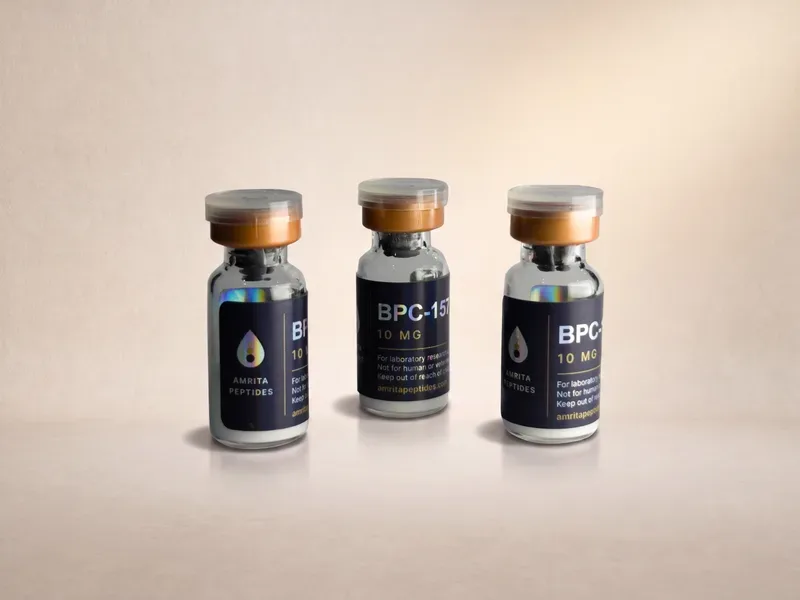
BPC-157
Molecular formula: C62H98N16O22
Probably the best-known recovery peptide — a 15-amino-acid fragment of a stomach protein, researched for how tendons, ligaments and the gut heal.
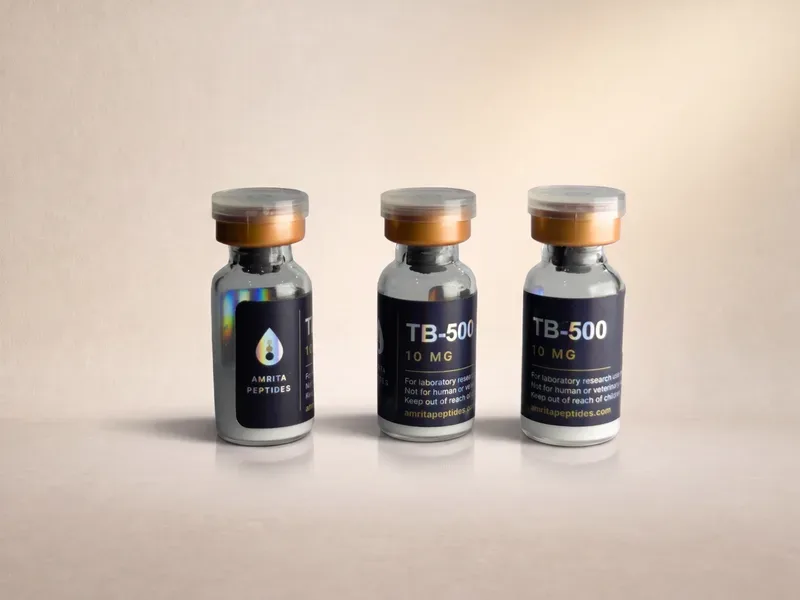
TB-500
Molecular formula: C38H68N10O14
A synthetic piece of Thymosin Beta-4, a protein that helps cells move and rebuild, often researched side by side with BPC-157.
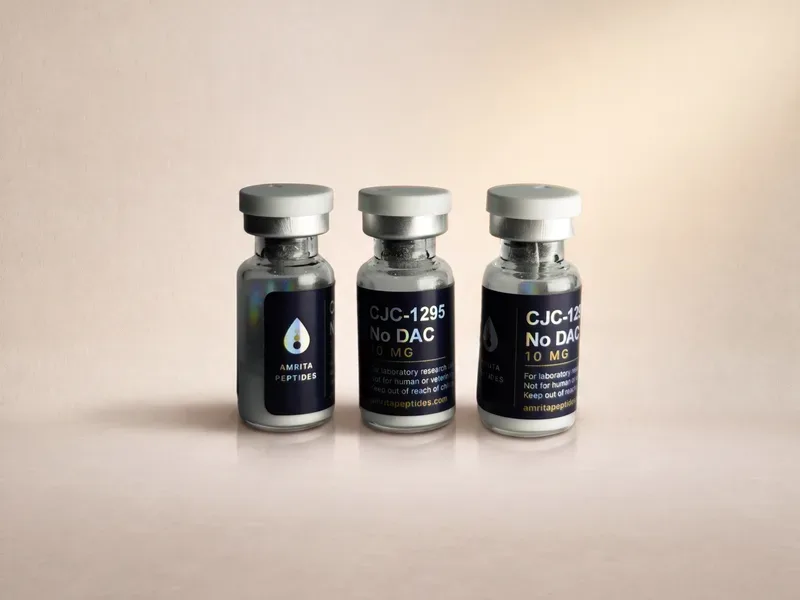
CJC-1295 No DAC
Molecular formula: C152H252N44O42
A short-acting version of the body's own growth-hormone-releasing signal, and the usual research partner for Ipamorelin.
฿300
Added to cart. Research use only.