Semaglutide in Thailand
From ฿2,500 · 5 mg
The GLP-1 peptide behind the current wave of weight and appetite research — long-acting, and the benchmark newer compounds are measured against.
Choose size
Added to cart. Choose another size or open your cart when ready.
For laboratory research use only. Not for human or veterinary use.
Delivery & ordering
- Ships from
- Bangkok, Thailand
- Coverage
- Thailand only — every province
- Dispatch
- Same-day dispatch
- Delivery time
- 2–3 days nationwide
- How to order
- Cart message by WhatsApp, LINE or Telegram
- Payment
- PromptPay, Thai bank transfer, Crypto
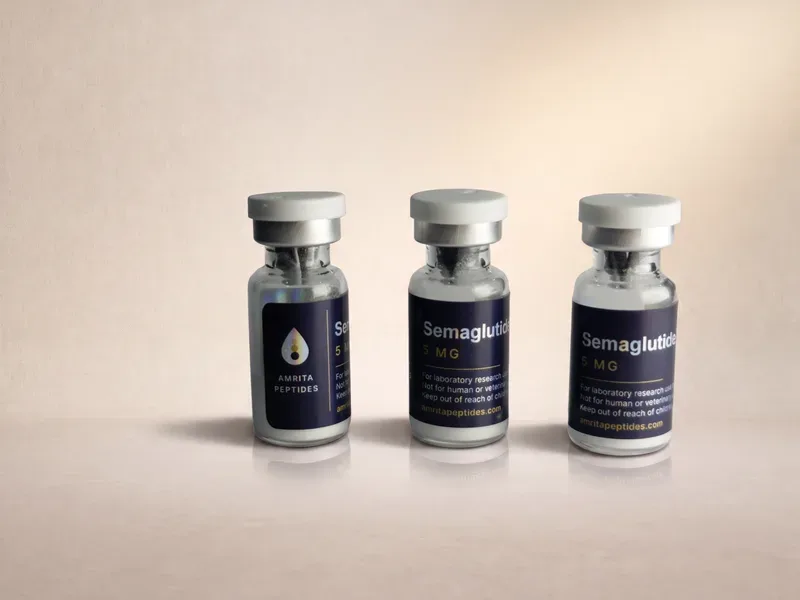
Buy semaglutide 5 mg research vials in Thailand
We stock semaglutide as a lyophilised research powder in 5 mg vials, sold singly or in 5- and 10-vial packs (current baht prices are shown in the size selector). Vials are stocked in Bangkok and dispatched the same day after manual confirmation, with free tracked delivery to Bangkok, Phuket, Chiang Mai and every other Thai province in about 2–3 days. Add the pack to your cart, send the generated order message by WhatsApp, LINE or Telegram, and pay by PromptPay, Thai bank transfer or crypto once we confirm. Laboratory research use only: this is not a prescription medicine, pen or weight-loss product.
Semaglutide is a long-acting GLP-1 receptor agonist — an acylated 31-residue analogue of human glucagon-like peptide-1, developed by Novo Nordisk and studied for appetite regulation, glycaemic control, and cardiometabolic endpoints. Its roughly week-long half-life made it the reference single-receptor incretin compound against which the newer dual and triple agonists are measured; see how it compares in retatrutide vs semaglutide vs tirzepatide. This page summarises published literature so a researcher can identify and characterise the compound; literature-reported study parameters are descriptive records rather than recommendations for use.
Quick facts
- Product
- Semaglutide (lyophilised research powder)
- Developer
- Novo Nordisk
- CAS number
- 910463-68-2
- Molecular weight
- ~4113.6 Da
- Structure
- GLP-1(7-37) backbone with Aib at position 8, Arg34 substitution, and a C18 diacid chain acylated to Lys26 via a spacer
- Intended use
- laboratory research use only
Explore the sequence and chemical composition.
- H
- Aib
- E
- G
- T
- F
- T
- S
- D
- V
- S
- S
- Y
- L
- E
- G
- Q
- A
- A
- K*
- E
- F
- I
- A
- W
- L
- V
- R
- G
- R
- G
Hover or focus a residue to see its full name.
A 31-residue GLP-1 analogue. Aib is at GLP-1 position 8; Lys* at position 26 carries the spacer-linked C18 diacid side chain; Arg replaces Lys at position 34.
How semaglutide works
Semaglutide is a GLP-1 analogue engineered for persistence. Two modifications do the work: an aminoisobutyric acid substitution at position 8 blocks cleavage by DPP-4, the enzyme that clears native GLP-1 within minutes, and a C18 fatty diacid chain attached through a spacer to lysine 26 binds reversibly to serum albumin. Albumin binding creates a circulating depot that releases the peptide slowly, stretching the half-life from roughly two minutes for native GLP-1 to about a week.
Once in circulation it engages GLP-1 receptors in three tissue compartments. In pancreatic beta cells it potentiates glucose-dependent insulin secretion while suppressing glucagon release from alpha cells, so the glycaemic effect scales with ambient glucose rather than driving it downward indiscriminately. In the gastrointestinal tract it slows gastric emptying. In the hypothalamus and hindbrain it activates central satiety circuits that reduce food intake. The combination of reduced intake and improved glucose handling is the mechanism behind the metabolic and body-weight findings reported in its trial programme.
Key research findings
- In the STEP-1 phase 3 trial (1,961 adults with overweight or obesity, 68 weeks), the 2.4 mg once-weekly group showed a mean body-weight change of −14.9% versus −2.4% for placebo, with 86.4% reaching at least 5% reduction (Wilding et al., NEJM 2021, PMID 33567185).
- In SUSTAIN-6 (3,297 adults with type 2 diabetes, 104 weeks), the primary composite cardiovascular endpoint occurred in 6.6% of the semaglutide arm versus 8.9% of placebo, meeting the trial's non-inferiority hypothesis; a higher rate of retinopathy complications was also recorded (Marso et al., NEJM 2016, PMID 27633186).
- In SELECT (17,604 participants with obesity and cardiovascular disease but without diabetes), the composite of cardiovascular death, non-fatal myocardial infarction, or non-fatal stroke occurred in 6.5% of the semaglutide arm versus 8.0% of placebo (hazard ratio 0.80, 95% CI 0.72–0.90); adverse events led to discontinuation in 16.6% versus 8.2% (Lincoff et al., NEJM 2023, PMID 37952131).
Research applications
- GLP-1 receptor pharmacology, binding kinetics, and receptor-desensitisation studies.
- Appetite regulation and hypothalamic satiety signalling models.
- Glycaemic control, insulin secretion, and pancreatic beta-cell function research.
- Cardiometabolic risk-marker studies in metabolic disease models.
- Hepatic lipid metabolism and steatotic liver disease (MASLD/NAFLD) investigations.
- Comparator arm for dual and triple incretin agonists in head-to-head pharmacology work.
- Central GLP-1 receptor research in neuroinflammation and neuroprotection models.
Study parameters reported in literature
Trials escalated across that range in roughly 4-week steps, from 0.25 mg to 2.4 mg. These figures report the escalation schedules used in the published STEP and SUSTAIN programmes — the SUSTAIN trials studied doses up to 1 mg weekly for glycaemic endpoints, and the STEP trials escalated to 2.4 mg weekly for body-weight endpoints. They are provided for literature reference only, not as recommendations for use. To model concentrations and volumes for a study, use the peptide calculator.
Reconstitution & storage
- Solvent
- Bacteriostatic water — the common laboratory choice
- Mixing
- Add solvent down the vial wall and swirl gently until dissolved; do not shake
- Storage
- Refrigerate at 2–8 °C after reconstitution
- Use within
- About 28 days once reconstituted
- Freeze / light
- Keep lyophilised powder frozen or refrigerated; protect from direct light; avoid repeated freeze–thaw
These are standard laboratory handling conventions, not instructions for use. See bacteriostatic water for the standard diluent. In Thailand's heat and humidity, minimise time at ambient temperature and limit courier exposure to heat.
Selected research
- Once-Weekly Semaglutide in Adults with Overweight or Obesity — New England Journal of Medicine, 2021 (PMID 33567185).
- Semaglutide and Cardiovascular Outcomes in Patients with Type 2 Diabetes — New England Journal of Medicine, 2016 (PMID 27633186).
- Semaglutide and Cardiovascular Outcomes in Obesity without Diabetes — New England Journal of Medicine, 2023 (PMID 37952131).
- Further indexed literature via PubMed search for semaglutide.
Related compounds
- Retatrutide — triple GLP-1 / GIP / glucagon agonist; the far end of the incretin family and the usual comparison point for receptor-coverage studies. Tirzepatide (dual GLP-1 / GIP) sits between the two but is not currently in our catalog.
- Bacteriostatic water — the standard diluent used to reconstitute lyophilised research peptides.
See also: retatrutide vs semaglutide vs tirzepatide and more incretin-receptor compounds.
Semaglutide FAQ
Is semaglutide sold here for research use only?
Yes. Semaglutide is supplied strictly as lyophilised research material for laboratory use. It is not a prescription medicine, pen, tablet, compounded product, supplement, or weight-loss product, and it is not offered as a treatment for any condition.
What do the study parameters on this page represent?
They record the weekly amounts and escalation schedules used in the cited STEP and SUSTAIN programmes. They describe those trial designs rather than recommending use of the listed material, which is not intended for humans or animals.
How should semaglutide be handled and stored?
As a lyophilised powder, keep it sealed, cool, dark, and dry — frozen or refrigerated for longer storage. After reconstitution with bacteriostatic water, laboratories commonly refrigerate at 2–8 °C and use within about 28 days, avoiding freeze–thaw cycles and direct light.
How do I store it in Thailand's climate?
Heat and humidity shorten peptide stability, so minimise time at ambient temperature, keep vials refrigerated, and limit courier heat exposure. Vials are stocked in Bangkok and dispatched domestically with tracked delivery, which keeps transit windows short. If a parcel arrives broken, the returns and refund policy explains what to report and when.
Is semaglutide legal to source for research in Thailand?
Semaglutide is an approved medicine in many jurisdictions, but the research-grade material listed here is not an authorised medicinal product or a substitute for one. Researchers should check current Thai FDA information for the specific product and activity.
How does semaglutide differ from retatrutide?
By receptor coverage. Semaglutide targets GLP-1 alone; tirzepatide adds GIP as a dual agonist; retatrutide adds glucagon on top for a triple-agonist profile. In separate trials the multi-receptor compounds reported larger body-weight reductions, though the studies were not head-to-head, which is precisely why comparative pharmacology remains an active research question.
Can it be ordered with bacteriostatic water?
Yes, bacteriostatic water can be added to the same order when a laboratory protocol calls for it. We do not recommend preparation volumes or provide reconstitution instructions for use.
Compliance note
Semaglutide is provided for laboratory research use only. It is not intended for human or veterinary use, and it is not intended to diagnose, treat, cure, or prevent any disease. Trial results described on this page are findings of the specific cited studies, not claims about this product. The full terms are in the research-use disclaimer, and what we can and cannot evidence about supply is set out on sourcing and transparency.
Helpful resources
Related products
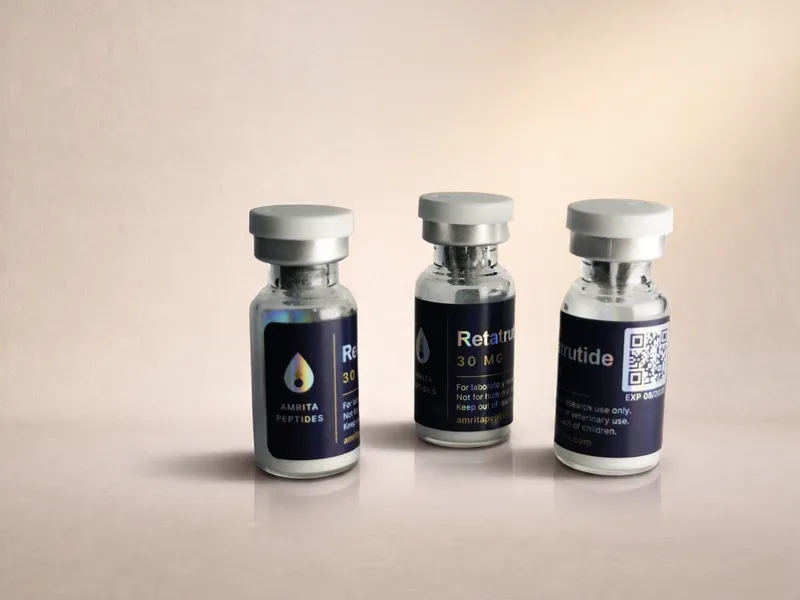
Retatrutide
Molecular formula: C221H342N46O68
The newest of the weight-research peptides: one molecule that works on three appetite-and-metabolism receptors — GLP-1, GIP and glucagon.
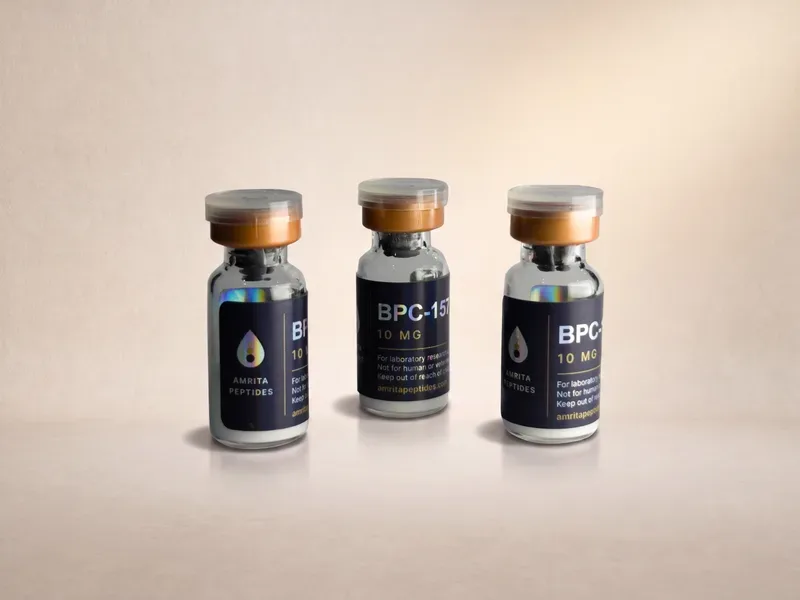
BPC-157
Molecular formula: C62H98N16O22
Probably the best-known recovery peptide — a 15-amino-acid fragment of a stomach protein, researched for how tendons, ligaments and the gut heal.
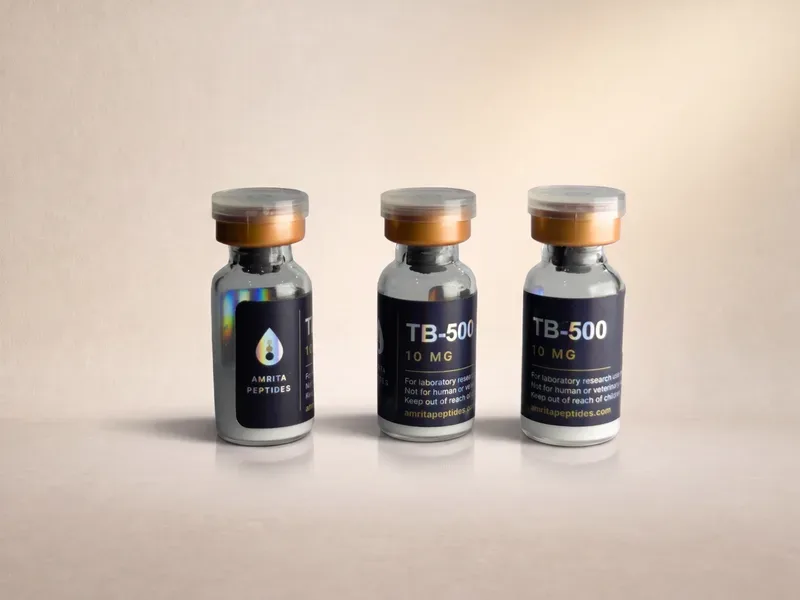
TB-500
Molecular formula: C38H68N10O14
A synthetic piece of Thymosin Beta-4, a protein that helps cells move and rebuild, often researched side by side with BPC-157.
฿2,500
Added to cart. Research use only.