Retatrutide in Thailand
From ฿5,900 · 30 mg
The newest of the weight-research peptides: one molecule that works on three appetite-and-metabolism receptors — GLP-1, GIP and glucagon.
Choose size
Added to cart. Choose another size or open your cart when ready.
For laboratory research use only. Not for human or veterinary use.
Delivery & ordering
- Ships from
- Bangkok, Thailand
- Coverage
- Thailand only — every province
- Dispatch
- Same-day dispatch
- Delivery time
- 2–3 days nationwide
- How to order
- Cart message by WhatsApp, LINE or Telegram
- Payment
- PromptPay, Thai bank transfer, Crypto
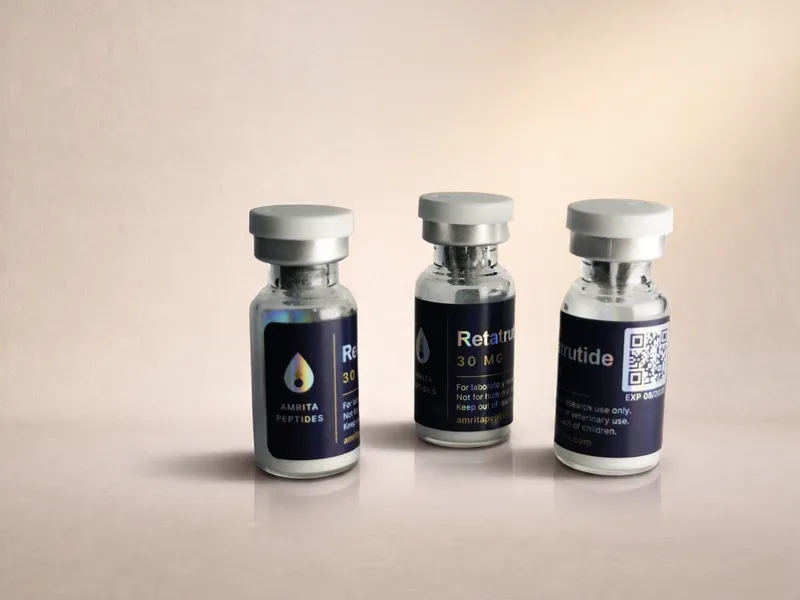
Buy retatrutide 30 mg and 40 mg research vials in Thailand
We stock retatrutide as a lyophilised research powder in two vial sizes, 30 mg and 40 mg, each sold singly or in 5- and 10-vial packs (current baht prices are shown in the size selector). Vials are stocked in Bangkok and dispatched the same day after manual confirmation, with free tracked delivery to Bangkok, Phuket, Chiang Mai and every other Thai province in about 2–3 days. Order by sending the cart message on WhatsApp, LINE or Telegram. Laboratory research use only; retatrutide is an investigational compound, not an approved medicine.
Retatrutide (developmental code LY3437943) is Eli Lilly's investigational triple-receptor agonist, a single peptide that activates the GLP-1, GIP, and glucagon receptors at once. This page covers the compound's identity and the peer-reviewed trial record. For its regulatory status, 2026 Phase 3 news and the checks that matter when sourcing it in Thailand, read the retatrutide Thailand guide; for how it differs from tirzepatide and semaglutide, see retatrutide vs tirzepatide vs semaglutide. Literature-reported study parameters are descriptive records rather than recommendations for use.
Quick facts
- Product
- Retatrutide (LY3437943)
- Developer
- Eli Lilly (investigational, not approved)
- CAS number
- 2381089-83-2
- Molecular weight
- ~4731 Da (peptide free base, reported)
- Intended use
- laboratory research use only
Explore the sequence and chemical composition.
- Y
- Aib
- Q
- G
- T
- F
- T
- S
- D
- Y
- S
- I
- αMeL
- L
- D
- K
- K*
- A
- Q
- Aib
- A
- F
- I
- E
- Y
- L
- L
- E
- G
- G
- P
- S
- S
- G
- A
- P
- P
- P
- S
Hover or focus a residue to see its full name.
A 39-residue peptide with Aib²/Aib²⁰, α-methylleucine¹³, a C20-diacid side chain attached at Lys¹⁷, and a C-terminal serinamide.
PubChem's retatrutide sodium-salt record reports this parent molecular formula.
How retatrutide works
Retatrutide is a single acylated peptide engineered to switch on three metabolic receptors simultaneously. In vitro it shows balanced glucagon- and GLP-1-receptor activity with stronger GIP-receptor activity (Coskun et al., Cell Metab 2022, PMID 35985340). The GLP-1 and GIP arms are associated with glucose-dependent insulin secretion and reduced food intake; the glucagon arm is what sets it apart.
In obese mice, the same discovery paper attributed part of the body-weight reduction to glucagon-receptor-mediated increases in energy expenditure, added to GIP- and GLP-1-driven reductions in calorie intake (Coskun et al., 2022). That energy-expenditure finding is from the mouse work; the human trials below report body-weight, HbA1c and safety endpoints. In a phase 1b study in type 2 diabetes, pharmacokinetics were dose proportional with a half-life of approximately 6 days (Urva et al., Lancet 2022, PMID 36354040).
Key research findings
- In a phase 2 obesity trial (338 adults, 48 weeks), the 12 mg dose group showed a least-squares mean body-weight change of −24.2% versus −2.1% for placebo, with 83% of that group reaching at least 15% reduction (Jastreboff et al., NEJM 2023, PMID 37366315).
- In a phase 2 type 2 diabetes trial (281 adults), the 12 mg escalation group showed an HbA1c change of −2.02% at 24 weeks and a body-weight reduction of 16.94% at 36 weeks, versus −0.01% and 3.00% for placebo; the HbA1c reduction was significantly greater than the 1.5 mg dulaglutide comparator in the 8 mg slow-escalation and 12 mg groups (Rosenstock et al., Lancet 2023, PMID 37385280).
- In both phase 2 trials the most common adverse events were gastrointestinal and mostly mild to moderate; the obesity trial also reported dose-dependent heart-rate increases that peaked at 24 weeks (Jastreboff et al., 2023), and the diabetes trial recorded no severe hypoglycaemia and no deaths (Rosenstock et al., 2023).
Research applications
- Triple-receptor (GLP-1 / GIP / glucagon) pharmacology and additive receptor-engagement studies.
- Energy-expenditure and thermogenesis pathway investigations, contrasting intake- versus expenditure-driven effects.
- Hepatic lipid metabolism and metabolic-dysfunction-associated steatotic liver disease (MASLD/NASH) models.
- Comparative efficacy modelling against dual and single incretin agonists such as tirzepatide and semaglutide.
- Glycaemic-control and insulin-sensitivity studies in metabolic disease models.
- Substrate-utilisation and metabolic-flexibility research.
Study parameters reported in literature
Phase 2 trials escalated across that range in roughly 4-week steps, from 1 mg to 12 mg. These figures summarise what published trials reported and are provided for literature reference only, not as recommendations for use. To model concentrations and volumes for a study, use the peptide calculator.
Reconstitution & storage
- Solvent
- Confirm compatibility for this material; bacteriostatic water is a common laboratory diluent, not a validated solvent for every formulation
- Mixing
- Add solvent down the vial wall and swirl gently until dissolved; do not shake
- Storage
- Refrigerate at 2–8 °C after reconstitution, in common laboratory practice
- Use within
- No in-use stability data has been published for this material; set limits from a validated protocol
- Freeze / light
- Keep lyophilised powder frozen or refrigerated; protect from direct light; avoid repeated freeze–thaw
These are general laboratory handling conventions, not instructions for use or demonstrated stability of the supplied vial. In Thailand's heat and humidity, minimise time at room temperature.
Selected research
- LY3437943, a novel triple glucagon, GIP, and GLP-1 receptor agonist for glycemic control and weight loss: From discovery to clinical proof of concept — Cell Metabolism, 2022 (PMID 35985340).
- LY3437943, a novel triple GIP, GLP-1, and glucagon receptor agonist in people with type 2 diabetes: a phase 1b multiple-ascending dose trial — The Lancet, 2022 (PMID 36354040).
- Triple-Hormone-Receptor Agonist Retatrutide for Obesity — A Phase 2 Trial — New England Journal of Medicine, 2023 (PMID 37366315).
- Retatrutide, a GIP, GLP-1 and glucagon receptor agonist, for people with type 2 diabetes: a phase 2 trial — The Lancet, 2023 (PMID 37385280).
- Further indexed literature via PubMed search for retatrutide.
Related compounds
- Semaglutide — single GLP-1 agonist; the baseline of the incretin family and a common comparison point in metabolic research. Tirzepatide (dual GLP-1 / GIP) sits between the two but is not currently in our catalog.
- PT-141 — bremelanotide, an agonist at MC4R. That hypothalamic receptor sits in the brain's own energy-balance circuitry, so melanocortin compounds are a separate, central route into questions that incretin research approaches through gut-hormone receptors.
- Bacteriostatic water — the standard diluent used to reconstitute lyophilised research peptides.
See also: retatrutide vs semaglutide vs tirzepatide, the retatrutide Thailand research guide, and more incretin-receptor compounds.
Buying Retatrutide in Thailand
Retatrutide is stocked in Bangkok as 30 mg or 40 mg vials, sold singly or in packs of 5 or 10. Prices are in Thai baht and include tracked delivery anywhere in Thailand. 10 × 30 mg vials work out at ฿4,610 a vial, 22% less than a single 30 mg vial.
| Option | Price | Per vial |
|---|---|---|
| 1 × 30 mg vial | ฿5,900 | ฿5,900 |
| 5 × 30 mg vials | ฿25,100 | ฿5,020 |
| 10 × 30 mg vials | ฿46,100 | ฿4,610 |
| 1 × 40 mg vial | ฿6,400 | ฿6,400 |
| 5 × 40 mg vials | ฿27,200 | ฿5,440 |
| 10 × 40 mg vials | ฿50,000 | ฿5,000 |
Dispatch and delivery
Same-day dispatch from Bangkok once your order is confirmed, by tracked courier. Typical timing:
- Bangkok
- same-day or next-day dispatch after confirmation
- Pattaya and the Eastern Seaboard
- tracked overnight where courier timing allows
- Phuket and the South
- usually 1–2 days after dispatch
- Chiang Mai and the North
- usually 1–2 days after dispatch
- Hua Hin, Koh Samui, and other provinces
- tracked nationwide courier delivery
How to order
Add a size to the cart and send the order message it writes on WhatsApp, LINE or Telegram. We reply with stock, the total and payment details (PromptPay, Thai bank transfer or Crypto). Nothing is charged on this website.
Retatrutide FAQ
Is retatrutide sold here for research use only?
Yes. Retatrutide is supplied strictly as a research chemical for laboratory use. It is an investigational compound and is not offered as a medicine, supplement, or weight-loss product.
What do the study parameters on this page represent?
They record the weekly amounts and escalation steps used in the cited phase 2 trials. They describe the investigational study design rather than recommending use of the listed material, which is not intended for humans or animals.
How should retatrutide be handled and stored?
As a lyophilised powder, keep it sealed, cool, dark, and dry, frozen or refrigerated for longer storage. After reconstitution, laboratories commonly refrigerate at 2–8°C and avoid freeze–thaw cycles and direct light. No in-use shelf life has been demonstrated for this material, so the laboratory's validated protocol should set how long a solution is kept.
How do I store it in Thailand's climate?
Heat and humidity shorten peptide stability, so minimise time at ambient temperature, keep vials refrigerated, and limit courier exposure to heat to keep peptides stable in Thai conditions. If a parcel arrives broken, the returns and refund policy explains what to report and when.
How is retatrutide different from semaglutide and tirzepatide?
By receptor coverage: semaglutide targets GLP-1 only, tirzepatide targets GLP-1 and GIP, and retatrutide adds glucagon for a triple-agonist profile. In separate phase 2 studies the triple agonist reported the largest body-weight reductions, though no direct head-to-head trial has been published.
Is retatrutide legal to source for research in Thailand?
It remains an investigational compound that is not approved as a medicine, so it is supplied only as research-grade material for qualified laboratory work. Buyers are responsible for confirming local import and research-use rules before ordering; delivery is arranged within Thailand, including Bangkok, after manual confirmation.
Can it be ordered with bacteriostatic water?
Yes, bacteriostatic water can be added to the same order when a laboratory protocol calls for it. We do not recommend preparation volumes or provide reconstitution instructions for use.
Compliance note
Retatrutide is provided for laboratory research use only. It is not intended for human or veterinary use, and it is not intended to diagnose, treat, cure, or prevent any disease. Trial results described on this page are findings of the specific cited studies, not claims about this product. The full terms are in the research-use disclaimer, and what we can and cannot evidence about supply is set out on sourcing and transparency.
Helpful resources
Related products
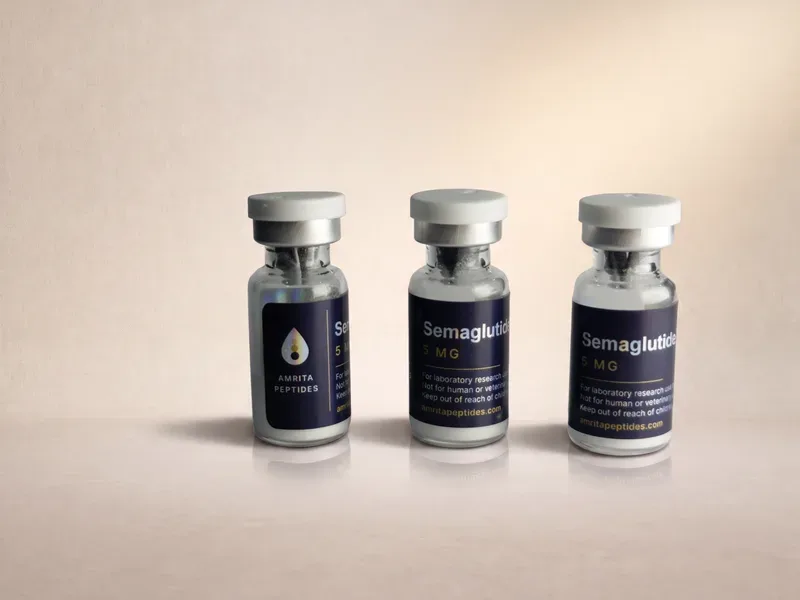
Semaglutide
Molecular formula: C187H291N45O59
The GLP-1 peptide behind the current wave of weight and appetite research — long-acting, and the benchmark newer compounds are measured against.
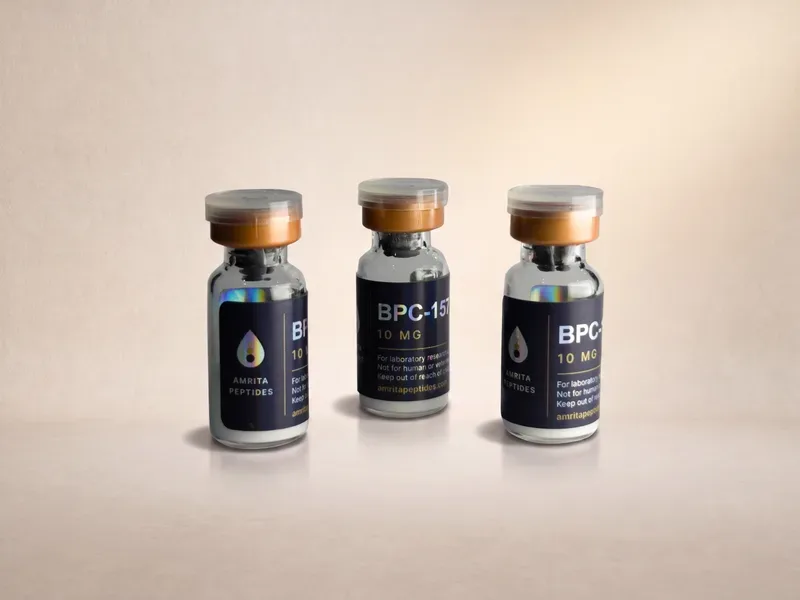
BPC-157
Molecular formula: C62H98N16O22
Probably the best-known recovery peptide — a 15-amino-acid fragment of a stomach protein, researched for how tendons, ligaments and the gut heal.
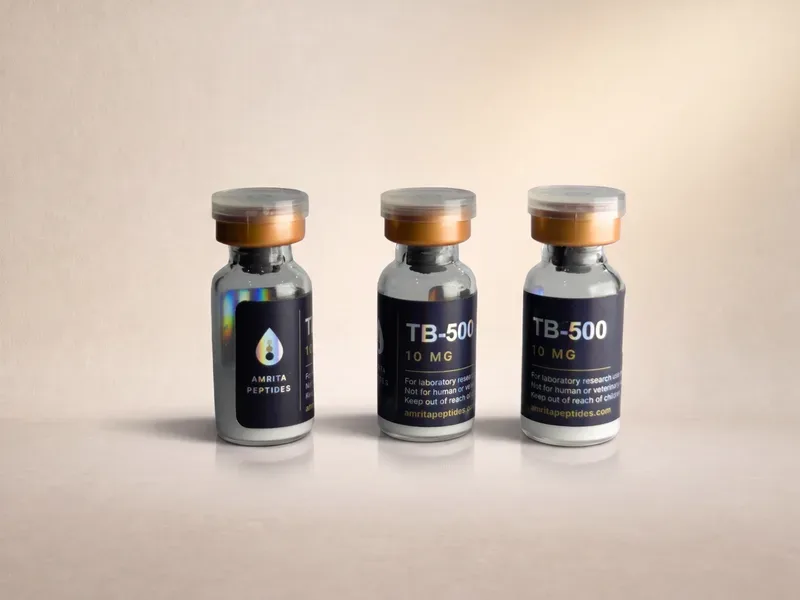
TB-500
Molecular formula: C38H68N10O14
A synthetic piece of Thymosin Beta-4, a protein that helps cells move and rebuild, often researched side by side with BPC-157.
฿5,900
Added to cart. Research use only.