Selank in Thailand
From ฿700 · 5 mg
Often mentioned in the same breath as Semax — a Russian peptide based on tuftsin, researched in stress and anxiety models.
Choose size
Added to cart. Choose another size or open your cart when ready.
For laboratory research use only. Not for human or veterinary use.
Delivery & ordering
- Ships from
- Bangkok, Thailand
- Coverage
- Thailand only — every province
- Dispatch
- Same-day dispatch
- Delivery time
- 2–3 days nationwide
- How to order
- Cart message by WhatsApp, LINE or Telegram
- Payment
- PromptPay, Thai bank transfer, Crypto
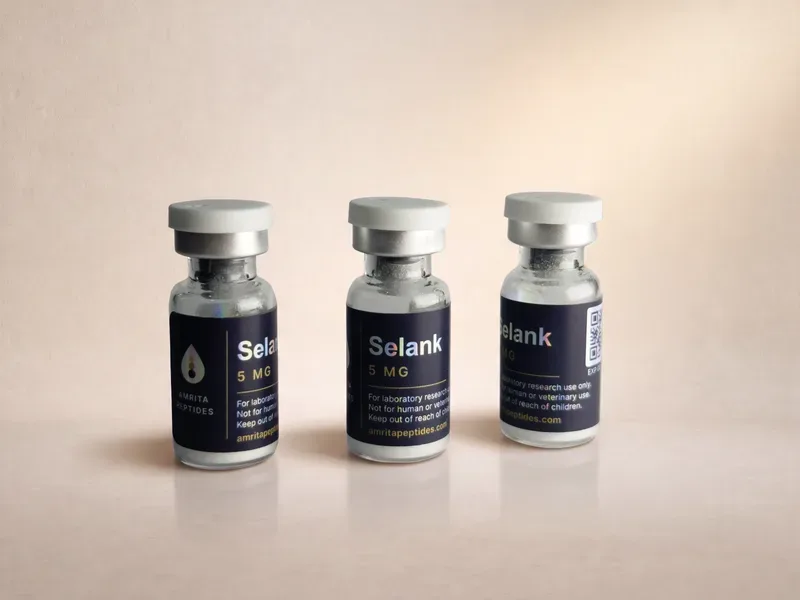
Selank research peptide in Thailand
Selank is a synthetic heptapeptide analogue of the endogenous immunomodulatory peptide tuftsin, developed at the Institute of Molecular Genetics of the Russian Academy of Sciences and studied in anxiolytic, BDNF-related and neuroimmune research models. It is frequently examined alongside Semax, the other Russian-developed regulatory peptide from the same research lineage.
This listing is for laboratory research use only. Most of the Selank literature is Russian-language and has not been replicated in Western trials — it is not a medicine, nootropic, supplement, or anxiety product.
Quick facts
- Product
- Selank (TP-7), synthetic tuftsin analogue
- CAS
- 129954-34-3
- Molecular weight
- ~751.9 g/mol
- Parent peptide
- Tuftsin (TKPR), an immunomodulatory tetrapeptide fragment of IgG
- Intended use
- laboratory research use only
Explore the sequence and chemical composition.
- Thr
- Lys
- Pro
- Arg
- Pro
- Gly
- Pro
Hover or focus a residue to see its full name.
One-letter sequence: TKPRPGP.
How Selank works
Selank is tuftsin with a Pro-Gly-Pro tail appended to the C-terminus. That extension is the whole design idea: native tuftsin is degraded almost immediately by serum peptidases, and the added tripeptide substantially slows cleavage while preserving the parent sequence's receptor interactions. This gives researchers a stabilised probe for tuftsin-like signalling — which sits at the junction of immune and central nervous system activity, since tuftsin itself is an IgG-derived fragment acting on macrophages and microglia.
In published work the peptide is described as modulating GABAergic transmission without acting at the benzodiazepine binding site, and as altering serotonin and noradrenaline turnover in limbic and brainstem regions. A separate strand of the literature examines its effect on brain-derived neurotrophic factor (BDNF) expression in the hippocampus and frontal cortex. Notably, the direction of that effect is context-dependent rather than a simple increase — in a chronic-ethanol rat model Selank prevented an ethanol-induced rise in BDNF (Kolik, Bull Exp Biol Med, 2019). These are findings from specific studies, not outcomes attributed to this product.
Key research findings
- In male Wistar rats, intranasally administered Selank altered BDNF mRNA and protein expression in hippocampal tissue, establishing the neurotrophin mechanism as a research target for the peptide (Inozemtseva, Dokl Biol Sci, 2008).
- In an unpredictable chronic mild stress model using the elevated plus maze, individual administration of Selank was most effective at reducing elevated anxiety indicators, while Selank combined with diazepam was most effective under chronic stress conditions (Kasian, Behav Neurol, 2017).
- In rats given 10% ethanol for 30 weeks, Selank (0.3 mg/kg/day intraperitoneally for 7 days) prevented ethanol-induced memory and attention disturbances during withdrawal and blocked the ethanol-induced increase in BDNF content in the hippocampus and frontal cortex (Kolik, Bull Exp Biol Med, 2019).
Research applications
- Anxiolytic screening models (elevated plus maze, chronic mild stress paradigms)
- BDNF and neurotrophin expression studies in hippocampus and frontal cortex
- Neuroimmune and tuftsin-receptor signalling research
- GABAergic and monoaminergic pathway modulation studies
- Withdrawal and dependence models (alcohol, opioid) in rodents
- Comparative regulatory-peptide work alongside Semax
Study parameters reported in literature
The rodent work used ~0.3 mg/kg intraperitoneally, and the BDNF studies administered the peptide intranasally. This is a summary of parameters as reported in research references, not recommendations for use. To model concentrations for a defined protocol, use the Selank peptide calculator.
Reconstitution & storage
- Solvent
- Bacteriostatic water — standard for lyophilised research peptides
- Mixing
- Add solvent down the vial wall and swirl gently until dissolved; do not shake
- Storage
- Refrigerated (2–8 °C) after reconstitution, in common laboratory practice
- Use within
- A few weeks once reconstituted
- Freeze / light
- Keep lyophilised powder frozen or cold, sealed, and protected from light
Reconstitute with bacteriostatic water using sterile technique. In Thailand's heat and humidity, protect vials from ambient temperature swings during storage and courier handling.
Selected research
- Intranasal administration of the peptide Selank regulates BDNF expression in the rat hippocampus in vivo — Dokl Biol Sci, 2008
- Peptide Selank Enhances the Effect of Diazepam in Reducing Anxiety in Unpredictable Chronic Mild Stress Conditions in Rats — Behav Neurol, 2017
- Selank, Peptide Analogue of Tuftsin, Protects Against Ethanol-Induced Memory Impairment by Regulating of BDNF Content in the Hippocampus and Prefrontal Cortex in Rats — Bull Exp Biol Med, 2019
- Peptide-based Anxiolytics: The Molecular Aspects of Heptapeptide Selank Biological Activity — Protein Pept Lett, 2018 (review)
- Browse all indexed Selank literature on PubMed
Related compounds
- Semax — a synthetic ACTH(4–7) analogue from the same Russian research programme, studied for neurotrophic and cognitive endpoints; the two are commonly examined together in comparative regulatory-peptide work.
- Pinealon — a short peptide studied in neuroprotection and CNS models, another compound in the neuropeptide-signalling category.
- PT-141 — bremelanotide, a melanocortin-receptor agonist used as a CNS-active comparison with an unrelated receptor mechanism; it sits in the separate neuroendocrine signalling hub.
- Bacteriostatic water — the standard diluent used to reconstitute lyophilised research peptides.
See also: Semax vs Selank cognitive research, what Semax and Selank users report online, and more neuropeptide signalling compounds.
Selank FAQ
How strong is the evidence base for Selank?
It is uneven and should be read with care. The preclinical rodent literature is real and indexed on PubMed, and there are small Russian clinical studies — for example a 60-patient comparison of selank against phenazepam in phobic-anxiety and somatoform disorders (Medvedev, Zh Nevrol Psikhiatr, 2014). However, the great majority of this work is Russian-language, from a small number of affiliated institutes, and has not been independently replicated in Western trials. Treat it as a promising but unreplicated research literature, not settled pharmacology.
Is Selank the same as tuftsin?
No. Tuftsin is a natural four-residue fragment (TKPR) of the IgG heavy chain. Selank is that sequence extended with Pro-Gly-Pro to resist peptidase degradation, giving a seven-residue synthetic analogue with a longer functional window.
Does Selank raise BDNF?
The literature is more nuanced than the common summary. Studies report that Selank regulates BDNF expression in the hippocampus and frontal cortex, and in at least one chronic-ethanol model the effect was to prevent a pathological increase rather than to raise baseline levels. Anyone designing a protocol around this endpoint should read the primary papers rather than rely on a directional shorthand.
What do the study parameters on this page represent?
They record the intraperitoneal and intranasal routes, amounts, and schedules used in the cited rodent research. They describe those study designs rather than recommending use of the listed material, which is not intended for humans or animals.
How should Selank be stored, especially in Thailand?
Keep the lyophilised powder frozen or cold, sealed, and out of direct light. Once reconstituted with bacteriostatic water, it is typically refrigerated and used within a few weeks. In Thailand's heat and humidity, minimise time at ambient temperature during handling and delivery.
Is Selank legal to buy for research in Thailand?
It is offered strictly for laboratory research use only, not for human or veterinary use. An RUO label does not determine legal status; researchers should check current Thai FDA information for the specific product and activity. Tracked delivery is available nationwide after order confirmation.
Where is Selank sourced, and are the images the exact vial?
It is sourced from reliable suppliers, stocked in Bangkok, and dispatched within Thailand. Product images are illustrative — confirm the current label, sequence, and packaging details when they matter to a protocol.
Compliance note
Selank is supplied for laboratory research use only. It is not for human or veterinary use, and it is not intended to diagnose, treat, cure, or prevent any disease. All findings referenced above are the results of specific published studies, not claims about this product.
Helpful resources
Related products
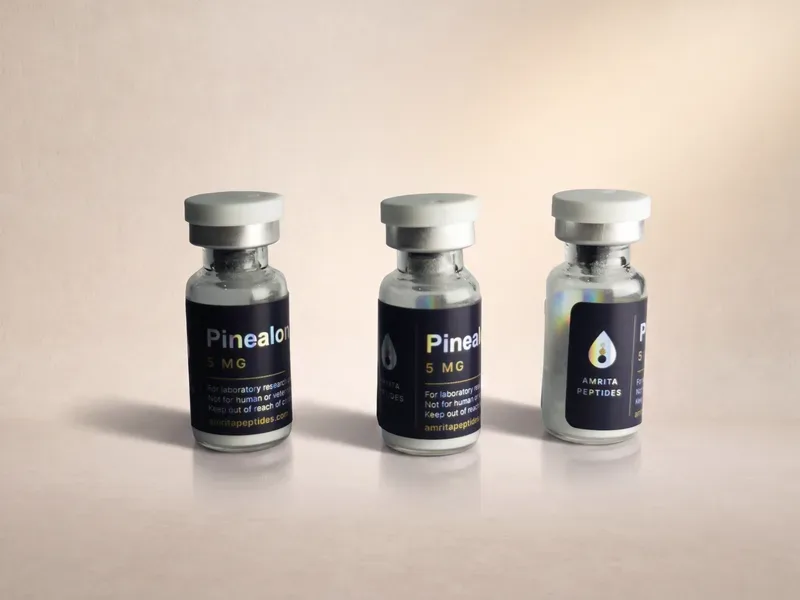
Pinealon
Molecular formula: C15H26N6O8
A tiny three-amino-acid peptide from Russian "bioregulator" research, looked at for how nerve cells cope with oxidative stress and ageing.
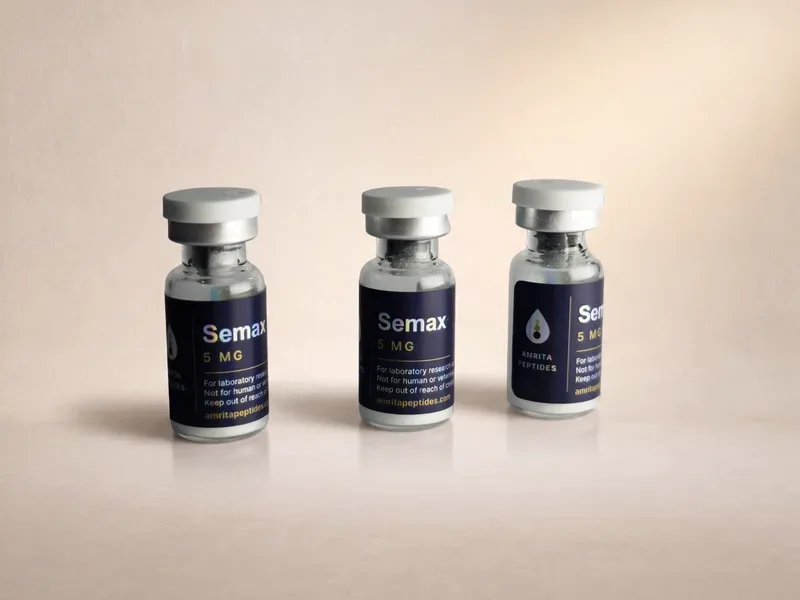
Semax
Molecular formula: C37H51N9O10S
A Russian-developed peptide built on a fragment of ACTH, researched in memory, learning and brain-protection studies.
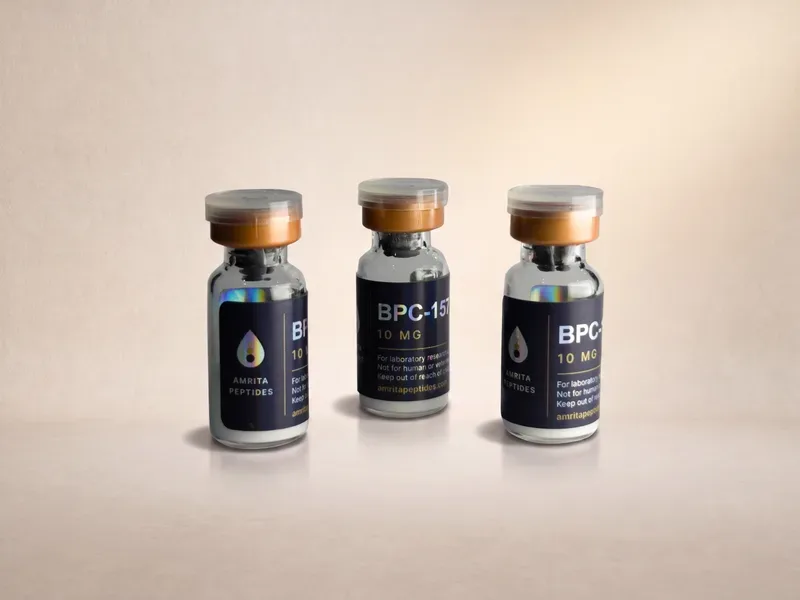
BPC-157
Molecular formula: C62H98N16O22
Probably the best-known recovery peptide — a 15-amino-acid fragment of a stomach protein, researched for how tendons, ligaments and the gut heal.
฿700
Added to cart. Research use only.