PT-141 in Thailand
From ฿1,000 · 10 mg
Also known as bremelanotide, a melanocortin peptide that reached approval for low sexual desire in 2019 — sold here strictly as a research compound.
Choose size
Added to cart. Choose another size or open your cart when ready.
For laboratory research use only. Not for human or veterinary use.
Delivery & ordering
- Ships from
- Bangkok, Thailand
- Coverage
- Thailand only — every province
- Dispatch
- Same-day dispatch
- Delivery time
- 2–3 days nationwide
- How to order
- Cart message by WhatsApp, LINE or Telegram
- Payment
- PromptPay, Thai bank transfer, Crypto
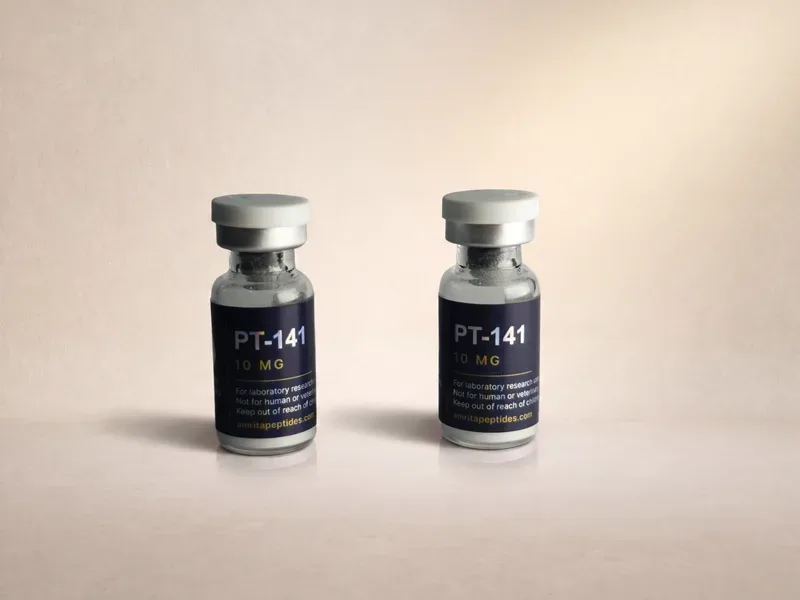
PT-141 research peptide in Thailand
PT-141 (bremelanotide) is a synthetic cyclic heptapeptide analogue of α-MSH that acts as an agonist at the melanocortin receptors MC3R and MC4R, and it is one of the few research peptides with a completed phase 3 programme behind it — the FDA approved it as Vyleesi in 2019 for hypoactive sexual desire disorder in premenopausal women. Because it engages central melanocortin signalling rather than peripheral vasculature, neuroendocrine labs use it as a reference MC4R agonist.
Supplied as a lyophilised powder for laboratory research use only. This page summarises the published literature so a researcher can identify the compound; it is not a medicine, a sexual-health product, or a wellness product. Literature-reported study parameters are identified as descriptive records rather than recommendations for use.
Quick facts
- Product
- PT-141 (bremelanotide free base reference)
- CAS number
- 189691-06-3
- Molecular weight
- ~1025.2 Da
- Regulatory status
- Approved as Vyleesi (FDA, 2019); research-grade material here
- Intended use
- laboratory research use only
Explore the sequence and chemical composition.
- Ac
- Nle
- cyclo[Asp
- His
- D-Phe
- Arg
- Trp
- Lys]
- OH
Hover or focus a residue to see its full name.
N-acetylated cyclic heptapeptide; the Asp-to-Lys lactam bond closes the ring.
How PT-141 works
Bremelanotide is a cyclised, N-acetylated analogue of α-melanocyte-stimulating hormone. The cyclisation locks the His-D-Phe-Arg-Trp pharmacophore into a conformation that resists enzymatic degradation and biases binding toward MC3R and MC4R over the pigmentation-associated MC1R. MC4R is densely expressed in the hypothalamus, brainstem, and limbic system, where it also participates in energy homeostasis — which is why melanocortin agonism is studied across both neuroendocrine and metabolic models.
The pharmacologically interesting point for researchers is the site of action. PDE5 inhibitors act peripherally on vascular smooth muscle via cGMP; bremelanotide acts within the central nervous system, and preclinical work has mapped its effects onto hypothalamic melanocortin circuitry rather than genital haemodynamics (Pfaus et al., J Sex Med 2007). MC4R expression in cardiovascular control regions also explains the transient blood-pressure signal characterised in dedicated ambulatory monitoring trials.
Key research findings
- The two identical RECONNECT phase 3 trials randomised 1,267 premenopausal women to bremelanotide 1.75 mg subcutaneously as needed or placebo for 24 weeks, reporting statistically significant changes versus placebo on both coprimary endpoints — FSFI-desire domain (integrated +0.35, P<.001) and FSDS-DAO item 13 (integrated −0.33, P<.001) (Kingsberg et al., Obstet Gynecol 2019, PMID 31599840).
- In the 52-week open-label extension of those trials (684 enrolled, 272 completing), the most common drug-related treatment-emergent adverse events were nausea (40.4%), flushing (20.6%), and headache (12.0%), with nausea the only severe event affecting more than one participant in both studies (Simon et al., Obstet Gynecol 2019, PMID 31599847).
- A randomised ambulatory blood-pressure study in 397 women found the 1.75 mg dose produced small transient systolic increases of roughly 3.1–3.2 mmHg over the 0–4 hour post-dose interval, with peaks typically lasting under 15 minutes and accompanied by a heart-rate reduction of about 4.6 bpm (White et al., J Hypertens 2017, PMID 27977473).
Research applications
- Melanocortin receptor pharmacology, particularly MC3R versus MC4R selectivity and binding-affinity profiling.
- Central versus peripheral mechanism studies contrasting melanocortin agonism with PDE5-inhibitor pathways.
- Hypothalamic and limbic neuroendocrine signalling models, including dopaminergic and oxytocinergic circuit work.
- Cardiovascular safety pharmacology of MC4R agonists, following the ambulatory blood-pressure methodology.
- Structure-activity work on cyclic α-MSH analogues and peptide conformational stability.
- Receptor-agonist tolerability and adverse-event characterisation in preclinical models.
Study parameters reported in literature
Phase 2/3 trials studied the 0.75–1.75 mg span, and the approved label specifies 1.75 mg as needed. These figures report what published trials studied and what the approved label specifies; they are provided for literature reference only, not as recommendations for use. To model concentrations and volumes for a study, use the peptide calculator.
Reconstitution & storage
- Solvent
- Bacteriostatic water — the common laboratory choice
- Mixing
- Add solvent down the vial wall and swirl gently until dissolved; do not shake
- Storage
- Refrigerate at 2–8 °C after reconstitution
- Use within
- About 28–30 days once reconstituted
- Freeze / light
- Keep lyophilised powder frozen or refrigerated; protect from direct light; avoid repeated freeze–thaw
These are standard laboratory handling conventions, not instructions for use. See bacteriostatic water for the standard diluent. In Thailand's heat and humidity, minimise time at ambient temperature and limit courier exposure to heat.
Selected research
- Bremelanotide for the Treatment of Hypoactive Sexual Desire Disorder: Two Randomized Phase 3 Trials — Obstetrics and Gynecology, 2019 (PMID 31599840).
- Long-Term Safety and Efficacy of Bremelanotide for Hypoactive Sexual Desire Disorder — Obstetrics and Gynecology, 2019 (PMID 31599847).
- Usefulness of ambulatory blood pressure monitoring to assess the melanocortin receptor agonist bremelanotide — Journal of Hypertension, 2017 (PMID 27977473).
- Melanocortin receptor agonists in the treatment of male and female sexual dysfunctions: results from basic research and clinical studies — Expert Opinion on Investigational Drugs, 2014 (PMID 25096243).
- Further indexed literature via PubMed search for bremelanotide.
Related compounds
- Oxytocin — a nine-amino-acid hypothalamic neuropeptide; oxytocinergic neurons in the paraventricular nucleus are downstream of melanocortin signalling, making it a frequent companion in central neuroendocrine circuit studies.
- Selank — a short regulatory neuropeptide used as a comparison point in CNS-active peptide research with a different receptor mechanism entirely.
- Bacteriostatic water — the standard diluent used to reconstitute lyophilised research peptides.
See also: more neuroendocrine signalling compounds.
PT-141 FAQ
Is PT-141 sold here for research use only?
Yes. PT-141 is supplied strictly as a research chemical for laboratory use. Although bremelanotide is an approved medicine in some jurisdictions, the material listed here is research-grade and is not offered as a medicine, supplement, sexual-health product, or treatment of any kind.
What do the study parameters on this page represent?
They record the amounts, subcutaneous route, and timing studied in the cited phase 2 and phase 3 trials and identified in the approved label. They describe those sources rather than recommending use of the listed material, which is not intended for humans or animals.
Is PT-141 the same thing as bremelanotide?
Yes — PT-141 is the development code and common research-supply name for bremelanotide, the cyclic α-MSH analogue approved as Vyleesi. If a protocol requires exact listing details, confirm the product name, option, SKU, and label before ordering.
What does the phase 3 evidence actually show?
The RECONNECT programme (PMID 31599840) reported statistically significant changes versus placebo on its two coprimary questionnaire endpoints in premenopausal women with HSDD, alongside higher rates of nausea, flushing, and headache. Those are findings of that specific trial in that specific population, not claims about this product.
How should PT-141 be handled and stored?
As a lyophilised powder, keep it sealed, cool, dark, and dry — frozen or refrigerated for longer storage. After reconstitution with bacteriostatic water, laboratories commonly refrigerate at 2–8 °C and use within about 28–30 days, avoiding freeze–thaw cycles and direct light.
How do I store it in Thailand's climate?
Heat and humidity shorten peptide stability, so minimise time at ambient temperature, keep vials refrigerated, and limit courier exposure to heat. Stock is held in Bangkok and dispatched within Thailand after manual confirmation, which keeps transit windows short.
Is PT-141 legal to source for research in Thailand?
It is supplied only as research-grade material for qualified laboratory work. An RUO label does not determine legal status; researchers should check current Thai FDA information for the specific product and activity.
Can it be ordered with bacteriostatic water?
Yes, bacteriostatic water can be added to the same order when a laboratory protocol calls for it. We do not recommend preparation volumes or provide reconstitution instructions for use.
Compliance note
PT-141 is provided for laboratory research use only. It is not intended for human or veterinary use, and it is not intended to diagnose, treat, cure, or prevent any disease. Trial results described on this page are findings of the specific cited studies, not claims about this product.
Helpful resources
Related products
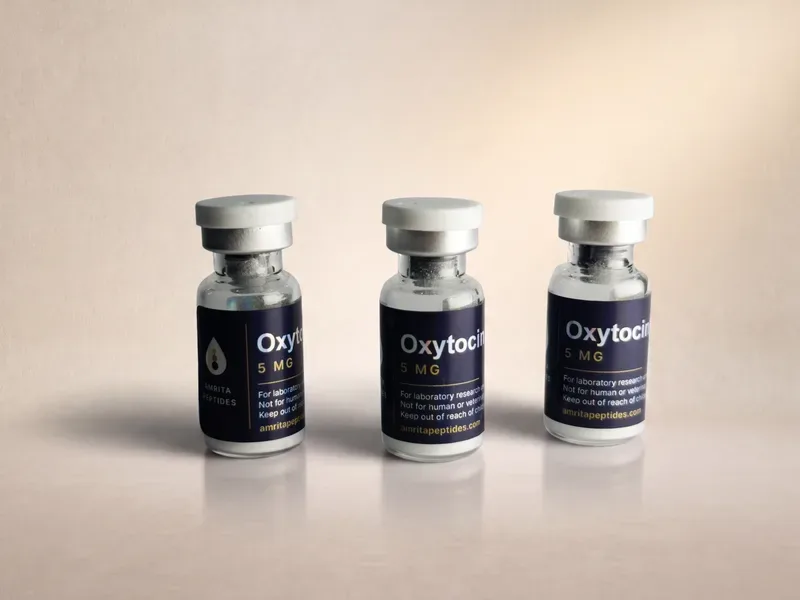
Oxytocin
Molecular formula: C43H66N12O12S2
The body's own bonding hormone: nine amino acids, and one of the most studied signalling molecules in social-behaviour research.
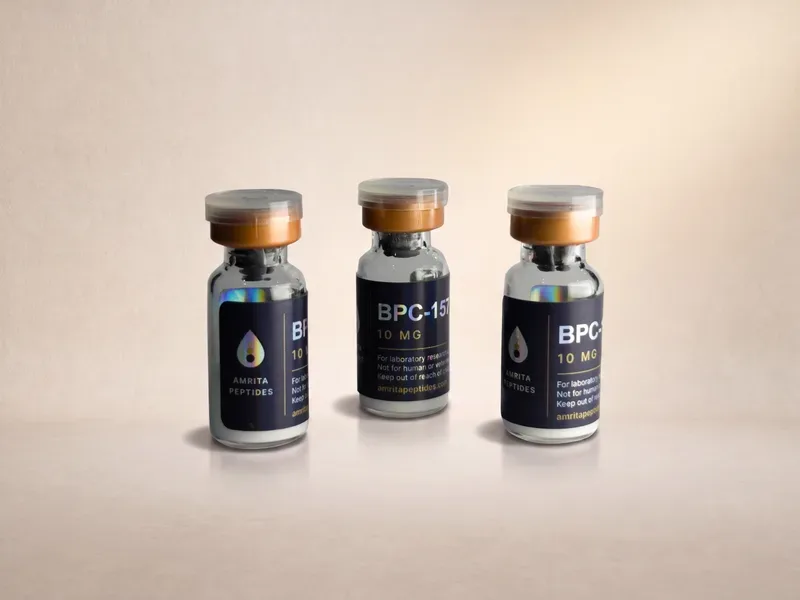
BPC-157
Molecular formula: C62H98N16O22
Probably the best-known recovery peptide — a 15-amino-acid fragment of a stomach protein, researched for how tendons, ligaments and the gut heal.
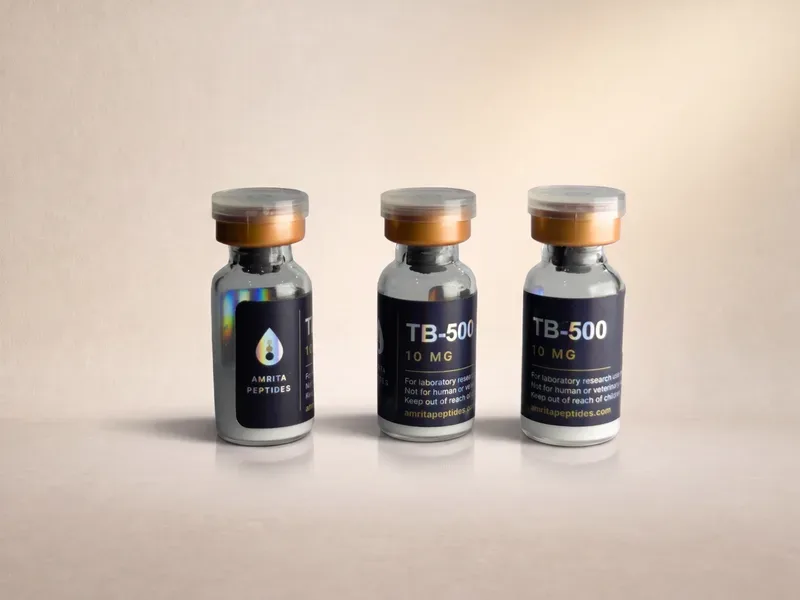
TB-500
Molecular formula: C38H68N10O14
A synthetic piece of Thymosin Beta-4, a protein that helps cells move and rebuild, often researched side by side with BPC-157.
฿1,000
Added to cart. Research use only.