Ipamorelin in Thailand
From ฿800 · 10 mg
A small, selective growth-hormone releaser — it caught researchers' attention because it leaves cortisol largely untouched.
Choose size
Added to cart. Choose another size or open your cart when ready.
For laboratory research use only. Not for human or veterinary use.
Delivery & ordering
- Ships from
- Bangkok, Thailand
- Coverage
- Thailand only — every province
- Dispatch
- Same-day dispatch
- Delivery time
- 2–3 days nationwide
- How to order
- Cart message by WhatsApp, LINE or Telegram
- Payment
- PromptPay, Thai bank transfer, Crypto
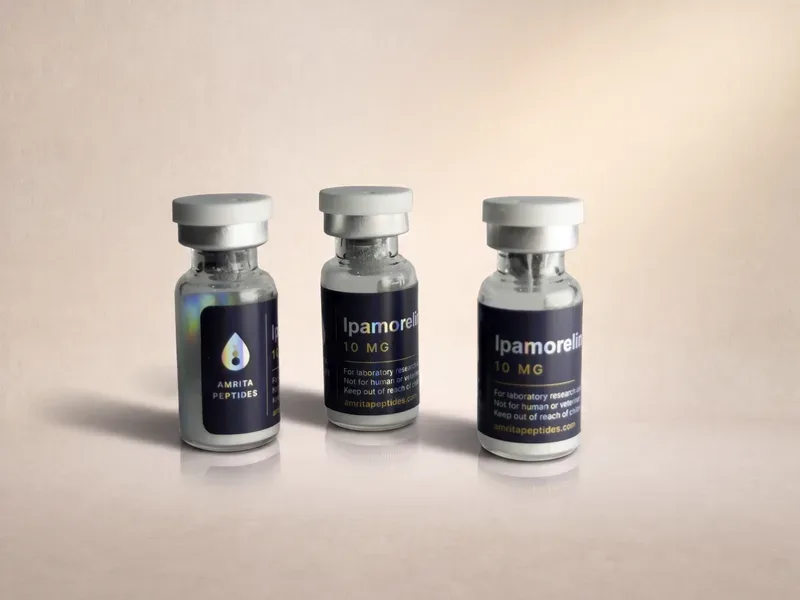
Ipamorelin research peptide in Thailand
Ipamorelin is a synthetic pentapeptide growth hormone secretagogue that acts as an agonist at the ghrelin receptor (GHS-R1a), studied for its unusually selective growth hormone release — it was characterised as the first GH secretagogue that raises GH without significantly elevating ACTH or cortisol (Raun, Eur J Endocrinol, 1998).
This listing is for laboratory research use only. The evidence base is largely preclinical, with a small number of early-phase human pharmacokinetic and Phase 2 studies; it is not a medicine, supplement, or performance product.
Quick facts
- Product
- Ipamorelin (standalone, not a CJC-1295 blend)
- CAS
- 170851-70-4
- Molecular weight
- ~711.9 g/mol
- Form
- Lyophilised powder, sealed vial
- Intended use
- laboratory research use only
Explore the sequence and chemical composition.
- Aib
- His
- D-2-Nal
- D-Phe
- Lys
- NH2
Hover or focus a residue to see its full name.
A modified pentapeptide with a C-terminal amide.
How Ipamorelin works
Ipamorelin binds the growth hormone secretagogue receptor (GHS-R1a) on somatotroph cells of the anterior pituitary — the same receptor targeted by the endogenous hormone ghrelin. GHS-R1a is Gq-coupled, so activation drives phospholipase C signalling and a rise in intracellular calcium, which triggers exocytosis of stored growth hormone granules. The result described in the literature is a discrete, pulsatile GH release rather than a sustained elevation.
What distinguishes ipamorelin in the published record is its receptor selectivity. Earlier peptidyl secretagogues such as GHRP-2 and GHRP-6 also stimulate ACTH and cortisol release; in the original characterisation study, ipamorelin released GH with potency comparable to GHRP-6 in rat pituitary cells, anaesthetised rats, and conscious swine, yet did not release ACTH or cortisol at levels significantly different from GHRH stimulation (Raun, Eur J Endocrinol, 1998). That separation is why it appears so often as a control or comparator compound in GH-axis work. Note that GHS-R1a agonism is a distinct mechanism from the GHRH-receptor route used by CJC-1295 (no DAC) and tesamorelin.
Key research findings
- In its original characterisation, ipamorelin released GH with a potency and efficacy comparable to GHRP-6 across rat pituitary cells, anaesthetised rats, and conscious swine, but did not release ACTH or cortisol at levels significantly different from those seen with GHRH (Raun, Eur J Endocrinol, 1998).
- In a human dose-escalation study across five infusion rates, ipamorelin showed dose-proportional pharmacokinetics with a terminal half-life of 2 hours, clearance of 0.078 L/h/kg, and a single episodic GH release peaking at ~0.67 hours (Gobburu, Pharm Res, 1999).
- In a randomised, controlled Phase 2 proof-of-concept trial in 117 bowel-resection patients, ipamorelin was well tolerated but did not differ significantly from placebo on the key or secondary efficacy endpoints for postoperative ileus (Beck, Int J Colorectal Dis, 2014).
- In adult female rats, ipamorelin produced a dose-dependent increase in longitudinal bone growth rate (42 to 52 µm/day at the highest dose, P<0.0001) without altering total IGF-I or IGF-binding protein levels (Johansen, Growth Horm IGF Res, 1999).
Research applications
- GHS-R1a receptor pharmacology and secretagogue selectivity studies
- Pulsatile GH secretion and pituitary somatotroph signalling models
- Comparator/control compound in GHRP-2 and GHRP-6 cortisol-confounding work
- Bone formation and glucocorticoid-catabolism models in rodents
- Gastrointestinal motility and postoperative ileus models
- Cross-mechanism GH-axis studies alongside GHRH-receptor analogues
Study parameters reported in literature
The human dose-escalation study infused 4.21–140.45 nmol/kg over 15 minutes rather than administering fixed amounts (Gobburu, Pharm Res, 1999), and the rodent work used roughly 0.1–1 mg/kg per administration. These figures are a summary of parameters as reported in published research, not recommendations for use. To model concentrations for a defined protocol, use the Ipamorelin peptide calculator.
Reconstitution & storage
- Solvent
- Bacteriostatic water — standard for lyophilised research peptides
- Mixing
- Add solvent down the vial wall and swirl gently until dissolved; do not shake
- Storage
- Refrigerated (2–8 °C) after reconstitution, in common laboratory practice
- Use within
- A few weeks once reconstituted
- Freeze / light
- Keep lyophilised powder frozen or cold, sealed, and protected from light
This describes common laboratory handling practice for lyophilised peptides, not preparation instructions. In Thailand's heat and humidity, protect vials from ambient temperature swings during storage and courier handling, and minimise time spent out of cold storage.
Selected research
- Ipamorelin, the first selective growth hormone secretagogue — Eur J Endocrinol, 1998
- Pharmacokinetic-pharmacodynamic modeling of ipamorelin, a growth hormone releasing peptide, in human volunteers — Pharm Res, 1999
- Prospective, randomized, controlled, proof-of-concept study of the ghrelin mimetic ipamorelin for the management of postoperative ileus in bowel resection patients — Int J Colorectal Dis, 2014
- The growth hormone secretagogue ipamorelin counteracts glucocorticoid-induced decrease in bone formation of adult rats — Growth Horm IGF Res, 2001
- Browse all indexed ipamorelin literature on PubMed
Related compounds
- CJC-1295 (no DAC) — a short-acting GHRH analogue. It reaches the same pituitary somatotrophs through the GHRH receptor rather than GHS-R1a, which is why the two are frequently studied as complementary arms of the GH axis.
- Tesamorelin — a stabilised GHRH analogue with the most developed human clinical record on this axis, useful as a reference comparator in GH/IGF-1 study design.
- Bacteriostatic water — the standard diluent used to reconstitute lyophilised research peptides.
See also: growth hormone secretagogues compared and more growth-hormone-axis compounds.
Ipamorelin FAQ
What makes Ipamorelin "selective" compared with other GHRPs?
Selectivity here refers to the endocrine profile, not receptor exclusivity in the abstract. In the original characterisation study, ipamorelin stimulated GH release comparably to GHRP-6 but did not raise ACTH or cortisol beyond what GHRH stimulation produced (Raun, Eur J Endocrinol, 1998). That makes it useful in study designs where cortisol elevation would confound the readout.
What evidence level supports Ipamorelin?
Mostly preclinical — rodent, swine, and cell work on GH release, bone formation, and GI motility. There is a small early-phase human record: a dose-escalation pharmacokinetic study in healthy volunteers, and a Phase 2 postoperative ileus trial that did not meet its efficacy endpoints. No human-outcome claims are made about this product.
Is this standalone Ipamorelin or a CJC-1295 blend?
This listing is standalone Ipamorelin. If a protocol calls for a GHRH-analogue arm, CJC-1295 (no DAC) is stocked separately. Always confirm compound identity on the current label — catalog category language can obscure real differences.
What do the study parameters on this page represent?
They record the infusion parameters used in the cited human pharmacokinetic study and the body-weight-based amounts used in rodent work. They describe published study designs rather than recommending use of the listed material, which is not intended for humans or animals.
How should Ipamorelin be stored, especially in Thailand?
Keep the lyophilised powder frozen or cold, sealed, and out of direct light. Once reconstituted with bacteriostatic water, it is typically refrigerated at 2–8 °C and used within a few weeks. In Thailand's climate, minimise time at ambient temperature during handling and delivery.
Is Ipamorelin legal to buy for research in Thailand?
It is offered strictly for laboratory research use only, not for human or veterinary use. An RUO label does not determine legal status; researchers should check current Thai FDA information for the specific product and activity. Tracked delivery is available nationwide after order confirmation.
Where is Ipamorelin sourced, and are the images the exact vial?
It is sourced from established suppliers, stocked in Bangkok, and dispatched within Thailand. Product images are illustrative — confirm the current label, batch, and packaging details when they matter to a protocol.
Compliance note
Ipamorelin is supplied for laboratory research use only. It is not for human or veterinary use, and it is not intended to diagnose, treat, cure, or prevent any disease. All findings referenced above are the results of specific published studies, not claims about this product.
Helpful resources
Related products
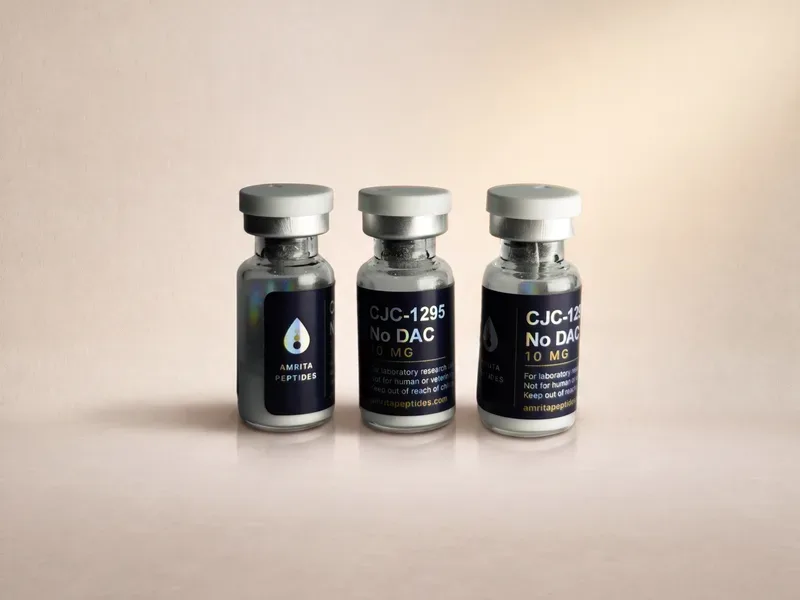
CJC-1295 No DAC
Molecular formula: C152H252N44O42
A short-acting version of the body's own growth-hormone-releasing signal, and the usual research partner for Ipamorelin.
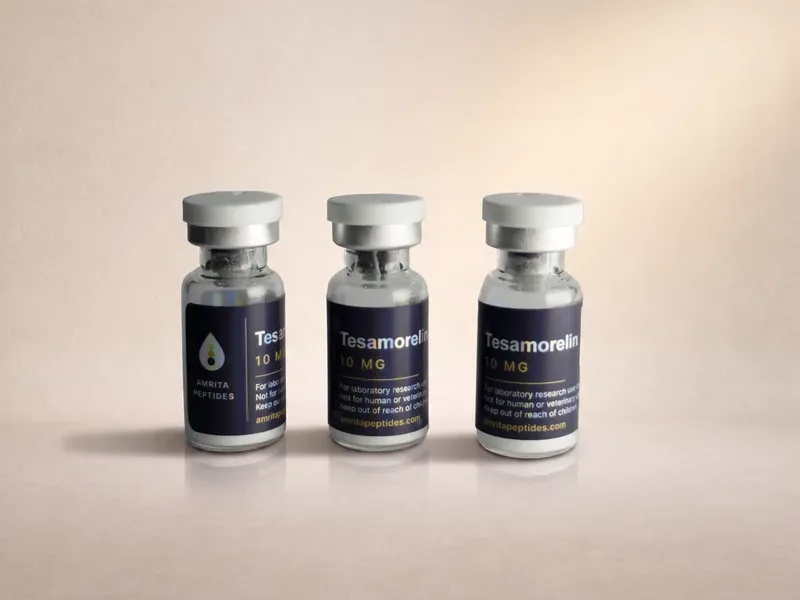
Tesamorelin
Molecular formula: C221H366N72O67S
A stabilised copy of the full growth-hormone-releasing hormone, and one of the few tested in large human trials, including on belly fat.
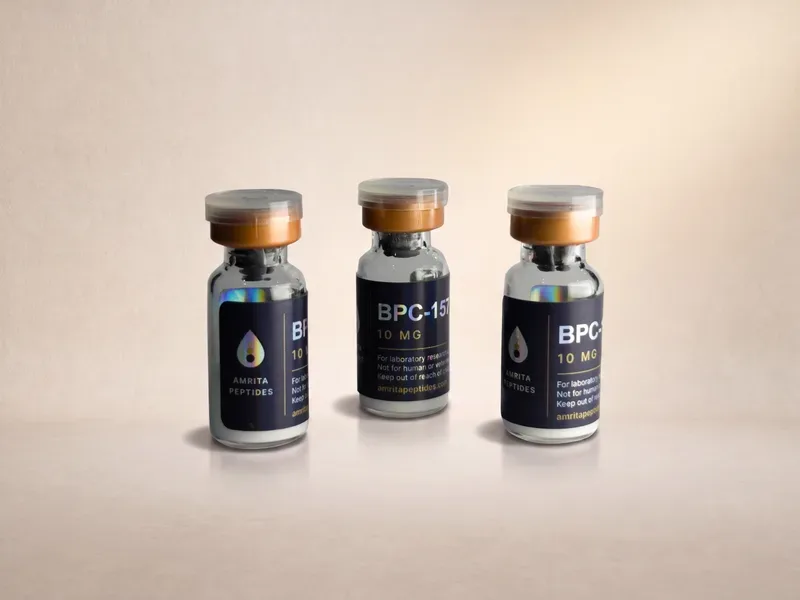
BPC-157
Molecular formula: C62H98N16O22
Probably the best-known recovery peptide — a 15-amino-acid fragment of a stomach protein, researched for how tendons, ligaments and the gut heal.
฿800
Added to cart. Research use only.