Tesamorelin in Thailand
From ฿1,900 · 10 mg
A stabilised copy of the full growth-hormone-releasing hormone, and one of the few tested in large human trials, including on belly fat.
Choose size
Added to cart. Choose another size or open your cart when ready.
For laboratory research use only. Not for human or veterinary use.
Delivery & ordering
- Ships from
- Bangkok, Thailand
- Coverage
- Thailand only — every province
- Dispatch
- Same-day dispatch
- Delivery time
- 2–3 days nationwide
- How to order
- Cart message by WhatsApp, LINE or Telegram
- Payment
- PromptPay, Thai bank transfer, Crypto
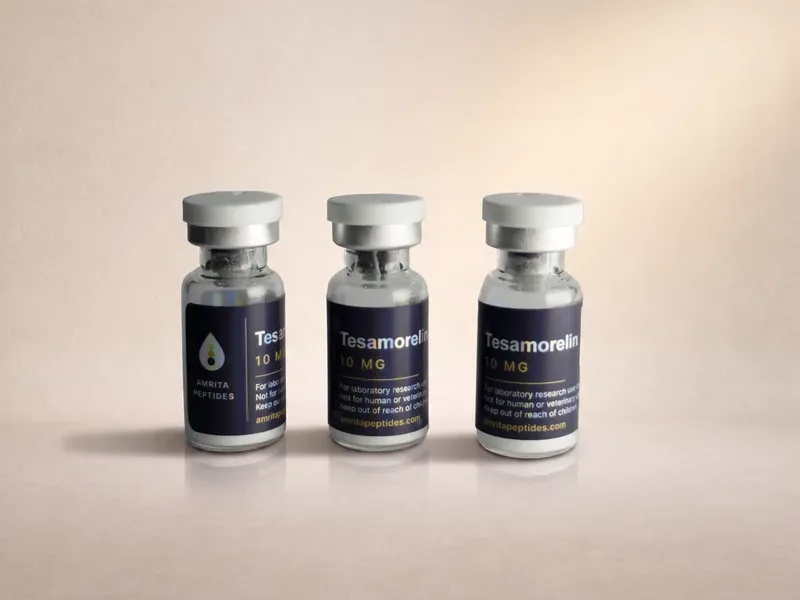
Tesamorelin research peptide in Thailand
Tesamorelin is a stabilised analogue of full-length human growth-hormone-releasing hormone, GHRH(1-44), studied for its effects on pulsatile growth hormone secretion, IGF-1 output, and visceral adipose tissue. It is the only GHRH analogue to have reached regulatory approval (as Egrifta, for HIV-associated lipodystrophy), which means it carries phase 3 human trial data that most research GHRH peptides do not.
Supplied as a lyophilised powder for laboratory research use only. This page summarises the published literature so a researcher can identify the compound; it is not a medicine. Literature-reported study parameters are identified as descriptive records rather than recommendations for use.
Quick facts
- Product
- Tesamorelin (TH9507, trade name Egrifta)
- Identity
- trans-3-hexenoyl-GHRH(1-44), 44-amino-acid GHRH analogue
- CAS number
- 218949-48-5
- Molecular weight
- ~5136 Da (peptide free base, reported)
- Intended use
- laboratory research use only
Explore the sequence and chemical composition.
- Y
- A
- D
- A
- I
- F
- T
- N
- S
- Y
- R
- K
- V
- L
- G
- Q
- L
- S
- A
- R
- K
- L
- L
- Q
- D
- I
- M
- S
- R
- Q
- Q
- G
- E
- S
- N
- Q
- E
- R
- G
- A
- R
- A
- R
- L
Hover or focus a residue to see its full name.
A 44-residue human GHRH analogue with an N-terminal trans-3-hexenoyl group.
How tesamorelin works
Native GHRH is cleaved within minutes by dipeptidyl peptidase-IV, which makes it impractical as a research stimulus. Tesamorelin carries a trans-3-hexenoic acid group on the N-terminus that blocks that cleavage site, extending the circulating half-life to roughly half an hour while leaving receptor binding intact. It engages the GHRH receptor on pituitary somatotrophs and drives growth hormone release in the body's own pulsatile pattern, which in turn raises hepatic IGF-1.
The downstream interest is adipose-tissue selective. Released growth hormone acts on adipocytes through the GH receptor and JAK2-STAT5 signalling, activating hormone-sensitive lipase and raising lipolysis. Visceral fat is more responsive to this pathway than subcutaneous fat, which is the mechanistic account offered for the tissue-specific visceral adipose tissue (VAT) reductions measured by CT in the phase 3 programme. Because the compound amplifies endogenous GHRH signalling rather than supplying exogenous GH, the resulting hormone profile stays feedback-regulated.
Key research findings
- In a 26-week randomised placebo-controlled phase 3 trial of 412 HIV-positive patients with excess abdominal fat, 2 mg daily tesamorelin was associated with a 15.2% decrease in visceral adipose tissue versus a 5.0% increase on placebo, alongside an 81.0% rise in IGF-1 (Falutz et al., NEJM 2007, PMID 18057338).
- A pooled analysis of two phase 3 trials (806 participants) reported a VAT treatment effect of −15.4% at 26 weeks and −17.5% at 52 weeks in the continued-treatment arm, with triglycerides falling 37 mg/dL versus a 6 mg/dL rise on placebo (Falutz et al., J Clin Endocrinol Metab 2010, PMID 20554713).
- Outside the metabolic indication, a 20-week controlled trial in 152 older adults (66 with mild cognitive impairment) reported a favourable effect of GHRH on cognition overall (P=.03), driven mainly by executive function (P=.005), at 1 mg daily (Baker et al., Arch Neurol 2012, PMID 22869065).
Research applications
- Visceral adipose tissue reduction and tissue-selective lipolysis models.
- GH/IGF-1 axis pharmacology using a pulsatile rather than continuous GH stimulus.
- DPP-IV resistance and peptide half-life engineering studies, with native GHRH as the comparator.
- Lipid-profile and cardiometabolic risk-marker research (triglycerides, cholesterol ratios).
- Age-related growth hormone decline and body-composition protocols.
- Neuroendocrine and cognitive-function research following the mild cognitive impairment trial literature.
Study parameters reported in literature
The phase 3 programme ran these doses over 26–52 weeks. These figures summarise what published trials reported and are provided for literature reference only, not as recommendations for use. To model concentrations and volumes for a study, use the peptide calculator.
Reconstitution & storage
- Solvent
- Bacteriostatic water — the common laboratory choice
- Mixing
- Add solvent down the vial wall and swirl gently until dissolved; do not shake
- Storage
- Refrigerate at 2–8 °C after reconstitution
- Use within
- About 28 days once reconstituted
- Freeze / light
- Keep lyophilised powder frozen or refrigerated; protect from direct light; avoid repeated freeze–thaw
These are standard laboratory handling conventions, not instructions for use. See bacteriostatic water for the standard diluent. In Thailand's heat and humidity, minimise time at room temperature and keep vials out of direct sun during courier handling.
Selected research
- Metabolic effects of a growth hormone-releasing factor in patients with HIV — New England Journal of Medicine, 2007 (PMID 18057338).
- Effects of tesamorelin (TH9507) in HIV-infected patients with excess abdominal fat: a pooled analysis of two phase 3 trials with safety extension data — Journal of Clinical Endocrinology & Metabolism, 2010 (PMID 20554713).
- Effects of growth hormone-releasing hormone on cognitive function in adults with mild cognitive impairment and healthy older adults — Archives of Neurology, 2012 (PMID 22869065).
- Further indexed literature via PubMed search for tesamorelin.
Related compounds
- CJC-1295 (no DAC) — the closest comparison: a shortened GHRH(1-29) analogue acting at the same receptor, but with a much shorter action and no comparable clinical trial base.
- Ipamorelin — a selective GHRP acting on the ghrelin receptor rather than the GHRH receptor, frequently used as the contrasting secretagogue pathway in GH-axis studies.
- Bacteriostatic water — the standard diluent used to reconstitute lyophilised research peptides.
See also: growth hormone secretagogues compared and more growth-hormone-axis compounds.
Buying Tesamorelin in Thailand
Tesamorelin is stocked in Bangkok as 10 mg vials, sold singly or in packs of 5 or 10. Prices are in Thai baht and include tracked delivery anywhere in Thailand. 10 × 10 mg vials work out at ฿1,490 a vial, 22% less than a single 10 mg vial.
| Option | Price | Per vial |
|---|---|---|
| 1 × 10 mg vial | ฿1,900 | ฿1,900 |
| 5 × 10 mg vials | ฿8,100 | ฿1,620 |
| 10 × 10 mg vials | ฿14,900 | ฿1,490 |
Dispatch and delivery
Same-day dispatch from Bangkok once your order is confirmed, by tracked courier. Typical timing:
- Bangkok
- same-day or next-day dispatch after confirmation
- Pattaya and the Eastern Seaboard
- tracked overnight where courier timing allows
- Phuket and the South
- usually 1–2 days after dispatch
- Chiang Mai and the North
- usually 1–2 days after dispatch
- Hua Hin, Koh Samui, and other provinces
- tracked nationwide courier delivery
How to order
Add a size to the cart and send the order message it writes on WhatsApp, LINE or Telegram. We reply with stock, the total and payment details (PromptPay, Thai bank transfer or Crypto). Nothing is charged on this website.
Tesamorelin FAQ
Is tesamorelin sold here for research use only?
Yes. Tesamorelin is supplied strictly as a research chemical for laboratory use. Although the compound is approved as a medicine in some jurisdictions under the name Egrifta, the material listed here is research-grade and is not offered as a medicine, supplement, or fat-loss product.
What do the study parameters on this page represent?
They record the daily amounts, subcutaneous route, and 26–52 week timeframes used in the cited phase 3 programme. They describe the trial design rather than recommending use of the listed material, which is not intended for humans or animals.
Why does tesamorelin have stronger evidence than other GHRH peptides?
Because it completed a full phase 3 programme. Two randomised, double-blind, placebo-controlled trials with more than 800 combined participants measured visceral adipose tissue by CT scan as a primary endpoint (Falutz et al., J Clin Endocrinol Metab 2010). Most research GHRH analogues have no comparable human dataset.
How should tesamorelin be handled and stored?
As a lyophilised powder, keep it sealed, cool, dark, and dry, frozen or refrigerated for longer storage. After reconstitution with bacteriostatic water, laboratories commonly refrigerate at 2–8 °C and use within about 28 days, avoiding freeze–thaw cycles and direct light.
How do I store it in Thailand's climate?
Heat and humidity shorten peptide stability, so minimise time at ambient temperature, keep vials refrigerated, and limit courier exposure to heat. Dispatch within Thailand is arranged after manual confirmation, which keeps transit time short.
How does tesamorelin differ from CJC-1295 and ipamorelin?
By molecule and by pathway. Tesamorelin is full-length GHRH(1-44) with an N-terminal modification that resists DPP-IV; CJC-1295 (no DAC) is a shortened GHRH(1-29) fragment at the same receptor; ipamorelin is a pentapeptide acting on the ghrelin receptor instead, a separate secretagogue route. No head-to-head trial of the three has been published.
Is tesamorelin legal to source for research in Thailand?
It is supplied only as research-grade material for qualified laboratory work, not as an approved medicine. Researchers should check current Thai FDA information for the specific product and activity.
Can it be ordered with bacteriostatic water?
Yes, bacteriostatic water can be added to the same order when a laboratory protocol calls for it. We do not recommend preparation volumes or provide reconstitution instructions for use.
Compliance note
Tesamorelin is provided for laboratory research use only. It is not intended for human or veterinary use, and it is not intended to diagnose, treat, cure, or prevent any disease. Trial results described on this page are findings of the specific cited studies, not claims about this product.
Helpful resources
Related products
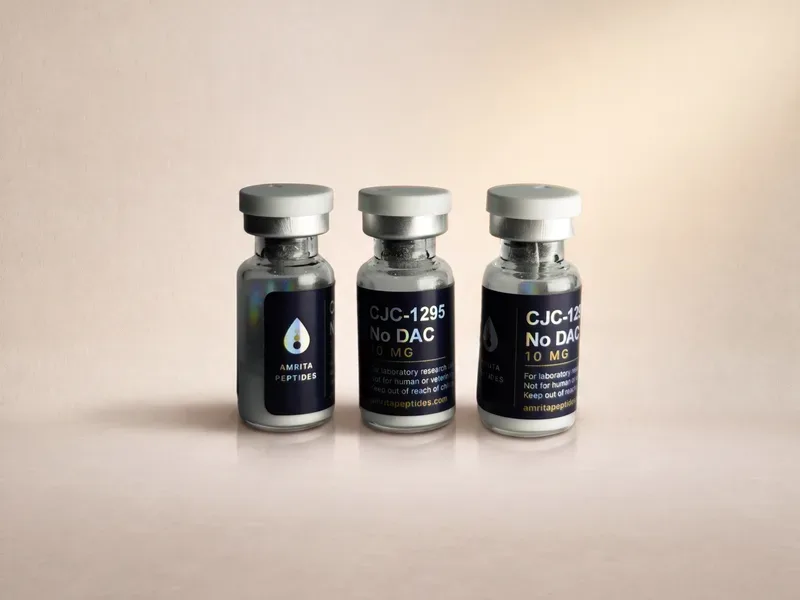
CJC-1295 No DAC
Molecular formula: C152H252N44O42
A short-acting version of the body's own growth-hormone-releasing signal, and the usual research partner for Ipamorelin.
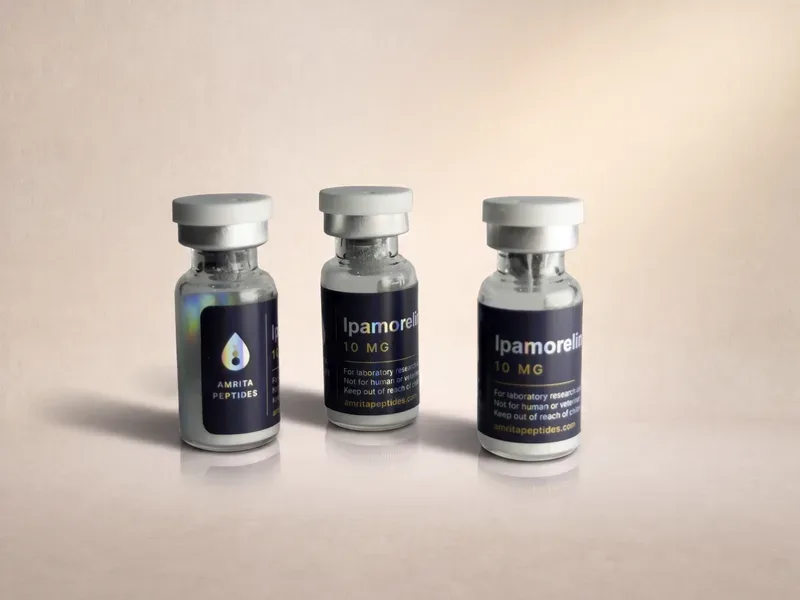
Ipamorelin
Molecular formula: C38H49N9O5
A small, selective growth-hormone releaser — it caught researchers' attention because it leaves cortisol largely untouched.
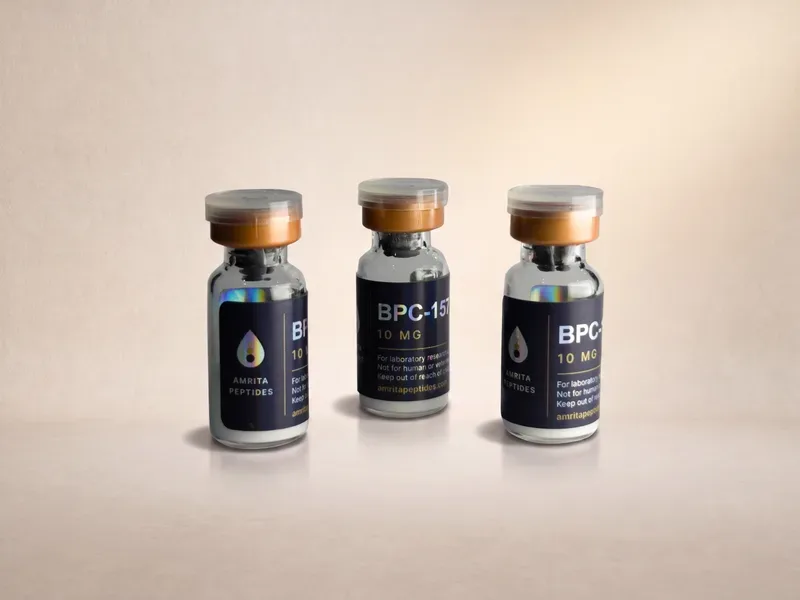
BPC-157
Molecular formula: C62H98N16O22
Probably the best-known recovery peptide — a 15-amino-acid fragment of a stomach protein, researched for how tendons, ligaments and the gut heal.
฿1,900
Added to cart. Research use only.